 Download Sheet Music Net is a site for those who wants to access popular sheet music easily,
letting them download the sheet music for free for trial purposes.
It's completely free to download and try the listed sheet music, but you have to delete the files after 24 hours of trial.
Don't forget, if you like the piece of music you have just learned playing,
treat the artist with respect, and go buy the original sheet music.
Download Sheet Music Net is a site for those who wants to access popular sheet music easily,
letting them download the sheet music for free for trial purposes.
It's completely free to download and try the listed sheet music, but you have to delete the files after 24 hours of trial.
Don't forget, if you like the piece of music you have just learned playing,
treat the artist with respect, and go buy the original sheet music.
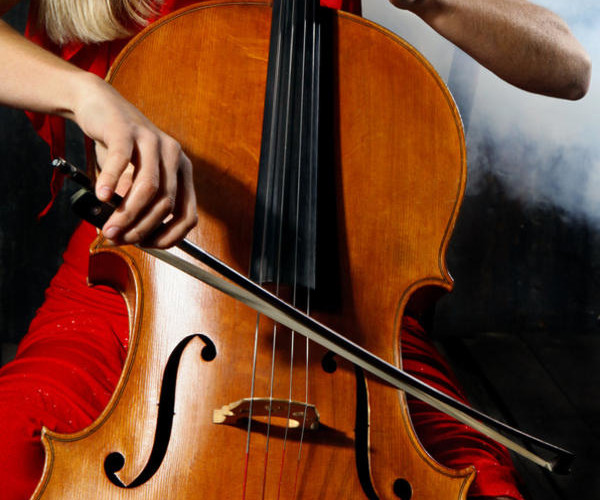
Cello Sheet Music
 "Music is love in search of a word." Sidney Lanier
Antonin Dvorak
Antonín Leopold Dvořák (English pronunciation: /ˈdvɒrʒɑːk/ DVOR-zhahk or /ˈdvɒrʒæk/ DVOR-zhak; Czech: ( listen); September 8, 1841 – May 1, 1904) was a Czech composer of Romantic music, who employed the idioms of the folk music of Moravia and his native Bohemia. His works include operas, symphonic, choral and chamber music. His best-known works include his New World Symphony, the Slavonic Dances, "American" String Quartet, and Cello Concerto in B minor.
Dvořák wrote in a variety of forms: his nine symphonies generally stick to classical models that Beethoven would have recognised, but he also worked in the newly developed symphonic poem form and the influence of Richard Wagner is apparent in some works. Many of his works also show the influence of Czech folk music, both in terms of rhythms and melodic shapes; perhaps the best known examples are the two sets of Slavonic Dances. Dvořák also wrote operas (of which the best known is Rusalka); serenades for string orchestra and wind ensemble; chamber music (including a number of string quartets, and quintets); songs; choral music; and piano music.
Dvořák wrote in a variety of forms: his nine symphonies generally stick to classical models that Beethoven would have recognised, but he also worked in the newly developed symphonic poem form and the influence of Richard Wagner is apparent in some works. Many of his works also show the influence of Czech folk music, both in terms of rhythms and melodic shapes; perhaps the best known examples are the two sets of Slavonic Dances. Dvořák also wrote operas (of which the best known is Rusalka); serenades for string orchestra and wind ensemble; chamber music (including a number of string quartets, and quintets); songs; choral music; and piano music.
Behnam Karimi.
Behnam karimi. Composer at behi. behi. Sanandaj County, Kordestan, Iran.
Juliaan Wilmots
Juliaan Wilmots (Sint-Truiden, 5 maart 1936 - 22 september 2000) was een Belgisch musicus, dirigent, docent en componist.Juliaan was een zoon van Joseph Wilmots en Maria Schrijvers. Hij trouwde met Annie Paredis.Als jonge knaap leerde hij piano spelen bij meester Justin Vandersteegen en werd hij lid van het gregoriaans koor in de Sint-Gangulfuskerk. Hij speelde ook accordeon. Hij volbracht de humaniora, waarna hij muziekstudies volgde in het Lemmensinstituut in Mechelen en er zijn einddiploma behaalde. Hij studeerde onder meer orkestratie en orkestdirectie bij Gaston Feremans.Hij volbracht zijn legerdienst als reserveofficier in het Belgisch leger (1959-1960).
Sebastian Lee
Sebastian Lee German cellistSebastian Lee was a German cellist and pedagogue active in France and Germany. Wikipedia
Born: December 24, 1805, Hamburg, Germany Died: January 4, 1887, Hamburg, Germany Books: Forty Melodic and Progressive Etudes: Op. 31 Book I and II, MORE
Born: December 24, 1805, Hamburg, Germany Died: January 4, 1887, Hamburg, Germany Books: Forty Melodic and Progressive Etudes: Op. 31 Book I and II, MORE
Frank cesar
César Franck Music teacher Places you can reach DescriptionCésar Franck is a Belgian classical French composer.
Date of birth: December 10, 1822, Liège, Belgium Date and place of death: November 8, 1890, Paris, France
Full name: César-Auguste-Jean-Guillaume-Hubert Franck
Date of birth: December 10, 1822, Liège, Belgium Date and place of death: November 8, 1890, Paris, France
Full name: César-Auguste-Jean-Guillaume-Hubert Franck
Eric Satie
Éric Alfred Leslie Satie (Honfleur, 17 May 1866 – Paris, 1 July 1925) was a French composer and pianist. Starting with his first composition in 1884, he signed his name as Erik Satie.
Satie was introduced as a "gymnopedist" in 1887, shortly before writing his most famous compositions, the Gymnopédies. Later, he also referred to himself as a "phonometrician" (meaning "someone who measures sounds") preferring this designation to that of "musician", after having been called "a clumsy but subtle technician" in a book on contemporary French composers published in 1911.
In addition to his body of music, Satie also left a remarkable set of writings, having contributed work for a range of publications, from the dadaist 391 to the American Vanity Fair. Although in later life he prided himself on always publishing his work under his own name, in the late nineteenth century he appears to have used pseudonyms such as Virginie Lebeau and François de Paule in some of his published writings.
Satie was a colourful figure in the early 20th century Parisian avant-garde. He was a precursor to later artistic movements such as minimalism, repetitive music, and the Theatre of the Absurd.
Satie was introduced as a "gymnopedist" in 1887, shortly before writing his most famous compositions, the Gymnopédies. Later, he also referred to himself as a "phonometrician" (meaning "someone who measures sounds") preferring this designation to that of "musician", after having been called "a clumsy but subtle technician" in a book on contemporary French composers published in 1911.
In addition to his body of music, Satie also left a remarkable set of writings, having contributed work for a range of publications, from the dadaist 391 to the American Vanity Fair. Although in later life he prided himself on always publishing his work under his own name, in the late nineteenth century he appears to have used pseudonyms such as Virginie Lebeau and François de Paule in some of his published writings.
Satie was a colourful figure in the early 20th century Parisian avant-garde. He was a precursor to later artistic movements such as minimalism, repetitive music, and the Theatre of the Absurd.
Ehsan Saboohi
Ehsan Saboohi is an Iranian contemporary composer. He was born in 1981 in Tehran, Iran. He learnt the principles of Iranian Traditional Music since his childhood.
Astor Piazzolla
Ástor Pantaleón Piazzolla (March 11, 1921 – July 4, 1992) was an Argentine tango composer and bandoneón player. His oeuvre revolutionized the traditional tango into a new style termed nuevo tango, incorporating elements from jazz and classical music. An excellent bandoneonist, he regularly performed his own compositions with different ensembles.
Piazzolla's nuevo tango was distinct from the traditional tango in its incorporation of elements of jazz, its use of extended harmonies and dissonance, its use of counterpoint, and its ventures into extended compositional forms. As Argentine psychoanalyst Carlos Kuri has pointed out, Piazzolla's fusion of tango with this wide range of other recognizable Western musical elements was so successful that it produced a new individual style transcending these influences. It is precisely this success, and individuality, that makes it hard to pin down where particular influences reside in his compositions, but some aspects are clear. The use of the passacaglia technique of a circulating bass line and harmonic sequence, invented and much used in 17th and 18th century baroque music but also central to the idea of jazz "changes", predominates in most of Piazzolla's mature compositions. Another clear reference to the baroque is the often complex and virtuosic counterpoint that sometimes follows strict fugal behavior but more often simply allows each performer in the group to assert his voice. A further technique that emphasises this sense of democracy and freedom among the musicians is improvisation that is borrowed from jazz in concept, but in practice involves a different vocabulary of scales and rhythms that stay within the parameters of the established tango sound-world. Pablo Ziegler has been particularly responsible for developing this aspect of the style both within Piazzolla's groups and since the composer's death.
Piazzolla's nuevo tango was distinct from the traditional tango in its incorporation of elements of jazz, its use of extended harmonies and dissonance, its use of counterpoint, and its ventures into extended compositional forms. As Argentine psychoanalyst Carlos Kuri has pointed out, Piazzolla's fusion of tango with this wide range of other recognizable Western musical elements was so successful that it produced a new individual style transcending these influences. It is precisely this success, and individuality, that makes it hard to pin down where particular influences reside in his compositions, but some aspects are clear. The use of the passacaglia technique of a circulating bass line and harmonic sequence, invented and much used in 17th and 18th century baroque music but also central to the idea of jazz "changes", predominates in most of Piazzolla's mature compositions. Another clear reference to the baroque is the often complex and virtuosic counterpoint that sometimes follows strict fugal behavior but more often simply allows each performer in the group to assert his voice. A further technique that emphasises this sense of democracy and freedom among the musicians is improvisation that is borrowed from jazz in concept, but in practice involves a different vocabulary of scales and rhythms that stay within the parameters of the established tango sound-world. Pablo Ziegler has been particularly responsible for developing this aspect of the style both within Piazzolla's groups and since the composer's death.
David Popper
Popper was a prolific composer of music for his instrument, writing four concertos, a Requiem for three cellos and orchestra (1891) and a number of smaller pieces which are still played today, including the ever-popular cello solo piece Tarantella. His shorter showpieces were written to highlight the unique sound and style native to the cello extending the instrument's range to heights with pieces such as Spinnlied (Spinning Song), Elfentanz (Dance of the Elves), or the Ungarische Rhapsodie (Hungarian Rhapsody). He also wrote instructional pieces. Popper is also famous for his High School of Cello Playing (Op. 73), a book of cello études that is used almost universally by advanced cello students.
Braveheart
Braveheart is a 1995 historical action-drama movie produced and directed by Mel Gibson, who also starred in the title role. The film was written for screen and then novelized by Randall Wallace. Gibson portrays a legendary Scot, William Wallace, who gained recognition when he came to the forefront of the First War of Scottish Independence by opposing Edward I of England (portrayed by Patrick McGoohan) and subsequently abetted by Edward's daughter-in-law Princess Isabelle (played by Sophie Marceau) and a claimant to the Scottish throne, Robert the Bruce (played by Angus Macfadyen).
The film won five Academy Awards at the 68th Academy Awards, including the Academy Award for Best Picture and Best Director, and had been nominated for an additional five. Produced by Icon Productions for Paramount Pictures and 20th Century Fox, the film's success helped revive the historical epic genre, with subsequent films such as Gladiator, Troy, Kingdom of Heaven, 300, and Mongol.
The film won five Academy Awards at the 68th Academy Awards, including the Academy Award for Best Picture and Best Director, and had been nominated for an additional five. Produced by Icon Productions for Paramount Pictures and 20th Century Fox, the film's success helped revive the historical epic genre, with subsequent films such as Gladiator, Troy, Kingdom of Heaven, 300, and Mongol.
Mozart
Wolfgang Amadeus Mozart, full name Johann Chrysostom Wolfgang Amadeus Mozart (27 January 1756 â 5 December 1791) was a prolific and influential composer of the Classical era. His over 600 compositions include works widely acknowledged as pinnacles of symphonic, concertante, chamber, piano, operatic, and choral music. Mozart is among the most enduringly popular of classical composers, and many of his works are part of the standard concert repertoire.
Mozart's music, like Haydn's, stands as an archetypal example of the Classical style. His works spanned the period during which that style transformed from one exemplified by the style galant to one that began to incorporate some of the contrapuntal complexities of the late Baroque, complexities against which the galant style had been a reaction. Mozart's own stylistic development closely paralleled the development of the classical style as a whole. In addition, he was a versatile composer and wrote in almost every major genre, including symphony, opera, the solo concerto, chamber music including string quartet and string quintet, and the piano sonata. While none of these genres were new, the piano concerto was almost single-handedly developed and popularized by Mozart. He also wrote a great deal of religious music, including masses; and he composed many dances, divertimenti, serenades, and other forms of light entertainment.
The central traits of the classical style can be identified in Mozart's music. Clarity, balance, and transparency are hallmarks of his work.
Mozart's music, like Haydn's, stands as an archetypal example of the Classical style. His works spanned the period during which that style transformed from one exemplified by the style galant to one that began to incorporate some of the contrapuntal complexities of the late Baroque, complexities against which the galant style had been a reaction. Mozart's own stylistic development closely paralleled the development of the classical style as a whole. In addition, he was a versatile composer and wrote in almost every major genre, including symphony, opera, the solo concerto, chamber music including string quartet and string quintet, and the piano sonata. While none of these genres were new, the piano concerto was almost single-handedly developed and popularized by Mozart. He also wrote a great deal of religious music, including masses; and he composed many dances, divertimenti, serenades, and other forms of light entertainment.
The central traits of the classical style can be identified in Mozart's music. Clarity, balance, and transparency are hallmarks of his work.
Gustav Holst
Gustav Theodore Holst (21 September 1874 – 25 May 1934) was an English composer and was a music teacher for nearly 20 years. He is most famous for his orchestral suite The Planets. Having studied at the Royal College of Music in London, his early work was influenced by Ravel, Grieg, Richard Strauss, and fellow student Ralph Vaughan Williams, but most of his music is highly original, with influences from Hindu spiritualism and English folk tunes. Holst's music is well known for unconventional use of metre and haunting melodies.
Holst wrote almost 200 catalogued compositions, including orchestral suites, operas, ballets, concertos, choral hymns, and songs (see Selected works below).
Holst became music master at St Paul's Girls' School in 1905 and director of music at Morley College in 1907, continuing in both posts until retirement.
He was the brother of Hollywood actor Ernest Cossart and father of the composer and conductor Imogen Holst, who wrote a biography of him in 1938.
Holst wrote almost 200 catalogued compositions, including orchestral suites, operas, ballets, concertos, choral hymns, and songs (see Selected works below).
Holst became music master at St Paul's Girls' School in 1905 and director of music at Morley College in 1907, continuing in both posts until retirement.
He was the brother of Hollywood actor Ernest Cossart and father of the composer and conductor Imogen Holst, who wrote a biography of him in 1938.
Joe Hisashi
Mamoru Fujisawa (藤澤 守 Fujisawa Mamoru?), known professionally as Joe Hisaishi (久石 譲 Hisaishi Jō?, born December 6, 1950), is a composer and director known for over 100 film scores and solo albums dating back to 1981.
While possessing a stylistically distinct sound, Hisaishi's music has been known to explore and incorporate different genres, including minimalist, experimental electronic, European classical, and Japanese classical. Lesser known are the other musical roles he plays; he is also a typesetter, author, arranger, and conductor.
He is best known for his work with animator Hayao Miyazaki, having composed scores for many of his films including Nausicaä of the Valley of the Wind (1984), Laputa aka Castle in the Sky (1986), My Neighbor Totoro (1988), Kiki's Delivery Service (1989), Porco Rosso (1992), Princess Mononoke (1997), Spirited Away (2001), Howl's Moving Castle (2004) and Ponyo on the Cliff by the Sea (2008). He is also recognized for the soundtracks he has provided for filmmaker 'Beat' Takeshi Kitano, including A Scene at the Sea (1991), Dolls (2002), Kikujiro (1999), Hana-bi (1997), Kids Return (1996), and Sonatine (1993). He was a student of legendary anime composer Takeo Watanabe.
While possessing a stylistically distinct sound, Hisaishi's music has been known to explore and incorporate different genres, including minimalist, experimental electronic, European classical, and Japanese classical. Lesser known are the other musical roles he plays; he is also a typesetter, author, arranger, and conductor.
He is best known for his work with animator Hayao Miyazaki, having composed scores for many of his films including Nausicaä of the Valley of the Wind (1984), Laputa aka Castle in the Sky (1986), My Neighbor Totoro (1988), Kiki's Delivery Service (1989), Porco Rosso (1992), Princess Mononoke (1997), Spirited Away (2001), Howl's Moving Castle (2004) and Ponyo on the Cliff by the Sea (2008). He is also recognized for the soundtracks he has provided for filmmaker 'Beat' Takeshi Kitano, including A Scene at the Sea (1991), Dolls (2002), Kikujiro (1999), Hana-bi (1997), Kids Return (1996), and Sonatine (1993). He was a student of legendary anime composer Takeo Watanabe.
Bach
Johann Sebastian Bach (31 March 1685 – 28 July 1750) was a German composer and organist whose sacred and secular works for choir, orchestra, and solo instruments drew together the strands of the Baroque period and brought it to its ultimate maturity. Although he introduced no new forms, he enriched the prevailing German style with a robust contrapuntal technique, an unrivalled control of harmonic and motivic organisation in composition for diverse musical forces, and the adaptation of rhythms and textures from abroad, particularly Italy and France.
Revered for their intellectual depth and technical and artistic beauty, Bach's works include the Brandenburg concertos; the Goldberg Variations; the English Suites, French Suites, Partitas, and Well-Tempered Clavier; the Mass in B Minor; the St. Matthew Passion; the St. John Passion; The Musical Offering; The Art of Fugue; the Sonatas and Partitas for violin solo; the Cello Suites; more than 200 surviving cantatas; and a similar number of organ works, including the celebrated Toccata and Fugue in D Minor.
While Bach's fame as an organist was great during his lifetime, he was not particularly well-known as a composer. His adherence to Baroque forms and contrapuntal style was considered "old-fashioned" by his contemporaries, especially late in his career when the musical fashion tended towards Rococo and later Classical styles. A revival of interest and performances of his music began early in the 19th century, and he is now widely considered to be one of the greatest composers in the Western tradition.
Revered for their intellectual depth and technical and artistic beauty, Bach's works include the Brandenburg concertos; the Goldberg Variations; the English Suites, French Suites, Partitas, and Well-Tempered Clavier; the Mass in B Minor; the St. Matthew Passion; the St. John Passion; The Musical Offering; The Art of Fugue; the Sonatas and Partitas for violin solo; the Cello Suites; more than 200 surviving cantatas; and a similar number of organ works, including the celebrated Toccata and Fugue in D Minor.
While Bach's fame as an organist was great during his lifetime, he was not particularly well-known as a composer. His adherence to Baroque forms and contrapuntal style was considered "old-fashioned" by his contemporaries, especially late in his career when the musical fashion tended towards Rococo and later Classical styles. A revival of interest and performances of his music began early in the 19th century, and he is now widely considered to be one of the greatest composers in the Western tradition.
Final Fantasy X
Final Fantasy X (ファイナルファンタジーX Fainaru Fantajī Ten?) is a console role-playing game developed and published by Square (now Square Enix) as the tenth title in the Final Fantasy series. It was released in 2001 for Sony's PlayStation 2. The game marks the Final Fantasy series' transition from entirely pre-rendered backdrops to fully three-dimensional areas, and is also the first in the series to feature voice acting. Final Fantasy X replaces the Active Time Battle (ATB) system with a new Conditional Turn-Based Battle (CTB) system, and uses a new leveling system called the "Sphere Grid".
Set in the fantasy world of Spira, the game's story centers around a group of adventurers and their quest to defeat a rampaging monster known as "Sin". The player character is Tidus, a blitzball star who finds himself in Spira after his home city of Zanarkand is destroyed by Sin. During the game, Tidus, along with several others, aids the summoner Yuna on her pilgrimage to destroy Sin.
Development of Final Fantasy X began in 1999, with a budget of more than US$32.3 million and a team of more than 100 people. The game was the first in the main series not entirely scored by Nobuo Uematsu; Masashi Hamauzu and Junya Nakano were signed as Uematsu's fellow composers. Final Fantasy X was both a critical and commercial success. It was voted by the readers of the Japanese video game magazine Famitsu to be the greatest video game of all-time. As of January 2004, the game has sold 6.6 million units worldwide. In 2003, it was followed by Final Fantasy X-2, making it the first Final Fantasy game to have a direct sequel.
Set in the fantasy world of Spira, the game's story centers around a group of adventurers and their quest to defeat a rampaging monster known as "Sin". The player character is Tidus, a blitzball star who finds himself in Spira after his home city of Zanarkand is destroyed by Sin. During the game, Tidus, along with several others, aids the summoner Yuna on her pilgrimage to destroy Sin.
Development of Final Fantasy X began in 1999, with a budget of more than US$32.3 million and a team of more than 100 people. The game was the first in the main series not entirely scored by Nobuo Uematsu; Masashi Hamauzu and Junya Nakano were signed as Uematsu's fellow composers. Final Fantasy X was both a critical and commercial success. It was voted by the readers of the Japanese video game magazine Famitsu to be the greatest video game of all-time. As of January 2004, the game has sold 6.6 million units worldwide. In 2003, it was followed by Final Fantasy X-2, making it the first Final Fantasy game to have a direct sequel.
Albinoni
Tomaso Giovanni Albinoni (8 June 1671, Venice, Republic of Venice – 17 January 1751, Venice, Republic of Venice) was a Venetian Baroque composer. While famous in his day as an opera composer, he is mainly remembered today for his instrumental music, some of which is regularly recorded.
james newton howard
James Newton Howard (born June 9, 1951) is an American composer, conductor, and music producer. He has scored over 100 films and is the recipient of a Grammy Award, Emmy Award, and eight Academy Award nominations. His film scores include Pretty Woman (1990), The Fugitive (1993), The Devil's Advocate (1997), Dinosaur (2000), Atlantis: The Lost Empire (2001), Treasure Planet (2002), King Kong (2005), Batman Begins (2005), Blood Diamond (2006), The Dark Knight (2008), The Bourne Legacy (2012), The Hunger Games series (2012–2015) and Fantastic Beasts and Where to Find Them (2016). He has collaborated with directors M. Night Shyamalan, having scored nine of his films since The Sixth Sense, and Francis Lawrence, having scored all of his films since I Am Legend.
Kelly Clarkson
Kelly Brianne Clarkson (born April 24, 1982) is an American pop rock singer, songwriter, and occasional actress. Clarkson made her debut under RCA Records after she won the highly-publicized first season of the television series American Idol in 2002. She was originally marketed as a pop musician with her debut album Thankful (2003). With the release of her multi-platinum second album Breakaway (2004), Clarkson moved to a more pop rock-oriented style of music. Clarkson's third album, entitled My December, was released on June 26, 2007. Her fourth album is due in fall 2008. Clarkson has sold over 19 million albums worldwide. Clarkson is the most successful American Idol alumna, with eight of her singles becoming Top 10 hits on the Billboard Hot 100. In 2008, she joined Vh1's list of 10 sexiest women of the new millennium at #8. She also hit #28 on Vh1's Top 30 Hottest Rock Front women.
J. S. Bach
Johann Sebastian Bach (21 March 1685, O.S.31 March 1685, N.S. – 28 July 1750, N.S.) was a German composer, organist, harpsichordist, violist, and violinist whose sacred and secular works for choir, orchestra, and solo instruments drew together the strands of the Baroque period and brought it to its ultimate maturity. Although he did not introduce new forms, he enriched the prevailing German style with a robust contrapuntal technique, an unrivalled control of harmonic and motivic organisation, and the adaptation of rhythms, forms and textures from abroad, particularly from Italy and France.
Revered for their intellectual depth, technical command and artistic beauty, Bach's works include the Brandenburg Concertos, the Goldberg Variations, the Partitas, The Well-Tempered Clavier, the Mass in B minor, the St Matthew Passion, the St John Passion, the Magnificat, A Musical Offering, The Art of Fugue, the English and French Suites, the Sonatas and Partitas for solo violin, the Cello Suites, more than 200 surviving cantatas, and a similar number of organ works, including the famous Toccata and Fugue in D minor and Passacaglia and Fugue in C minor, as well as the Great Eighteen Chorale Preludes and Organ Mass.
Bach's abilities as an organist were highly respected throughout Europe during his lifetime, although he was not widely recognised as a great composer until a revival of interest and performances of his music in the first half of the 19th century. He is now generally regarded as one of the main composers of the Baroque style, and as one of the greatest composers of all time.
Revered for their intellectual depth, technical command and artistic beauty, Bach's works include the Brandenburg Concertos, the Goldberg Variations, the Partitas, The Well-Tempered Clavier, the Mass in B minor, the St Matthew Passion, the St John Passion, the Magnificat, A Musical Offering, The Art of Fugue, the English and French Suites, the Sonatas and Partitas for solo violin, the Cello Suites, more than 200 surviving cantatas, and a similar number of organ works, including the famous Toccata and Fugue in D minor and Passacaglia and Fugue in C minor, as well as the Great Eighteen Chorale Preludes and Organ Mass.
Bach's abilities as an organist were highly respected throughout Europe during his lifetime, although he was not widely recognised as a great composer until a revival of interest and performances of his music in the first half of the 19th century. He is now generally regarded as one of the main composers of the Baroque style, and as one of the greatest composers of all time.
Marco Beltrami
Marco Edward Jonathan Beltrami (born October 7, 1966) is an American composer and conductor of film and television scores. A prolific musician, he has worked in a number of genres, including horror (Mimic, The Faculty, Resident Evil, The Woman in Black, A Quiet Place), action (Terminator 3: Rise of the Machines, Live Free or Die Hard, World War Z), science-fiction (I, Robot, Snowpiercer), Western (3:10 to Yuma, Jonah Hex, The Homesman), and superhero (Hellboy, The Wolverine, Logan).
Rachel Thibodeau
Rachel Thibodeau Musical artist Available on Deezer Born: Elk River, Minnesota, United States Songs Beautiful To Him
EFY 2006: The Greatest Gift · 2006 Love Land I'll Still Be Me.
EFY 2006: The Greatest Gift · 2006 Love Land I'll Still Be Me.
Vladimir Goncharenko
Vladimir Goncharenko russian contemporary artists,composer.
Gaspar Cassado
Gaspar Cassadó i Moreu was a Spanish cellist and composer of the early 20th century. He was born in Barcelona to a church musician father, Joaquim Cassadó, and began taking cello lessons at age seven
Brahms
Johannes Brahms (May 7, 1833 â April 3, 1897) was a German composer of the Romantic period. He was born in Hamburg and in his later years he settled in Vienna, Austria.
Brahms maintained a Classical sense of form and order in his works â in contrast to the opulence of the music of many of his contemporaries. Thus many admirers (though not necessarily Brahms himself) saw him as the champion of traditional forms and "pure music," as opposed to the New German embrace of program music.
Brahms venerated Beethoven: in the composer's home, a marble bust of Beethoven looked down on the spot where he composed, and some passages in his works are reminiscent of Beethoven's style. The main theme of the finale of Brahms's First Symphony is reminiscent of the main theme of the finale of Beethoven's Ninth, and when this resemblance was pointed out to Brahms he replied that any ass â jeder Esel â could see that.
Ein deutsches Requiem was partially inspired by his mother's death in 1865, but also incorporates material from a Symphony he started in 1854, but abandoned following Schumann's suicide attempt. He once wrote that the Requiem "belonged to Schumann". The first movement of this abandoned Symphony was re-worked as the first movement of the First Piano Concerto.
Brahms also loved the Classical composers Mozart and Haydn. He collected first editions and autographs of their works, and edited performing editions. He also studied the music of pre-classical composers, including Giovanni Gabrieli, Johann Adolph Hasse, Heinrich Schütz and especially Johann Sebastian Bach. His friends included leading musicologists, and with Friedrich Chrysander he edited an edition of the works of François Couperin. He looked to older music for inspiration in the arts of strict counterpoint; the themes of some of his works are modelled on Baroque sources, such as Bach's The Art of Fugue in the fugal finale of Cello Sonata No. 1, or the same composer's Cantata No. 150 in the passacaglia theme of the Fourth Symphony's finale.
Brahms maintained a Classical sense of form and order in his works â in contrast to the opulence of the music of many of his contemporaries. Thus many admirers (though not necessarily Brahms himself) saw him as the champion of traditional forms and "pure music," as opposed to the New German embrace of program music.
Brahms venerated Beethoven: in the composer's home, a marble bust of Beethoven looked down on the spot where he composed, and some passages in his works are reminiscent of Beethoven's style. The main theme of the finale of Brahms's First Symphony is reminiscent of the main theme of the finale of Beethoven's Ninth, and when this resemblance was pointed out to Brahms he replied that any ass â jeder Esel â could see that.
Ein deutsches Requiem was partially inspired by his mother's death in 1865, but also incorporates material from a Symphony he started in 1854, but abandoned following Schumann's suicide attempt. He once wrote that the Requiem "belonged to Schumann". The first movement of this abandoned Symphony was re-worked as the first movement of the First Piano Concerto.
Brahms also loved the Classical composers Mozart and Haydn. He collected first editions and autographs of their works, and edited performing editions. He also studied the music of pre-classical composers, including Giovanni Gabrieli, Johann Adolph Hasse, Heinrich Schütz and especially Johann Sebastian Bach. His friends included leading musicologists, and with Friedrich Chrysander he edited an edition of the works of François Couperin. He looked to older music for inspiration in the arts of strict counterpoint; the themes of some of his works are modelled on Baroque sources, such as Bach's The Art of Fugue in the fugal finale of Cello Sonata No. 1, or the same composer's Cantata No. 150 in the passacaglia theme of the Fourth Symphony's finale.
Franz Schubert
Franz Peter Schubert (German pronunciation: ; January 31, 1797 – November 19, 1828) was an Austrian composer. He wrote some 600 Lieder, nine symphonies (including the famous "Unfinished Symphony"), liturgical music, operas, some incidental music, and a large body of chamber and solo piano music. He is particularly noted for his original melodic and harmonic writing.
Schubert was born into a musical family, and received formal musical training through much of his childhood. While Schubert had a close circle of friends and associates who admired his work (amongst them the prominent singer Johann Michael Vogl), wide appreciation of his music during his lifetime was limited at best. He was never able to secure adequate permanent employment, and for most of his career he relied on the support of friends and family. He made some money from published works, and occasionally gave private musical instruction. In the last year of his life he began to receive wider acclaim. He died at the age of 31 of "typhoid fever", a diagnosis which was vague at the time; several scholars suspect the real illness was tertiary syphilis.
Interest in Schubert's work increased dramatically in the decades following his death. Composers like Franz Liszt, Robert Schumann and Felix Mendelssohn discovered, collected, and championed his works in the 19th century, as did musicologist Sir George Grove. Franz Schubert is now widely considered to be one of the greatest composers in the Western tradition.
Schubert was born into a musical family, and received formal musical training through much of his childhood. While Schubert had a close circle of friends and associates who admired his work (amongst them the prominent singer Johann Michael Vogl), wide appreciation of his music during his lifetime was limited at best. He was never able to secure adequate permanent employment, and for most of his career he relied on the support of friends and family. He made some money from published works, and occasionally gave private musical instruction. In the last year of his life he began to receive wider acclaim. He died at the age of 31 of "typhoid fever", a diagnosis which was vague at the time; several scholars suspect the real illness was tertiary syphilis.
Interest in Schubert's work increased dramatically in the decades following his death. Composers like Franz Liszt, Robert Schumann and Felix Mendelssohn discovered, collected, and championed his works in the 19th century, as did musicologist Sir George Grove. Franz Schubert is now widely considered to be one of the greatest composers in the Western tradition.
Claude lachapelle
Claude Lachapelle Musical artist Songs Ritournelle Samba Cubana Lieblich Traum
Akira Yamaoka
Akira Yamaoka (山岡 晃 Yamaoka Akira?, born February 6, 1968) is a video game composer, sound designer, sound director, and video game producer who has worked for Konami since 1993. He is best known for creating the music in the Silent Hill series; he also works as a sound director and producer on the series.
Edward Elgar
Sir Edward William Elgar, 1st Baronet OM, GCVO (2 June 1857 – 23 February 1934) was an English composer, many of whose works have entered the British and international classical concert repertoire. Among his best-known compositions are orchestral works including the Enigma Variations, the Pomp and Circumstance Marches, concertos for violin and cello, and two symphonies. He also composed choral works, including The Dream of Gerontius, chamber music and songs. He was appointed Master of the King's Musick in 1924.
Robert Davidson
Robert Davidson (born 17 December 1965) is an Australian composer. He studied composition with Terry Riley in 1995 following studies with Philip Bračanin at the University of Queensland. He lectures in music at the Queensland University of Technology.
Since 1996, Davidson has directed the post classical quintet Topology, with whom he plays double bass.
Since 1996, Davidson has directed the post classical quintet Topology, with whom he plays double bass.
Dia
Dia created a sketchbook called Dia's Sketchbook, in which she places videos of her singing covers of other people's songs. Dia has collaborated with many artist including IU, The Black, D'Nine, H-Eugene, PD Blue, and such.
Vivaldi
Antonio Lucio Vivaldi (March 4, 1678 â July 28, 1741), nicknamed il Prete Rosso ("The Red Priest"), was a Venetian priest and Baroque music composer, as well as a famous virtuoso violinist; he was born and raised in the Republic of Venice. The Four Seasons, a series of four violin concerti, is his best-known work and a highly popular Baroque piece.
Many of Vivaldi's compositions reflect a flamboyant, almost playful, exuberance. Most of Vivaldi's repertoire was rediscovered only in the first half of the 20th century in Turin and Genoa and was published in the second half. Vivaldi's music is innovative, breaking a consolidated tradition in schemes; he gave brightness to the formal and the rhythmic structure of the concerto, repeatedly looking for harmonic contrasts and innovative melodies and themes. Moreover, Vivaldi was able to compose nonacademic music, particularly meant to be appreciated by the wide public and not only by an intellectual minority. The joyful appearance of his music reveals in this regard a transmissible joy of composing; these are among the causes of the vast popularity of his music. This popularity soon made him famous in other countries such as France which was, at the time, very independent concerning its musical taste.
Vivaldi is considered one of the composers who brought Baroque music (with its typical contrast among heavy sonorities) to evolve into a classical style. Johann Sebastian Bach was deeply influenced by Vivaldi's concertos and arias (recalled in his Johannes Passion, Matthäuspassion, and cantatas). Bach transcribed a number of Vivaldi's concerti for solo keyboard, along with a number for orchestra, including the famous Concerto for Four Violins and Violoncello, Strings and Continuo (RV 580).
Many of Vivaldi's compositions reflect a flamboyant, almost playful, exuberance. Most of Vivaldi's repertoire was rediscovered only in the first half of the 20th century in Turin and Genoa and was published in the second half. Vivaldi's music is innovative, breaking a consolidated tradition in schemes; he gave brightness to the formal and the rhythmic structure of the concerto, repeatedly looking for harmonic contrasts and innovative melodies and themes. Moreover, Vivaldi was able to compose nonacademic music, particularly meant to be appreciated by the wide public and not only by an intellectual minority. The joyful appearance of his music reveals in this regard a transmissible joy of composing; these are among the causes of the vast popularity of his music. This popularity soon made him famous in other countries such as France which was, at the time, very independent concerning its musical taste.
Vivaldi is considered one of the composers who brought Baroque music (with its typical contrast among heavy sonorities) to evolve into a classical style. Johann Sebastian Bach was deeply influenced by Vivaldi's concertos and arias (recalled in his Johannes Passion, Matthäuspassion, and cantatas). Bach transcribed a number of Vivaldi's concerti for solo keyboard, along with a number for orchestra, including the famous Concerto for Four Violins and Violoncello, Strings and Continuo (RV 580).
Johann Sebastian Bach
Johann Sebastian Bach (31 March 1685 – 28 July 1750) was a German composer and musician of the Baroque period. He is known for instrumental compositions such as the Art of Fugue, the Brandenburg Concertos, and the Goldberg Variations, and for vocal music such as the St Matthew Passion and the Mass in B minor. Since the 19th-century Bach Revival he has been generally regarded as one of the greatest composers of the Western art musical canon.
Carl Nielsen
Carl August Nielsen (9 June 1865 – 3 October 1931), widely recognised as Denmark's greatest composer, was also a conductor and a violinist. Brought up by poor but musically talented parents on the island of Funen, he demonstrated his musical abilities at an early age. While it was some time before his works were fully appreciated, even in his home country, Nielsen has now firmly entered the international repertoire. Especially in Europe and the United States, Nielsen's music is ever more frequently performed, with interest growing in other countries too. Carl Nielsen is especially admired for his six symphonies, his Wind Quintet and his concertos for violin, flute and clarinet. In Denmark, his opera Maskarade and a considerable number of his songs have become an integral part of the national heritage. While his early music was inspired by composers such as Brahms and Grieg, he soon started to develop his own style, first experimenting with progressive tonality and later diverging even more radically from the standards of composition still common at the time. For many years, he appeared on the Danish hundred-kroner banknote.
Nielsen is best known for his six symphonies. Other well-known pieces are the incidental music for Adam Oehlenschläger's drama Aladdin, the operas Saul og David and Maskarade, the three concertos for violin, flute and clarinet, the Wind Quintet, and the Helios Overture, which depicts the passage of the sun in the sky from dawn to nightfall. Most Danes can sing many of the numerous songs by various poets, set to music by Carl Nielsen.
The music initially had a neo-classical sound but became increasingly modern as Nielsen developed his own approach to what Robert Simpson called progressive tonality, moving from one key to another. Typically, he would end on a different key, sometimes as the outcome of a struggle as in his symphonies. His frequently blended melodic passages inspired by folk music with more complicated stylings including counterpoint and modern variations.
Like his contemporary, the Finn Jean Sibelius, he studied Renaissance polyphony closely, which accounts for much of the melodic and harmonic "feel" of his music.
Nielsen is best known for his six symphonies. Other well-known pieces are the incidental music for Adam Oehlenschläger's drama Aladdin, the operas Saul og David and Maskarade, the three concertos for violin, flute and clarinet, the Wind Quintet, and the Helios Overture, which depicts the passage of the sun in the sky from dawn to nightfall. Most Danes can sing many of the numerous songs by various poets, set to music by Carl Nielsen.
The music initially had a neo-classical sound but became increasingly modern as Nielsen developed his own approach to what Robert Simpson called progressive tonality, moving from one key to another. Typically, he would end on a different key, sometimes as the outcome of a struggle as in his symphonies. His frequently blended melodic passages inspired by folk music with more complicated stylings including counterpoint and modern variations.
Like his contemporary, the Finn Jean Sibelius, he studied Renaissance polyphony closely, which accounts for much of the melodic and harmonic "feel" of his music.
Tchaikovsky
Pyotr Il'yich Tchaikovsky (May 7 1840 â November 6 1893) was a Russian composer of the Romantic era. While not part of the nationalistic music group known as "The Five", Tchaikovsky wrote music which, in the opinion of Harold Schonberg, was distinctly Russian: plangent, introspective, with modally-inflected melody and harmony.
Aesthetically, Tchaikovsky remained open to all aspects of Saint Petersburg musical life. He was impressed by Serov and Balakirev as well as the classical values upheld by the conservatory. Both the progressive and conservative camps in Russian music at the time attempted to win him over. Tchaikovsky charted his compositional course between these two factions, retaining his individuality as a composer as well as his Russian identity. In this he was influenced by the ideals of his teacher Nikolai Rubinstein and Nikolai's brother Anton.
Tchaikovsky's musical cosmopolitanism led him to be favored by many Russian music-lovers over the "Russian" harmonies and styles of Mussorgsky, Borodin and Rimsky-Korsakov.
Nonetheless he frequently adapted Russian traditional melodies and dance forms in his music, which enhanced his success in his home country. The success in St. Petersburg at the premiere of his Third Orchestral Suite may have been due in large part to his concluding the work with a polonaise. He also used a polonaise for the final movement of his Third Symphony.
Aesthetically, Tchaikovsky remained open to all aspects of Saint Petersburg musical life. He was impressed by Serov and Balakirev as well as the classical values upheld by the conservatory. Both the progressive and conservative camps in Russian music at the time attempted to win him over. Tchaikovsky charted his compositional course between these two factions, retaining his individuality as a composer as well as his Russian identity. In this he was influenced by the ideals of his teacher Nikolai Rubinstein and Nikolai's brother Anton.
Tchaikovsky's musical cosmopolitanism led him to be favored by many Russian music-lovers over the "Russian" harmonies and styles of Mussorgsky, Borodin and Rimsky-Korsakov.
Nonetheless he frequently adapted Russian traditional melodies and dance forms in his music, which enhanced his success in his home country. The success in St. Petersburg at the premiere of his Third Orchestral Suite may have been due in large part to his concluding the work with a polonaise. He also used a polonaise for the final movement of his Third Symphony.
Luigi Boccherini
Ridolfo Luigi Boccherini (/ˌbɒkəˈriːni/, also US: /ˌboʊk-/, Italian: (About this soundlisten); 19 February 1743 – 28 May 1805) was an Italian, later Spanish, composer and cellist of the Classical era whose music retained a courtly and galante style even while he matured somewhat apart from the major European musical centers. He is best known for a minuet from his String Quintet in E, Op. 11, No. 5 (G 275), and the Cello Concerto in B flat major (G 482). The latter work was long known in the heavily altered version by German cellist and prolific arranger Friedrich Grützmacher, but has recently been restored to its original version.
Bond
Bond or BOND is an Australian/British string quartet that specialises in classical crossover and synth-pop music. The quartet has sold five million albums.
Beethoven
Ludwig van Beethoven (16 December 1770 - 26 March 1827) was a German composer and pianist. He was a crucial figure in the transitional period between the Classical and Romantic eras in Western classical music, and remains one of the most respected and influential composers of all time.
Born in Bonn, then in the Electorate of Cologne (now in modern-day Germany), he moved to Vienna in his early twenties and settled there, studying with Joseph Haydn and quickly gaining a reputation as a virtuoso pianist. Beethoven's hearing gradually deteriorated beginning in his twenties, yet he continued to compose masterpieces, and to conduct and perform, even after he was completely deaf.
Born in Bonn, then in the Electorate of Cologne (now in modern-day Germany), he moved to Vienna in his early twenties and settled there, studying with Joseph Haydn and quickly gaining a reputation as a virtuoso pianist. Beethoven's hearing gradually deteriorated beginning in his twenties, yet he continued to compose masterpieces, and to conduct and perform, even after he was completely deaf.
G. F. Handel
George Frideric Handel (German: Georg Friedrich Händel; pronounced ) (23 February 1685 – 14 April 1759) was a German-English Baroque composer who is famous for his operas, oratorios, and concerti grossi. Handel was born in Germany in the same year as JS Bach and Domenico Scarlatti. He received critical musical training in Italy before settling in London and becoming a naturalised British subject. His works include Messiah, Water Music, and Music for the Royal Fireworks. He was strongly influenced by the techniques of the great composers of the Italian Baroque and the English composer Henry Purcell. Handel's music was well-known to many composers, including Haydn, Mozart, and Beethoven.
Rachmaninoff
Sergei Vasilievich Rachmaninoff (1 April 1873 - 28 March 1943) was a Russian composer, pianist, and conductor. He was one of the finest pianists of his day and, as a composer, the last great representative of Russian late Romanticism in classical music. Early influences of Tchaikovsky, Rimsky-Korsakov and other Russian composers gave way to a thoroughly personal idiom which included a pronounced lyricism, expressive breadth, structural ingenuity and a tonal palette of rich, distinctive orchestral colors.
Understandably, the piano figures prominently in Rachmaninoff's compositional output, either as a solo instrument or as part of an ensemble. He made it a point, however, to use his own skills as a performer to explore fully the expressive possibilities of the instrument. Even in his earliest works, he revealed a sure grasp of idiomatic piano writing and a striking gift for melody. In some of his early orchestral pieces he showed the first signs of a talent for tone painting, which he would perfect in The Isle of the Dead, and he began to show a similar penchant for vocal writing in two early sets of songs, Opp. 4 and 8. Rachmaninoff's masterpiece, however, is his choral symphony The Bells, in which all of his talents are fused and unified.
Rachmaninoff sometimes felt threatened by the success of modernists such as Scriabin and Prokofiev and wondered whether to cease composing even before he left Russia. His musical philosophy was rooted in the Russian spiritual tradition, where the role of the artist was to create beauty and to speak the truth from the depths of his heart. In his last major interview, in 1941, he admitted his music, like Russian music, was a product of his temperament. He said, on another occasion, "The new kind of music seems to create not from the heart but from the head. Its composers think rather than feel. They have not the capacity to make their works exalt—they meditate, protest, analyze, reason, calculate and brood, but they do not exalt."
Understandably, the piano figures prominently in Rachmaninoff's compositional output, either as a solo instrument or as part of an ensemble. He made it a point, however, to use his own skills as a performer to explore fully the expressive possibilities of the instrument. Even in his earliest works, he revealed a sure grasp of idiomatic piano writing and a striking gift for melody. In some of his early orchestral pieces he showed the first signs of a talent for tone painting, which he would perfect in The Isle of the Dead, and he began to show a similar penchant for vocal writing in two early sets of songs, Opp. 4 and 8. Rachmaninoff's masterpiece, however, is his choral symphony The Bells, in which all of his talents are fused and unified.
Rachmaninoff sometimes felt threatened by the success of modernists such as Scriabin and Prokofiev and wondered whether to cease composing even before he left Russia. His musical philosophy was rooted in the Russian spiritual tradition, where the role of the artist was to create beauty and to speak the truth from the depths of his heart. In his last major interview, in 1941, he admitted his music, like Russian music, was a product of his temperament. He said, on another occasion, "The new kind of music seems to create not from the heart but from the head. Its composers think rather than feel. They have not the capacity to make their works exalt—they meditate, protest, analyze, reason, calculate and brood, but they do not exalt."
Bruce Baker
His compositions include a cantata and a choral Eucharist. His music has been recorded, broadcast and published. He has been music director at three Auckland
New Japanesse Phillarmonic Orchestra
The New Japan Philharmonic is a symphony orchestra based in Tokyo, Japan. It was founded in 1972 with Seiji Ozawa as honorary conductor laureate. The Philharmonic's primary concert venue is the Sumida Triphony Hall. From 2003 to 2013 its music director was Christian Arming.
György Ligeti
György Sándor Ligeti (May 28, 1923 – June 12, 2006) was a composer, born in a Hungarian Jewish family in Transylvania, Romania. He briefly lived in Hungary before later becoming an Austrian citizen. Many of his works are well known in classical music circles, but to the general public, he is best-known for the various pieces featured in the Stanley Kubrick films 2001: A Space Odyssey, The Shining, and Eyes Wide Shut.
Ligeti's music is best-known to the general public for its use in the films of Stanley Kubrick. The soundtrack to 2001: A Space Odyssey includes four of his pieces: Atmosphères, Lux Aeterna (for the moon-bus scene en route to the TMA-1 monolith in the crater Tycho), Requiem (the Kyrie section), and an electronically altered version of Aventures (in the cryptic final scenes). Some of this music was used again in Peter Hyams's 1984 sequel film, 2010. Kubrick's The Shining uses Lontano for orchestra. The second of Ligeti's Musica ricercata is used extensively in Eyes Wide Shut.
Ligeti's music is best-known to the general public for its use in the films of Stanley Kubrick. The soundtrack to 2001: A Space Odyssey includes four of his pieces: Atmosphères, Lux Aeterna (for the moon-bus scene en route to the TMA-1 monolith in the crater Tycho), Requiem (the Kyrie section), and an electronically altered version of Aventures (in the cryptic final scenes). Some of this music was used again in Peter Hyams's 1984 sequel film, 2010. Kubrick's The Shining uses Lontano for orchestra. The second of Ligeti's Musica ricercata is used extensively in Eyes Wide Shut.
Belinda Reynolds
Raised in a Texan-Florida Air Force family, Belinda Reynolds now considers herself an 'adopted native' of California. Her music has been performed throughout the world and has been featured in such festivals and venues as Lincoln Center’s Great Performers Series, and the Spoleto Music Festival. Ms. Reynolds’s has also scored for films such as the independent PBS documentary, The New Metropolis. Ms. Reynolds is Vice-President of the composers’ collective, Common Sense and is the Co-Director of HeShe Music in San Francisco, a private studio that teaches composition to both beginners and professionals. Her music is published by Dover, HeShe Music, Kithara Editions, Les Productions d’OZ and PRB Productions. Her recorded music for guitar and other mediums can be found on the Albany, Innova, and Trance recording labels, among others.
Dietrich Buxtehude
Dieterich Buxtehude (German: ; Danish: Diderich, pronounced ; c. 1637/39 – 9 May 1707) was a Danish-German organist and composer of the Baroque period. His organ works represent a central part of the standard organ repertoire and are frequently performed at recitals and in church services. He composed in a wide variety of vocal and instrumental idioms, and his style strongly influenced many composers, including Johann Sebastian Bach, his student. Today, Buxtehude is considered one of the most important composers in Germany of the mid-Baroque.
Debussy
Achille-Claude Debussy (August 22, 1862 – March 25, 1918) was a French composer. Along with Maurice Ravel, he is considered one of the most prominent figures working within the field of Impressionist music, though he himself intensely disliked the term when applied to his compositions. Debussy was not only among the most important of all French composers but also was a central figure in all European music at the turn of the twentieth century.
Debussy's music virtually defines the transition from late-Romantic music to twentieth century modernist music. In French literary circles, the style of this period was known as Symbolism, a movement that directly inspired Debussy both as a composer and as an active cultural participant.
Debussy's music virtually defines the transition from late-Romantic music to twentieth century modernist music. In French literary circles, the style of this period was known as Symbolism, a movement that directly inspired Debussy both as a composer and as an active cultural participant.