 Download Sheet Music Net is a site for those who wants to access popular sheet music easily,
letting them download the sheet music for free for trial purposes.
It's completely free to download and try the listed sheet music, but you have to delete the files after 24 hours of trial.
Don't forget, if you like the piece of music you have just learned playing,
treat the artist with respect, and go buy the original sheet music.
Download Sheet Music Net is a site for those who wants to access popular sheet music easily,
letting them download the sheet music for free for trial purposes.
It's completely free to download and try the listed sheet music, but you have to delete the files after 24 hours of trial.
Don't forget, if you like the piece of music you have just learned playing,
treat the artist with respect, and go buy the original sheet music.
Bass Sheet Music
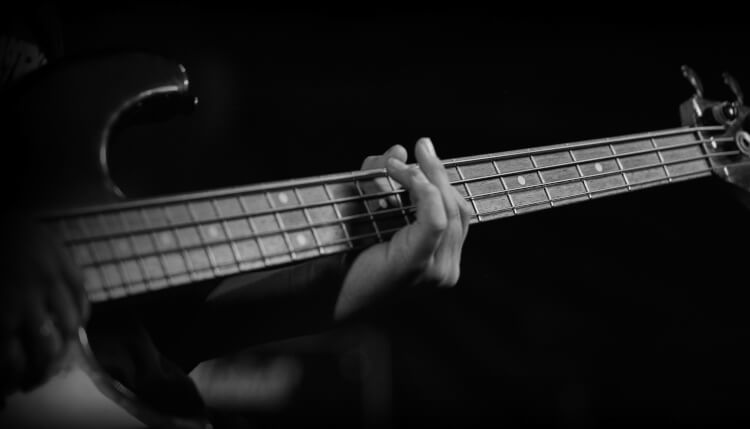 "... you watch Jimi Hendrix literally reinvent the instrument. He was playing from somewhere else. He was really a kind of hybrid, and I can't even begin to imagine where he came from" Steve Vai
Friedrich Kuhlau
Friedrich Daniel Rudolf Kuhlau (German; Danish sometimes Frederick Kulav) (11 September 1786 – 12 March 1832) was a Danish pianist and composer during the late Classical and early Romantic periods. He was a central figure of the Danish Golden Age and is immortalized in Danish cultural history through his music for Elves' Hill, the first true work of Danish National Romanticism and a concealed tribute to the absolute monarchy. To this day it is his version of this melody which is the definitive arrangement.During his lifetime, Kuhlau was known primarily as a concert pianist and composer of Danish opera, but was responsible for introducing many of Beethoven's works, which he greatly admired, to Copenhagen audiences. Kuhlau was a prolific composer, as evidenced by the fact that although his house burned down, destroying all of his unpublished manuscripts, he still left a legacy of more than 200 published works in most genres.
Ryan Elvert
Ryan Elvert (b. 1994) is a composer and a percussionist based out of Grand Rapids, Michigan. He is a graduate of Central Michigan University where he earned his Bachelor of Music Degree in Theory/Composition. While at CMU, Ryan studied percussion with Andrew Spencer and studied composition with Scott Harding, José-Luis Maúrtua, and David Gillingham. His sources of inspiration originate from classical literature, human emotion, and the aesthetic of nature. Ryan’s works for percussion have been premiered by the Central Michigan University Percussion Ensemble, RELA Percussion, re:creat duo, If + When, the Lamont School of Music at the University of Denver, and the RTÉ National Symphony Orchestra. In 2016, his composition Waters of Oblivion - for fixed media and percussion was accepted to Electronic Music Midwest. The music of Ryan Elvert is available for purchase through his website, C Alan Publications, and Heartland Marimba.
Creedence Clearwater Revival
Creedence Clearwater Revival, also referred to as Creedence and CCR, was an American rock band that recorded and performed from 1959 to 1972 under various names before settling on the Creedence Clearwater Revival name in 1967. The band initially consisted of lead vocalist, lead guitarist, and primary songwriter John Fogerty; his brother, rhythm guitarist Tom Fogerty; bassist Stu Cook; and drummer Doug Clifford. These members had played together since 1959, first as the Blue Velvets and later as the Golliwogs.
Melodibog
Melodibog A very nice study book containing all the notes of many songs.
The Beatles
The Beatles were a pop and rock group from Liverpool, England formed in 1960. Primarily consisting of John Lennon (rhythm guitar, vocals), Paul McCartney (bass guitar, vocals), George Harrison (lead guitar, vocals) and Ringo Starr (drums, vocals) throughout their career, The Beatles are recognised for leading the mid-1960s musical "British Invasion" into the United States. Although their initial musical style was rooted in 1950s rock and roll and homegrown skiffle, the group explored genres ranging from Tin Pan Alley to psychedelic rock. Their clothes, styles, and statements made them trend-setters, while their growing social awareness saw their influence extend into the social and cultural revolutions of the 1960s. After the band broke up in 1970, all four members embarked upon solo careers.
The Beatles are one of the most commercially successful and critically acclaimed bands in the history of popular music, selling over a billion records internationally. In the United Kingdom, The Beatles released more than 40 different singles, albums, and EPs that reached number one, earning more number one albums (15) than any other group in UK chart history. This commercial success was repeated in many other countries; their record company, EMI, estimated that by 1985 they had sold over one billion records worldwide. According to the Recording Industry Association of America, The Beatles have sold more albums in the United States than any other band. In 2004, Rolling Stone magazine ranked The Beatles number one on its list of 100 Greatest Artists of All Time. According to that same magazine, The Beatles' innovative music and cultural impact helped define the 1960s, and their influence on pop culture is still evident today. In 2008, Billboard magazine released a list of top-selling Hot 100 artists to celebrate the chart's fiftieth anniversary; The Beatles reached #1 again.
The Beatles are one of the most commercially successful and critically acclaimed bands in the history of popular music, selling over a billion records internationally. In the United Kingdom, The Beatles released more than 40 different singles, albums, and EPs that reached number one, earning more number one albums (15) than any other group in UK chart history. This commercial success was repeated in many other countries; their record company, EMI, estimated that by 1985 they had sold over one billion records worldwide. According to the Recording Industry Association of America, The Beatles have sold more albums in the United States than any other band. In 2004, Rolling Stone magazine ranked The Beatles number one on its list of 100 Greatest Artists of All Time. According to that same magazine, The Beatles' innovative music and cultural impact helped define the 1960s, and their influence on pop culture is still evident today. In 2008, Billboard magazine released a list of top-selling Hot 100 artists to celebrate the chart's fiftieth anniversary; The Beatles reached #1 again.
Bach
Johann Sebastian Bach (31 March 1685 – 28 July 1750) was a German composer and organist whose sacred and secular works for choir, orchestra, and solo instruments drew together the strands of the Baroque period and brought it to its ultimate maturity. Although he introduced no new forms, he enriched the prevailing German style with a robust contrapuntal technique, an unrivalled control of harmonic and motivic organisation in composition for diverse musical forces, and the adaptation of rhythms and textures from abroad, particularly Italy and France.
Revered for their intellectual depth and technical and artistic beauty, Bach's works include the Brandenburg concertos; the Goldberg Variations; the English Suites, French Suites, Partitas, and Well-Tempered Clavier; the Mass in B Minor; the St. Matthew Passion; the St. John Passion; The Musical Offering; The Art of Fugue; the Sonatas and Partitas for violin solo; the Cello Suites; more than 200 surviving cantatas; and a similar number of organ works, including the celebrated Toccata and Fugue in D Minor.
While Bach's fame as an organist was great during his lifetime, he was not particularly well-known as a composer. His adherence to Baroque forms and contrapuntal style was considered "old-fashioned" by his contemporaries, especially late in his career when the musical fashion tended towards Rococo and later Classical styles. A revival of interest and performances of his music began early in the 19th century, and he is now widely considered to be one of the greatest composers in the Western tradition.
Revered for their intellectual depth and technical and artistic beauty, Bach's works include the Brandenburg concertos; the Goldberg Variations; the English Suites, French Suites, Partitas, and Well-Tempered Clavier; the Mass in B Minor; the St. Matthew Passion; the St. John Passion; The Musical Offering; The Art of Fugue; the Sonatas and Partitas for violin solo; the Cello Suites; more than 200 surviving cantatas; and a similar number of organ works, including the celebrated Toccata and Fugue in D Minor.
While Bach's fame as an organist was great during his lifetime, he was not particularly well-known as a composer. His adherence to Baroque forms and contrapuntal style was considered "old-fashioned" by his contemporaries, especially late in his career when the musical fashion tended towards Rococo and later Classical styles. A revival of interest and performances of his music began early in the 19th century, and he is now widely considered to be one of the greatest composers in the Western tradition.
Edvard Grieg
Edvard Hagerup Grieg (15 June 1843 – 4 September 1907) was a Norwegian composer and pianist who composed in the Romantic period. He is best known for his Piano Concerto in A minor, for his incidental music to Henrik Ibsen's play Peer Gynt (which includes Morning Mood and In the Hall of the Mountain King), and for his collection of piano miniatures Lyric Pieces. "Edvard" is sometimes mispelt as "Edward".
Grieg is renowned as a nationalist composer, drawing inspiration from Norwegian folk music. Early works include a symphony (which he later suppressed) and a piano sonata. He also wrote three sonatas for violin and piano and a cello sonata. His many short pieces for piano — often based on Norwegian folk tunes and dances — led some to call him the "Chopin of the North".
Concerto in A minor: 1. Allegro molto moderato
Performed by the University of Washington Symphony, conducted by Peter Erős (Neal O'Doan, piano)
Concerto in A minor: 1. Allegro molto moderato
Performed by the Skidmore College Orchestra (courtesy of Musopen)
Concerto in A minor: 2. Adagio
Performed by the University of Washington Symphony, conducted by Peter Erős (Neal O'Doan, piano)
Concerto in A minor: 2. Adagio
Performed by the Skidmore College Orchestra (courtesy of Musopen)
Concerto in A minor: 3. Allegro moderato molto e marcato
Performed by the University of Washington Symphony, conducted by Peter Erős (Neal O'Doan, piano)
Concerto in A minor: 3. Allegro moderato molto e marcato
Performed by the Skidmore College Orchestra (courtesy of Musopen)
Notturno, Op. 54, No. 4
Performed live by Mark Gasser
Problems listening to these files? See media help.
The Piano Concerto is his most popular work. Its champions have included the pianist and composer Percy Grainger, a personal friend of Grieg who played the concerto frequently during his long career. An arrangement of part of the work made an iconic television comedy appearance in the 1971 Morecambe and Wise Show, conducted by André Previn.
Some of the Lyric Pieces (for piano) are also well-known, as is the incidental music to Henrik Ibsen's play Peer Gynt, a play that Grieg found to be an arduous work to score properly. In a 1874 letter to his friend Frants Beyer, Grieg expressed his unhappiness with what is now considered one of his most popular compositions from Peer Gynt, In the Hall of the Mountain King: "I have also written something for the scene in the hall of the mountain King - something that I literally can't bear listening to because it absolutely reeks of cow-pies, exaggerated Norwegian nationalism, and trollish self-satisfaction! But I have a hunch that the irony will be discernible."
Grieg is renowned as a nationalist composer, drawing inspiration from Norwegian folk music. Early works include a symphony (which he later suppressed) and a piano sonata. He also wrote three sonatas for violin and piano and a cello sonata. His many short pieces for piano — often based on Norwegian folk tunes and dances — led some to call him the "Chopin of the North".
Concerto in A minor: 1. Allegro molto moderato
Performed by the University of Washington Symphony, conducted by Peter Erős (Neal O'Doan, piano)
Concerto in A minor: 1. Allegro molto moderato
Performed by the Skidmore College Orchestra (courtesy of Musopen)
Concerto in A minor: 2. Adagio
Performed by the University of Washington Symphony, conducted by Peter Erős (Neal O'Doan, piano)
Concerto in A minor: 2. Adagio
Performed by the Skidmore College Orchestra (courtesy of Musopen)
Concerto in A minor: 3. Allegro moderato molto e marcato
Performed by the University of Washington Symphony, conducted by Peter Erős (Neal O'Doan, piano)
Concerto in A minor: 3. Allegro moderato molto e marcato
Performed by the Skidmore College Orchestra (courtesy of Musopen)
Notturno, Op. 54, No. 4
Performed live by Mark Gasser
Problems listening to these files? See media help.
The Piano Concerto is his most popular work. Its champions have included the pianist and composer Percy Grainger, a personal friend of Grieg who played the concerto frequently during his long career. An arrangement of part of the work made an iconic television comedy appearance in the 1971 Morecambe and Wise Show, conducted by André Previn.
Some of the Lyric Pieces (for piano) are also well-known, as is the incidental music to Henrik Ibsen's play Peer Gynt, a play that Grieg found to be an arduous work to score properly. In a 1874 letter to his friend Frants Beyer, Grieg expressed his unhappiness with what is now considered one of his most popular compositions from Peer Gynt, In the Hall of the Mountain King: "I have also written something for the scene in the hall of the mountain King - something that I literally can't bear listening to because it absolutely reeks of cow-pies, exaggerated Norwegian nationalism, and trollish self-satisfaction! But I have a hunch that the irony will be discernible."
Traditional
Scott Colley
Scott Colley (born November 24, 1963) is an American jazz double bassist and composer. He has performed in bands led by Herbie Hancock, Jim Hall, Andrew Hill, Michael Brecker, Chris Potter, Pat Metheny, Carmen McRae, Edward Simon, Adam Rogers, Brian Blade, David Binney, Antonio Sanchez, Kenny Werner.
Prokofiev
Sergei Sergeyevich Prokofiev (Russian: Сергей Сергеевич Прокофьев; Ukrainian: Сергій Сергійович Прокоф'єв) (27 April 1891 – 5 March 1953) was a Russian composer, pianist and conductor who mastered numerous musical genres and came to be admired as one of the greatest composers of the 20th century.
Prokofiev was a soloist with the London Symphony Orchestra, conducted by Piero Coppola, in the first recording of his Piano Concerto No. 3, recorded in London by His Master's Voice in June 1932. Prokofiev also recorded some of his solo piano music for HMV in Paris in February 1935; these recordings were issued on CD by Pearl and Naxos. In 1938, he conducted the Moscow Philharmonic Orchestra in a recording of the second suite from his Romeo and Juliet ballet; this performance was also later released on LP and CD. Another reported recording with Prokofiev and the Moscow Philharmonic was of the First Violin Concerto with David Oistrakh as soloist; Everest Records later released this recording on an LP.
Prokofiev was a soloist with the London Symphony Orchestra, conducted by Piero Coppola, in the first recording of his Piano Concerto No. 3, recorded in London by His Master's Voice in June 1932. Prokofiev also recorded some of his solo piano music for HMV in Paris in February 1935; these recordings were issued on CD by Pearl and Naxos. In 1938, he conducted the Moscow Philharmonic Orchestra in a recording of the second suite from his Romeo and Juliet ballet; this performance was also later released on LP and CD. Another reported recording with Prokofiev and the Moscow Philharmonic was of the First Violin Concerto with David Oistrakh as soloist; Everest Records later released this recording on an LP.
Joe Zawinul
Josef Erich Zawinul (July 7, 1932 – September 11, 2007) was an Austrian jazz keyboardist and composer.
First coming to prominence with saxophonist Cannonball Adderley, Zawinul went on to play with trumpeter Miles Davis, and to become one of the creators of jazz fusion, an innovative musical genre that combined jazz with elements of rock and world music. Later, Zawinul co-founded the groups Weather Report and the world fusion music oriented Zawinul Syndicate. Additionally, he made pioneering use of electric piano and synthesizers. Zawinul won the "Best Keyboardist" award 30 times from American jazz magazine Down Beat's critics' poll.
Several artists have honored Zawinul with songs, notably Brian Eno's instrumental "Zawinul/Lava", John McLaughlin's instrumental "Jozy", Warren Cuccurullo's "Hey Zawinul", Bob Baldwin's "Joe Zawinul", and Biréli Lagrène's instrumental "Josef". Zawinul's playing style is often dominated by quirky melodic improvisations —both bebop, ethnic and pop sounding— combined with sparse but rhythmic playing of big-band sounding chords or bass lines. In Weather Report, he often employed a vocoder as well as pre-recorded sounds played (i.e filtered and transposed) through a synthesizer, creating a very distinctive, often beautiful, synthesis of jazz harmonics and "noise" ("using all the sounds the world generates"). Many considered Zawinul as the "best" synthesizer player "in jazz", frequently employing several keyboards with live settings of his bands.
First coming to prominence with saxophonist Cannonball Adderley, Zawinul went on to play with trumpeter Miles Davis, and to become one of the creators of jazz fusion, an innovative musical genre that combined jazz with elements of rock and world music. Later, Zawinul co-founded the groups Weather Report and the world fusion music oriented Zawinul Syndicate. Additionally, he made pioneering use of electric piano and synthesizers. Zawinul won the "Best Keyboardist" award 30 times from American jazz magazine Down Beat's critics' poll.
Several artists have honored Zawinul with songs, notably Brian Eno's instrumental "Zawinul/Lava", John McLaughlin's instrumental "Jozy", Warren Cuccurullo's "Hey Zawinul", Bob Baldwin's "Joe Zawinul", and Biréli Lagrène's instrumental "Josef". Zawinul's playing style is often dominated by quirky melodic improvisations —both bebop, ethnic and pop sounding— combined with sparse but rhythmic playing of big-band sounding chords or bass lines. In Weather Report, he often employed a vocoder as well as pre-recorded sounds played (i.e filtered and transposed) through a synthesizer, creating a very distinctive, often beautiful, synthesis of jazz harmonics and "noise" ("using all the sounds the world generates"). Many considered Zawinul as the "best" synthesizer player "in jazz", frequently employing several keyboards with live settings of his bands.
Janek Gwizdala
Gwizdala's beginnings in music started at age 11 with classical guitar lessons at the Merton Music Foundation from Peter Woodings, as well as study in classical music through brass ensembles and orchestral percussion, drum lessons with now Buzzcocks drummer Danny Farrant, and participation in almost every style and genre of ensemble that was offered by the MMF. Through these early years Gwizdala's main interest was in drums, and it was the lure of one of his favorite drummers, Ian Thomas, that convinced him to attend a local jazz gig at the Gun Tavern in Croydon with a friend, the band leader Laurence Cottle. The next day a bass was purchased and Gwizdala followed Cottle around London and the UK, learning everything he could.
La oreja de Van Gogh
La Oreja de Van Gogh (English: Van Gogh's Ear) is a Latin Grammy winning and Grammy nominated Spanish pop band from Donostia-San Sebastian. The name of the band references the famous post-impressionist painter Vincent van Gogh who cut off the lobe of his own ear. Their characteristically poetic songs (both lyrics and music) are written mainly by band members Pablo Benegas, Xabi San Martín and Amaia Montero. The themes of their songs usually include love, friendship, relationships. Since their debut, they have sold more than 6 million copies worldwide of their four albums. In November 2007, lead singer Amaia Montero announced that she would be leaving the group to begin a solo career. Her replacement, Leire Martínez, was announced in July 2008, along with the band's first single "El Último Vals" from their album titled A las cinco en el Astoria which was released on September 2 2008. Leire was discovered on the Spanish reality show Factor X.
Clark Murray
Clark Murray (born 1938) is an American sculptor who is best known for his large outdoor constructions of welded and painted steel pipes.Sculptures by Clark Murray include:White Mountains, a 1977 three-ton welded steel pipe sculpture was on loan for a brief time beginning in 1982 at the Laumeier Sculpture Park (St. Louis, Missouri. Its current location is unknown.A 1973 untitled painted steel pipe sculpture at the University of St. Thomas (Houston, Texas) owned by the Menil CollectionA 1974-5 untitled painted steel sculpture at the Museum of Fine Arts, Houston (Houston, Texas)
Hilton Ruiz
Hilton Ruiz was an American jazz pianist in the Afro-Cuban jazz mold, but was also a talented bebop player. He was of Puerto Rican descent.
Chic
Chic or Nile Rodgers, now known as Chic, is an American band founded in 1976 by guitarist Nile Rodgers and bassist Bernard Edwards. He recorded many commercially successful disco songs such as "Dance, Dance, Dance", "Everybody Dance", "Le Freak", "I Want Your Love", Good Times, My Forbidden Lover.
Randy Randolph
Randy Randolph Musician Songs Percolator Percolator / Yakety Sax · 2008 Yakety Sax Percolator / Yakety Sax · 2018
Greenback Dollar
Greenback Dollar
Georg Philipp Telemann
Georg Philipp Telemann was a German Baroque composer and multi-instrumentalist. Almost completely self-taught in music, he became a composer against his family's wishes.
bill mays
William Allen Mays (born February 5, 1944), known professionally as Bill Mays, is an American jazz pianist from Sacramento, CaliforniaHe came from a musical family and at the age of 15 became interested in jazz at an Earl Hines concert.From 1969 to the early 1980s Mays worked as a studio session musician in Los Angeles. He has been an accompanist to singers Al Jarreau, Peggy Lee, Anita O'Day, Frank Sinatra, Sarah Vaughan and Dionne Warwick, and also worked with artists such as Don Ellis, Mel Lewis, Barry Manilow, Shelly Manne, Bob Mintzer, Red Mitchell, Gerry Mulligan, Art Pepper, Bud Shank, Bobby Shew, Sonny Stitt, Paul Winter, Phil Woods and Frank Zappa. In 1984, he moved to New York City and began to do more work as a bandleader, composer, and arranger.
Dario Castello
Dario Castello was an Italian composer and violinist from the early Baroque period who worked and published in Venice. As a composer, he was a late member of the Venetian School and had a role in the transformation of the instrumental canzona into the sonata.
Flávio Venturini
Flávio Hugo Venturini (born July 23, 1949) is a Brazilian singer and songwriter.Venturini took an early interest in music at the age of three. When he was fifteen he began his musical training. His first musical instrument was the accordion. After his father presented him with a piano, he started his studies at the Fundação de Educação Artística in Belo Horizonte, where he studied musical perception and piano.
Count Basie
Count Basie Jazz pianist William "Count" Basie is an American jazz pianist, organist and jazz orchestra conductor.
Date of birth: August 21, 1904, Red Bank, New Jersey, USA Date and place of death: April 26, 1984, Hollywood, Florida, USA Instrument: Piano; Organ
Date of birth: August 21, 1904, Red Bank, New Jersey, USA Date and place of death: April 26, 1984, Hollywood, Florida, USA Instrument: Piano; Organ
Bradley Nowell
Bradley James Nowell (February 22, 1968 – May 25, 1996) was an American musician and the lead singer and guitarist of the ska punk band Sublime.Born and raised in Belmont Shore, Long Beach, California, Nowell developed an interest in music at a young age. His father took him on a trip to Jamaica during his childhood years, which exposed him to reggae and dancehall music; he then gained a strong interest in rock music once he learned how to play guitar. Nowell played in various bands until forming Sublime with bassist Eric Wilson and drummer Bud Gaugh, whom he had met while attending California State University at Long Beach. In his lifetime, Sublime released the albums 40oz. to Freedom and Robbin' the Hood to critical and commercial success.
Barry Manilow
Barry Manilow (born June 17, 1943) is an American singer-songwriter, musician, arranger, producer and conductor, best known for such recordings as I Write the Songs, Mandy, Weekend in New England and Copacabana.
Manilow's achievements include sales of more than 76 million records worldwide. In 1978, five of his albums were on the best-selling charts simultaneously; a feat equalled only by Frank Sinatra and Johnny Mathis. He has recorded a string of Billboard hit singles and multi-platinum albums that have resulted in his being named Radio & Records number one Adult Contemporary artist and winning three straight American Music Awards for Favorite Pop/Rock Male Artist. Several well-known entertainers have given Manilow their "stamp of approval," including Sinatra, who was quoted in the 1970s regarding Manilow, "He's next." In 1988, Bob Dylan stopped Manilow at a party, hugged him and said, "Don't stop what you're doing, man. We're all inspired by you." Arsenio Hall cited Manilow as a favorite guest on The Arsenio Hall Show and admonished his audience to respect him for his work.
As well as producing and arranging albums for other artists, such as Bette Midler, Dionne Warwick and Rosemary Clooney, Manilow has written songs for musicals, films, and commercials.
Since February 2005, he has been the headliner at the Las Vegas Hilton, and has performed hundreds of shows since.
Manilow's achievements include sales of more than 76 million records worldwide. In 1978, five of his albums were on the best-selling charts simultaneously; a feat equalled only by Frank Sinatra and Johnny Mathis. He has recorded a string of Billboard hit singles and multi-platinum albums that have resulted in his being named Radio & Records number one Adult Contemporary artist and winning three straight American Music Awards for Favorite Pop/Rock Male Artist. Several well-known entertainers have given Manilow their "stamp of approval," including Sinatra, who was quoted in the 1970s regarding Manilow, "He's next." In 1988, Bob Dylan stopped Manilow at a party, hugged him and said, "Don't stop what you're doing, man. We're all inspired by you." Arsenio Hall cited Manilow as a favorite guest on The Arsenio Hall Show and admonished his audience to respect him for his work.
As well as producing and arranging albums for other artists, such as Bette Midler, Dionne Warwick and Rosemary Clooney, Manilow has written songs for musicals, films, and commercials.
Since February 2005, he has been the headliner at the Las Vegas Hilton, and has performed hundreds of shows since.
Vittorio Monti
Vittorio Monti (6 January 1868 – 20 June 1922) was an Italian composer, violinist, and conductor. Monti was born in Naples where he studied violin and composition at the Conservatorio di San Pietro a Majella. Around 1900 he got an assignment as the conductor for the Lamoureux Orchestra in Paris, where he wrote several ballets and operettas, for example Noël de Pierrot.
His only famous work is his Csárdás, written around 1904 and played by almost every gypsy orchestra.
His only famous work is his Csárdás, written around 1904 and played by almost every gypsy orchestra.
Jazz Standard
Autumn Leaves" is a popular song and jazz standard composed by Joseph Kosma with original lyrics by Jacques Prévert in French, and later by Johnny Mercer in English. An instrumental version by pianist Roger Williams was a #1 best-seller in the USA Billboard charts of 1955.
Antonin Dvorak
Antonín Leopold Dvořák (English pronunciation: /ˈdvɒrʒɑːk/ DVOR-zhahk or /ˈdvɒrʒæk/ DVOR-zhak; Czech: ( listen); September 8, 1841 – May 1, 1904) was a Czech composer of Romantic music, who employed the idioms of the folk music of Moravia and his native Bohemia. His works include operas, symphonic, choral and chamber music. His best-known works include his New World Symphony, the Slavonic Dances, "American" String Quartet, and Cello Concerto in B minor.
Dvořák wrote in a variety of forms: his nine symphonies generally stick to classical models that Beethoven would have recognised, but he also worked in the newly developed symphonic poem form and the influence of Richard Wagner is apparent in some works. Many of his works also show the influence of Czech folk music, both in terms of rhythms and melodic shapes; perhaps the best known examples are the two sets of Slavonic Dances. Dvořák also wrote operas (of which the best known is Rusalka); serenades for string orchestra and wind ensemble; chamber music (including a number of string quartets, and quintets); songs; choral music; and piano music.
Dvořák wrote in a variety of forms: his nine symphonies generally stick to classical models that Beethoven would have recognised, but he also worked in the newly developed symphonic poem form and the influence of Richard Wagner is apparent in some works. Many of his works also show the influence of Czech folk music, both in terms of rhythms and melodic shapes; perhaps the best known examples are the two sets of Slavonic Dances. Dvořák also wrote operas (of which the best known is Rusalka); serenades for string orchestra and wind ensemble; chamber music (including a number of string quartets, and quintets); songs; choral music; and piano music.
Bob Maize
Bob Maize was an American jazz double bassist born and raised in Ontario California. Maize played piano from age seven and switched to bass at 13. After moving to San Francisco in 1963, Maize worked in the house bands of many jazz clubs in the city, including Soulville and Bop City.
Thos. M. Bowers
Thomas J. Bowers (c. 1823–October 3, 1885), also known as "The Colored Mario", was an American concert artist. He studied voice with African-American concert artist Elizabeth Taylor Greenfield and toured with her troupe for a few years before embarking on his own successful solo career. He was the brother of professional singer Sarah Sedgwick Bowers, known as "the Colored Nightingale", and John C. Bowers, a Philadelphia entrepreneur and church organist.
Juan Salinas
After having released several singers under his own record label for 5 years, and having been traveling around the world carrying the message of Jesus Christ, the outstanding Christian composer and producer Juan Salinas, presents the first major production of his band Juan Salinas Band (JSB) titled Unico Amor... Unico Amor contains 11 original songs by Juan Salinas and Emmanuel Espinosa in pop-rock rhythms and ballads with some Caribbean arrangements, in the voices of Juan Salinas Band, made up of Gabriela Gabby Vainstein (Vocalist) , Willjosmer Will Mora (Vocalist) and Juan Salinas (Backing vocals, programming and guitars).
Juan Luis Guerra
Juan Luis Guerra Seijas is a Dominican musician, singer, composer, and record producer. He has sold 30 million records worldwide, making him one of the best-selling Latin music artists.
Tom Waits
Thomas Alan Waits (born 7 December 1949) is an American singer-songwriter, composer, and actor. Waits has a distinctive voice, described by critic Daniel Durchholz as sounding "like it was soaked in a vat of bourbon, left hanging in the smokehouse for a few months, and then taken outside and run over with a car." With this trademark growl, his incorporation of pre-rock styles such as blues, jazz, and vaudeville, and experimental tendencies verging on industrial music, Waits has built up a distinctive musical persona. He has worked as a composer for movies and musical plays and as a supporting actor in films, including The Fisher King, Coffee & Cigarettes, Bram Stoker's Dracula, and Short Cuts. He was nominated for an Academy Award for his soundtrack work on One from the Heart.
Lyrically, Waits' songs contain atmospheric portrayals of bizarre, seedy characters and places, although he has also shown a penchant for more conventional ballads. He has a cult following and has influenced subsequent songwriters despite having little radio or music video support. His songs are best-known to the general public in the form of cover versions by more visible artistsâfor example, "Jersey Girl," performed by Bruce Springsteen; "Downtown Train" and "Tom Traubert's Blues" performed by Rod Stewart; and "Ol' '55," performed by the Eagles. Although Waits' albums have met with mixed commercial success in his native United States, they have occasionally achieved gold album sales status in other countries. He has been nominated for a number of major music awards and has won Grammy Awards for two albums, Bone Machine and Mule Variations.
Waits currently lives in Sonoma County, California with his wife and their three children.
Lyrically, Waits' songs contain atmospheric portrayals of bizarre, seedy characters and places, although he has also shown a penchant for more conventional ballads. He has a cult following and has influenced subsequent songwriters despite having little radio or music video support. His songs are best-known to the general public in the form of cover versions by more visible artistsâfor example, "Jersey Girl," performed by Bruce Springsteen; "Downtown Train" and "Tom Traubert's Blues" performed by Rod Stewart; and "Ol' '55," performed by the Eagles. Although Waits' albums have met with mixed commercial success in his native United States, they have occasionally achieved gold album sales status in other countries. He has been nominated for a number of major music awards and has won Grammy Awards for two albums, Bone Machine and Mule Variations.
Waits currently lives in Sonoma County, California with his wife and their three children.
Music theory
Music theory is the study of the practices and possibilities of music. The Oxford Companion to Music describes three interrelated uses of the term "music theory"
Yoko Kanno
Yoko Kanno (菅野 よう子 Kanno Yōko?, born March 19, 1964 in Miyagi Prefecture, Japan) is a composer, arranger and musician best known for her work on the soundtracks for many games, anime films, TV series, live-action movies, and advertisements. She has written scores for famous animated works, including Macross Plus, Turn A Gundam, Cowboy Bebop, The Vision of Escaflowne, Ghost in the Shell: Stand Alone Complex, Wolf's Rain, and is the most trusted composer by veteran and new-wave directors such as Yoshiyuki Tomino, Shinichiro Watanabe and Shoji Kawamori. Kanno has also composed music for J-pop artists, the most notable being Maaya Sakamoto and Kyōko Koizumi. She is also a skilled keyboardist, and is the frontwoman for The Seatbelts, who perform many of Kanno's compositions on the various original soundtracks for which she is responsible.
Scissor Sisters
Scissor Sisters; Scissor Sisters was founded in 2001, consisting of Jake Shears, Babydaddy, Ana matronik, Del Marquis and Paddy Boom. They started their music life in New York, New York, USA (2000) Albums: Ta-dah, Night Work, Magic Hour, Scissor Sisters, MORE Genres: Alternative Rock, Indie Pop, Glam Rock, Nu-Disco, Elektroclash
Miles Davis
Miles Dewey Davis III (May 26, 1926 – September 28, 1991) was an American trumpeter, bandleader, and composer.
Widely considered one of the most influential musicians of the 20th century, Miles Davis was, with his musical groups, at the forefront of several major developments in jazz music, including bebop, cool jazz, hard bop, modal jazz, and jazz fusion. Many well-known musicians rose to prominence as members of Davis' ensembles, including saxophonists Gerry Mulligan, John Coltrane, Cannonball Adderley, George Coleman, Wayne Shorter, Dave Liebman, Branford Marsalis and Kenny Garrett; trombonist J. J. Johnson; pianists Horace Silver, Red Garland, Wynton Kelly, Bill Evans, Herbie Hancock, Joe Zawinul, Chick Corea, and Keith Jarrett; guitarists John McLaughlin, Pete Cosey, John Scofield and Mike Stern; bassists Paul Chambers, Ron Carter, Dave Holland, Marcus Miller and Darryl Jones ; and drummers Philly Joe Jones, Jimmy Cobb, Tony Williams, Billy Cobham, Jack DeJohnette, and Al Foster.
On October 7, 2008, his album Kind of Blue, released in 1959, received its fourth platinum certification from the RIAA, signifying sales of 4 million copies. Miles Davis was inducted into the Rock and Roll Hall of Fame in 2006. Davis was noted as "one of the key figures in the history of jazz".
On November 5, 2009, Rep. John Conyers of Michigan sponsored a measure in the US House of Representatives to recognize and commemorate the album Kind of Blue on its 50th anniversary. The measure also affirms jazz as a national treasure and "encourages the United States government to preserve and advance the art form of jazz music." It passed, unanimously, with a vote of 409–0 on December 15, 2009.
Widely considered one of the most influential musicians of the 20th century, Miles Davis was, with his musical groups, at the forefront of several major developments in jazz music, including bebop, cool jazz, hard bop, modal jazz, and jazz fusion. Many well-known musicians rose to prominence as members of Davis' ensembles, including saxophonists Gerry Mulligan, John Coltrane, Cannonball Adderley, George Coleman, Wayne Shorter, Dave Liebman, Branford Marsalis and Kenny Garrett; trombonist J. J. Johnson; pianists Horace Silver, Red Garland, Wynton Kelly, Bill Evans, Herbie Hancock, Joe Zawinul, Chick Corea, and Keith Jarrett; guitarists John McLaughlin, Pete Cosey, John Scofield and Mike Stern; bassists Paul Chambers, Ron Carter, Dave Holland, Marcus Miller and Darryl Jones ; and drummers Philly Joe Jones, Jimmy Cobb, Tony Williams, Billy Cobham, Jack DeJohnette, and Al Foster.
On October 7, 2008, his album Kind of Blue, released in 1959, received its fourth platinum certification from the RIAA, signifying sales of 4 million copies. Miles Davis was inducted into the Rock and Roll Hall of Fame in 2006. Davis was noted as "one of the key figures in the history of jazz".
On November 5, 2009, Rep. John Conyers of Michigan sponsored a measure in the US House of Representatives to recognize and commemorate the album Kind of Blue on its 50th anniversary. The measure also affirms jazz as a national treasure and "encourages the United States government to preserve and advance the art form of jazz music." It passed, unanimously, with a vote of 409–0 on December 15, 2009.
Alan Silvestri
Alan Anthony Silvestri (born March 26, 1950) is an Academy Award-nominated American film score composer and conductor.
estri is best known for his collaborations with director Robert Zemeckis, having scored Romancing the Stone (1984), the Back to the Future trilogy (1985, 1989, 1990), Who Framed Roger Rabbit (1988), Death Becomes Her (1992), Forrest Gump (1994), Contact (1997), Cast Away (2000), The Polar Express (2004) , Beowulf (2007) and Disney's A Christmas Carol (2009).
Silvestri is also known for his work on Predator (1987) and Predator 2 (1990), both of which are considered preeminent examples of action/sci-fi film scores. He has also begun a collaboration with director Stephen Sommers, scoring the films The Mummy Returns in 2001, Van Helsing in 2004 and G.I. Joe: The Rise of Cobra in 2009.
Silvestri also composed music for television, including for the series Starsky & Hutch, CHiPs , Manimal and HBO's Tales from the Crypt.
Silvestri was 21 years old when he started his film/televsion composing career.
His early style is marked by a strong use of the "octatonic scale," as well as an eclectic use of different notes and instruments.
It was thought that Silvestri was allegedly inspired by the works of Barry DeVorzon, Perry Botkin, Jr., Lalo Schifrin, Jerry Fielding, Jerry Goldsmith and John Williams.
estri is best known for his collaborations with director Robert Zemeckis, having scored Romancing the Stone (1984), the Back to the Future trilogy (1985, 1989, 1990), Who Framed Roger Rabbit (1988), Death Becomes Her (1992), Forrest Gump (1994), Contact (1997), Cast Away (2000), The Polar Express (2004) , Beowulf (2007) and Disney's A Christmas Carol (2009).
Silvestri is also known for his work on Predator (1987) and Predator 2 (1990), both of which are considered preeminent examples of action/sci-fi film scores. He has also begun a collaboration with director Stephen Sommers, scoring the films The Mummy Returns in 2001, Van Helsing in 2004 and G.I. Joe: The Rise of Cobra in 2009.
Silvestri also composed music for television, including for the series Starsky & Hutch, CHiPs , Manimal and HBO's Tales from the Crypt.
Silvestri was 21 years old when he started his film/televsion composing career.
His early style is marked by a strong use of the "octatonic scale," as well as an eclectic use of different notes and instruments.
It was thought that Silvestri was allegedly inspired by the works of Barry DeVorzon, Perry Botkin, Jr., Lalo Schifrin, Jerry Fielding, Jerry Goldsmith and John Williams.
Billy Joel
William Martin Joel (born May 9, 1949) is an American pianist and singer-songwriter. He released his first hit song, "Piano Man", in 1973. According to the RIAA, he is the sixth best-selling recording artist in the United States.
Joel had Top 10 hits in the '70s, '80s, and '90s; is a six-time Grammy Award winner, and has sold in excess of 150 million albums worldwide. He was inducted into the Songwriter's Hall of Fame (Class of 1992), the Rock and Roll Hall of Fame (Class of 1999), and the Long Island Music Hall of Fame (Class of 2006). Joel "retired" from recording pop music in 1993 but continued to tour (sometimes with Elton John). In 2001 he subsequently released Fantasies & Delusions, a CD of classical compositions for piano. In 2007 he returned to recording with a single entitled "All My Life," followed by an extensive "World Tour" from 2006-2008, covering many of the major world cities.
Joel had Top 10 hits in the '70s, '80s, and '90s; is a six-time Grammy Award winner, and has sold in excess of 150 million albums worldwide. He was inducted into the Songwriter's Hall of Fame (Class of 1992), the Rock and Roll Hall of Fame (Class of 1999), and the Long Island Music Hall of Fame (Class of 2006). Joel "retired" from recording pop music in 1993 but continued to tour (sometimes with Elton John). In 2001 he subsequently released Fantasies & Delusions, a CD of classical compositions for piano. In 2007 he returned to recording with a single entitled "All My Life," followed by an extensive "World Tour" from 2006-2008, covering many of the major world cities.
Nat King Cole
Nathaniel Adams Coles (March 17, 1919 â February 15, 1965), known professionally as Nat King Cole, was an American musician.
Cole first came to prominence as a leading jazz pianist, then switched his emphasis to singing, becoming one of the most popular and best known vocalists of all time.
Cole's first mainstream vocal hit was his 1943 recording of one of his compositions, "Straighten Up and Fly Right", based on a black folk tale that his father had used as a theme for a sermon. Johnny Mercer invited him to record it for the fledgling Capitol Records label. It sold over 500,000 copies, and proved that folk-based material could appeal to a wide audience. Although Nat would never be considered a rocker, the song can be seen as anticipating the first rock and roll records. Indeed, Bo Diddley, who performed similar transformations of folk material, counted Cole as an influence.
Beginning in the late 1940s, Cole began recording and performing more pop-oriented material for mainstream audiences, often accompanied by a string orchestra. His stature as a popular icon was cemented during this period by hits such as "The Christmas Song" (Cole recorded the tune four times: June 14, 1946 as a pure Trio recording; August 19, 1946 with an added string section; August 24, 1953; and again in 1961 for the double album, The Nat King Cole Story. This final version, recorded in stereo, is the one most often heard today.), "Nature Boy" (1948), "Mona Lisa" (1950), "Too Young" (the #1 song in 1951), and his signature tune "Unforgettable" (1951). While this shift to pop music led some jazz critics and fans to accuse Cole of selling out, he never totally abandoned his jazz roots; as late as 1956, for instance, he recorded an all-jazz album, After Midnight.
His last album, L-O-V-E, was recorded in early December 1964 â just a few days before entering the hospital for lung cancer treatment â and released just prior to his death; it peaked at #4 on the Billboard Albums chart in the spring of 1965. A Best Of album went gold in 1968. His 1957 recording of "When I Fall In Love" reached #4 in the UK charts in 1987.
Cole first came to prominence as a leading jazz pianist, then switched his emphasis to singing, becoming one of the most popular and best known vocalists of all time.
Cole's first mainstream vocal hit was his 1943 recording of one of his compositions, "Straighten Up and Fly Right", based on a black folk tale that his father had used as a theme for a sermon. Johnny Mercer invited him to record it for the fledgling Capitol Records label. It sold over 500,000 copies, and proved that folk-based material could appeal to a wide audience. Although Nat would never be considered a rocker, the song can be seen as anticipating the first rock and roll records. Indeed, Bo Diddley, who performed similar transformations of folk material, counted Cole as an influence.
Beginning in the late 1940s, Cole began recording and performing more pop-oriented material for mainstream audiences, often accompanied by a string orchestra. His stature as a popular icon was cemented during this period by hits such as "The Christmas Song" (Cole recorded the tune four times: June 14, 1946 as a pure Trio recording; August 19, 1946 with an added string section; August 24, 1953; and again in 1961 for the double album, The Nat King Cole Story. This final version, recorded in stereo, is the one most often heard today.), "Nature Boy" (1948), "Mona Lisa" (1950), "Too Young" (the #1 song in 1951), and his signature tune "Unforgettable" (1951). While this shift to pop music led some jazz critics and fans to accuse Cole of selling out, he never totally abandoned his jazz roots; as late as 1956, for instance, he recorded an all-jazz album, After Midnight.
His last album, L-O-V-E, was recorded in early December 1964 â just a few days before entering the hospital for lung cancer treatment â and released just prior to his death; it peaked at #4 on the Billboard Albums chart in the spring of 1965. A Best Of album went gold in 1968. His 1957 recording of "When I Fall In Love" reached #4 in the UK charts in 1987.
Scarlatti
Giuseppe Domenico Scarlatti was an Italian composer. He is classified primarily as a Baroque composer chronologically, although his music was influential in the development of the Classical style and he was one of the few Baroque composers to transition into the classical period.
Coldplay
Coldplay are a rock band formed in London, England in 1997. The group comprises vocalist/pianist/guitarist Chris Martin, lead guitarist Jonny Buckland, bassist Guy Berryman, and drummer/multi-instrumentalist Will Champion. Coldplay have sold 34.6 million albums, and are also known for their hit singles, such as "Yellow", "The Scientist", "Speed of Sound", "Fix You", "Viva la Vida" and the Grammy Award-winning "Clocks".
Coldplay achieved worldwide fame with the release of their single "Yellow", followed by their debut album, Parachutes (2000), which was nominated for the Mercury Prize. Its follow-up, A Rush of Blood to the Head (2002) won multiple awards such as NME's Album of the Year and was later included on Rolling Stone magazine's 500 Greatest Albums of All Time list, ranking at #473. Their next release, X&Y (2005), received a slightly less enthusiastic yet still generally positive reception. The band's fourth studio album, Viva la Vida or Death and All His Friends (2008), was produced by Brian Eno and released again to largely favourable reviews. All of Coldplay's albums have enjoyed great commercial success.
Coldplay's early material was compared to acts such as Jeff Buckley, U2, and Travis. Coldplay have been an active supporter of various social and political causes, such as Oxfam's Make Trade Fair campaign and Amnesty International. The group have also performed at various charity projects such as Band Aid 20, Live 8, and the Teenage Cancer Trust.
Coldplay achieved worldwide fame with the release of their single "Yellow", followed by their debut album, Parachutes (2000), which was nominated for the Mercury Prize. Its follow-up, A Rush of Blood to the Head (2002) won multiple awards such as NME's Album of the Year and was later included on Rolling Stone magazine's 500 Greatest Albums of All Time list, ranking at #473. Their next release, X&Y (2005), received a slightly less enthusiastic yet still generally positive reception. The band's fourth studio album, Viva la Vida or Death and All His Friends (2008), was produced by Brian Eno and released again to largely favourable reviews. All of Coldplay's albums have enjoyed great commercial success.
Coldplay's early material was compared to acts such as Jeff Buckley, U2, and Travis. Coldplay have been an active supporter of various social and political causes, such as Oxfam's Make Trade Fair campaign and Amnesty International. The group have also performed at various charity projects such as Band Aid 20, Live 8, and the Teenage Cancer Trust.
Guns N' Roses
Guns N 'Roses is an American rock band founded in 1985 in Los Angeles, California. Axl Rose, Slash, Izzy Stradlin, Duff McKagan, and Steven , Genres: Hard rock, Heavy metal, Blues rock, Glam rock They started their music life in Los Angeles, California, USA (1985) Albums: Appetite for Destruction, Use Your Illusion I
The Animals
The Animals are an English rhythm and blues and rock band, formed in Newcastle upon Tyne in the early 1960s. The band moved to London upon finding fame in 1964. The Animals were known for their gritty, bluesy sound and deep-voiced frontman Eric Burdon, as exemplified by their signature song and transatlantic No. 1 hit single, "House of the Rising Sun", as well as by hits such as "We Gotta Get Out of This Place", "It's My Life", "I'm Crying" and "Don't Let Me Be Misunderstood". The band balanced tough, rock-edged pop singles against rhythm and blues-orientated album material and were part of the British Invasion of the US.
Juliaan Wilmots
Juliaan Wilmots (Sint-Truiden, 5 maart 1936 - 22 september 2000) was een Belgisch musicus, dirigent, docent en componist.Juliaan was een zoon van Joseph Wilmots en Maria Schrijvers. Hij trouwde met Annie Paredis.Als jonge knaap leerde hij piano spelen bij meester Justin Vandersteegen en werd hij lid van het gregoriaans koor in de Sint-Gangulfuskerk. Hij speelde ook accordeon. Hij volbracht de humaniora, waarna hij muziekstudies volgde in het Lemmensinstituut in Mechelen en er zijn einddiploma behaalde. Hij studeerde onder meer orkestratie en orkestdirectie bij Gaston Feremans.Hij volbracht zijn legerdienst als reserveofficier in het Belgisch leger (1959-1960).
Bulat Okudzhava
Bulat Shalvovich Okudzhava (Russian: Булат Шалвович Окуджава; Georgian: ბულატ ოკუჯავა; Armenian: Բուլատ Օկուջավա; May 9, 1924 – June 12, 1997) was a Soviet and Russian poet, writer, musician, novelist, and singer-songwriter of Georgian-Armenian ancestry. He was one of the founders of the Soviet genre called "author song" (авторская песня, avtorskaya pesnya), or "guitar song", and the author of about 200 songs, set to his own poetry. His songs are a mixture of Russian poetic and folksong traditions and the French chansonnier style represented by such contemporaries of Okudzhava as Georges Brassens. Though his songs were never overtly political (in contrast to those of some of his fellow Soviet bards), the freshness and independence of Okudzhava's artistic voice presented a subtle challenge to Soviet cultural authorities, who were thus hesitant for many years to give him official recognition.
J.J. Johnson
James Louis Johnson (January 22, 1924 – February 4, 2001) was an American jazz trombonist, composer and arranger.
Johnson was one of the earliest trombonists to embrace bebop.After studying the piano beginning at age 9, Johnson decided to play trombone at the age of 14. In 1941, he began his professional career with Clarence Love, and then played with Snookum Russell in 1942. In Russell's band, he met the trumpeter Fats Navarro, who influenced him to play in the style of the tenor saxophonist Lester Young.
Johnson was one of the earliest trombonists to embrace bebop.After studying the piano beginning at age 9, Johnson decided to play trombone at the age of 14. In 1941, he began his professional career with Clarence Love, and then played with Snookum Russell in 1942. In Russell's band, he met the trumpeter Fats Navarro, who influenced him to play in the style of the tenor saxophonist Lester Young.
Michael Schmid
Michael Schmid is a musician and flutist specializing in contemporary experimental music. A fixed member of the Belgian Ictus Ensemble and as freelancer he has worked with most of the major European New Music Ensembles as chamber musician and soloist.
John Williams
John Towner Williams (born February 8, 1932) is an American composer, conductor, and pianist. In a career that spans six decades, Williams has composed many of the most famous film scores in Hollywood history, including Star Wars, Superman, Home Alone, the first three Harry Potter movies and all but two of Steven Spielberg's feature films including the Indiana Jones series, Schindler's List, E.T. the Extra-Terrestrial, Jurassic Park and Jaws. He also composed the soundtrack for the hit 1960s television series Lost in Space as well as the fanfare of the DreamWorks Pictures' logo.
Williams has composed theme music for four Olympic Games, the NBC Nightly News, the rededication of the Statue of Liberty, and numerous television series and concert pieces. He served as the principal conductor of the Boston Pops Orchestra from 1980 to 1993, and is now the orchestra's laureate conductor.
Williams is a five-time winner of the Academy Award. He has also won four Golden Globe Awards, seven BAFTA Awards and 21 Grammy Awards. With 45 Academy Award nominations, Williams is, together with composer Alfred Newman, the second most nominated person after Walt Disney. He was inducted into the Hollywood Bowl Hall of Fame in 2000, and was a recipient of the Kennedy Center Honors in 2004.
Williams has composed theme music for four Olympic Games, the NBC Nightly News, the rededication of the Statue of Liberty, and numerous television series and concert pieces. He served as the principal conductor of the Boston Pops Orchestra from 1980 to 1993, and is now the orchestra's laureate conductor.
Williams is a five-time winner of the Academy Award. He has also won four Golden Globe Awards, seven BAFTA Awards and 21 Grammy Awards. With 45 Academy Award nominations, Williams is, together with composer Alfred Newman, the second most nominated person after Walt Disney. He was inducted into the Hollywood Bowl Hall of Fame in 2000, and was a recipient of the Kennedy Center Honors in 2004.
Real Book
The Real Book refers to compilations of lead sheets for jazz standards. It usually refers to the first volume of a series of books transcribed and collated by Berklee College of Music students during the 1970s.The name is derived from "fake books", so called because they contained only rough outlines of music pieces rather than fully notated scores. Early fake books were often used by professional bands who performed mostly standards, often more geared to society and dance bands rather than jazz ensembles, and devoted much space to show tunes, novelty tunes, traditional jazz, etc. The first three Real Book volumes, in contrast, contained many bebop and other jazz standards that were likely to be encountered on jazz gigs at the time. For this reason, the books were quickly adopted among jazz players in the 1970s, particularly on the east coast.
Brian Blade
Brian Blade (born July 25, 1970) is an American jazz drummer, composer, session musician, and singer-songwriter.
Mozart
Wolfgang Amadeus Mozart, full name Johann Chrysostom Wolfgang Amadeus Mozart (27 January 1756 â 5 December 1791) was a prolific and influential composer of the Classical era. His over 600 compositions include works widely acknowledged as pinnacles of symphonic, concertante, chamber, piano, operatic, and choral music. Mozart is among the most enduringly popular of classical composers, and many of his works are part of the standard concert repertoire.
Mozart's music, like Haydn's, stands as an archetypal example of the Classical style. His works spanned the period during which that style transformed from one exemplified by the style galant to one that began to incorporate some of the contrapuntal complexities of the late Baroque, complexities against which the galant style had been a reaction. Mozart's own stylistic development closely paralleled the development of the classical style as a whole. In addition, he was a versatile composer and wrote in almost every major genre, including symphony, opera, the solo concerto, chamber music including string quartet and string quintet, and the piano sonata. While none of these genres were new, the piano concerto was almost single-handedly developed and popularized by Mozart. He also wrote a great deal of religious music, including masses; and he composed many dances, divertimenti, serenades, and other forms of light entertainment.
The central traits of the classical style can be identified in Mozart's music. Clarity, balance, and transparency are hallmarks of his work.
Mozart's music, like Haydn's, stands as an archetypal example of the Classical style. His works spanned the period during which that style transformed from one exemplified by the style galant to one that began to incorporate some of the contrapuntal complexities of the late Baroque, complexities against which the galant style had been a reaction. Mozart's own stylistic development closely paralleled the development of the classical style as a whole. In addition, he was a versatile composer and wrote in almost every major genre, including symphony, opera, the solo concerto, chamber music including string quartet and string quintet, and the piano sonata. While none of these genres were new, the piano concerto was almost single-handedly developed and popularized by Mozart. He also wrote a great deal of religious music, including masses; and he composed many dances, divertimenti, serenades, and other forms of light entertainment.
The central traits of the classical style can be identified in Mozart's music. Clarity, balance, and transparency are hallmarks of his work.
John Coltrane
John William "Trane" Coltrane (September 23, 1926 – July 17, 1967) was an American jazz saxophonist and composer.
Working in the bebop and hard bop idioms early in his career, Coltrane helped pioneer the use of modes in jazz and later was at the forefront of free jazz. He was prolific, making about fifty recordings as a leader during his recording career, and appeared as a sideman on many other albums, notably with trumpeter Miles Davis and pianist Thelonious Monk. As his career progressed, Coltrane's music took on an increasingly spiritual dimension. His second wife was pianist Alice Coltrane, and their son Ravi Coltrane is also a saxophonist.
He influenced innumerable musicians, and remains one of the most significant tenor saxophonists in jazz history. He received many awards, among them a posthumous Special Citation from the Pulitzer Prize Board in 2007 for his "masterful improvisation, supreme musicianship and iconic centrality to the history of jazz."
Working in the bebop and hard bop idioms early in his career, Coltrane helped pioneer the use of modes in jazz and later was at the forefront of free jazz. He was prolific, making about fifty recordings as a leader during his recording career, and appeared as a sideman on many other albums, notably with trumpeter Miles Davis and pianist Thelonious Monk. As his career progressed, Coltrane's music took on an increasingly spiritual dimension. His second wife was pianist Alice Coltrane, and their son Ravi Coltrane is also a saxophonist.
He influenced innumerable musicians, and remains one of the most significant tenor saxophonists in jazz history. He received many awards, among them a posthumous Special Citation from the Pulitzer Prize Board in 2007 for his "masterful improvisation, supreme musicianship and iconic centrality to the history of jazz."