 Download Sheet Music Net is a site for those who wants to access popular sheet music easily,
letting them download the sheet music for free for trial purposes.
It's completely free to download and try the listed sheet music, but you have to delete the files after 24 hours of trial.
Don't forget, if you like the piece of music you have just learned playing,
treat the artist with respect, and go buy the original sheet music.
Download Sheet Music Net is a site for those who wants to access popular sheet music easily,
letting them download the sheet music for free for trial purposes.
It's completely free to download and try the listed sheet music, but you have to delete the files after 24 hours of trial.
Don't forget, if you like the piece of music you have just learned playing,
treat the artist with respect, and go buy the original sheet music.
Bass Sheet Music
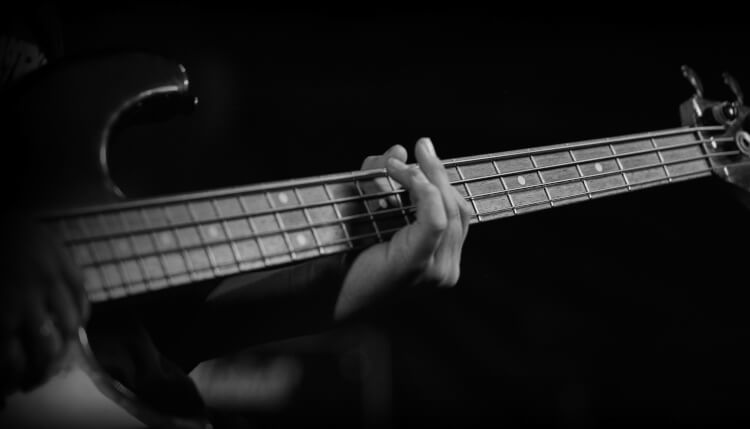 "Love is like a violin. The music may stop now and then, but the strings remain forever." Victor Hugo
Steve Swallow
Steve Swallow (born October 4, 1940) is a jazz fusion bassist and composer noted for his collaborations with Jimmy Giuffre, Gary Burton, and Carla Bley. He was one of the first jazz double bassists to switch entirely to electric bass guitar.
Johann Strauss
Johann Strauss I (March 14, 1804 – September 25, 1849; German: Johann Baptist Strauß, Johann Strauss (Vater); also Johann Baptist Strauss, Johann Strauss, Sr., the Elder, the Father), born in Vienna, was an Austrian Romantic composer famous for his waltzes, and for popularizing them alongside Joseph Lanner, thereby setting the foundations for his sons to carry on his musical dynasty. His most famous piece is probably the Radetzky March (named after Joseph Radetzky von Radetz), while his most famous waltz is probably the Lorelei Rheinklänge, Op. 154.
Peter Gabriel
Peter Brian Gabriel (born 13 February 1950) is an English singer, songwriter, musician, record producer and activist. He rose to fame as the original lead singer of the progressive rock band Genesis. After leaving Genesis in 1975, he launched a successful solo career with "Solsbury Hill" as his first single. His 1986 album, So, is his best-selling release and is certified triple platinum in the UK and five times platinum in the U.S. The album's most successful single, "Sledgehammer", won a record nine MTV Awards at the 1987 MTV Video Music Awards and, according to a report in 2011, it was MTV's most played music video of all time.
Maria Schneider Jazz Orchestra
Maria Lynn Schneider (born November 27, 1960) is an American composer and jazz orchestra leader who has won multiple Grammy Awards.Born in Windom, Minnesota, Schneider studied music theory and composition at the University of Minnesota, graduating in 1983, then earned a master's degree in Music in 1985 from the Eastman School of Music, studying for one year as well at the University of Miami. After leaving Eastman, she was hired by Gil Evans as his copyist and assistant.
Richard Rodgers
Richard Charles Rodgers (June 28, 1902 – December 30, 1979) was an American composer of music for more than 900 songs and for 43 Broadway musicals. He also composed music for films and television. He is best known for his songwriting partnerships with the lyricists Lorenz Hart and Oscar Hammerstein II. His compositions have had a significant impact on popular music down to the present day, and have an enduring broad appeal.
Rodgers is one of only two persons to have won an Oscar, a Grammy, an Emmy, a Tony Award, and a Pulitzer Prize (Marvin Hamlisch is the other).
Rodgers is one of only two persons to have won an Oscar, a Grammy, an Emmy, a Tony Award, and a Pulitzer Prize (Marvin Hamlisch is the other).
Mozart
Wolfgang Amadeus Mozart, full name Johann Chrysostom Wolfgang Amadeus Mozart (27 January 1756 â 5 December 1791) was a prolific and influential composer of the Classical era. His over 600 compositions include works widely acknowledged as pinnacles of symphonic, concertante, chamber, piano, operatic, and choral music. Mozart is among the most enduringly popular of classical composers, and many of his works are part of the standard concert repertoire.
Mozart's music, like Haydn's, stands as an archetypal example of the Classical style. His works spanned the period during which that style transformed from one exemplified by the style galant to one that began to incorporate some of the contrapuntal complexities of the late Baroque, complexities against which the galant style had been a reaction. Mozart's own stylistic development closely paralleled the development of the classical style as a whole. In addition, he was a versatile composer and wrote in almost every major genre, including symphony, opera, the solo concerto, chamber music including string quartet and string quintet, and the piano sonata. While none of these genres were new, the piano concerto was almost single-handedly developed and popularized by Mozart. He also wrote a great deal of religious music, including masses; and he composed many dances, divertimenti, serenades, and other forms of light entertainment.
The central traits of the classical style can be identified in Mozart's music. Clarity, balance, and transparency are hallmarks of his work.
Mozart's music, like Haydn's, stands as an archetypal example of the Classical style. His works spanned the period during which that style transformed from one exemplified by the style galant to one that began to incorporate some of the contrapuntal complexities of the late Baroque, complexities against which the galant style had been a reaction. Mozart's own stylistic development closely paralleled the development of the classical style as a whole. In addition, he was a versatile composer and wrote in almost every major genre, including symphony, opera, the solo concerto, chamber music including string quartet and string quintet, and the piano sonata. While none of these genres were new, the piano concerto was almost single-handedly developed and popularized by Mozart. He also wrote a great deal of religious music, including masses; and he composed many dances, divertimenti, serenades, and other forms of light entertainment.
The central traits of the classical style can be identified in Mozart's music. Clarity, balance, and transparency are hallmarks of his work.
Deep Purple
Deep Purple are an English rock band formed in Hertford in 1968. Along with Led Zeppelin and Black Sabbath, they are considered to be among the pioneers of heavy metal and modern hard rock, although some band members have tried not to categorise themselves as any one genre. The band also incorporated classical music, blues-rock, pop and progressive rock elements. They were once listed by the Guinness Book of World Records as the world's loudest band, and have sold over 100 million albums worldwide. Deep Purple were ranked #22 on VH1's Greatest Artists of Hard Rock programme.
The band have gone through many line-up changes and an eight-year hiatus (1976–84). The 1968–76 line-ups are commonly labeled Mark I, II, III and IV. Their second and most commercially successful line-up featured Ian Gillan (vocals), Ritchie Blackmore (guitar), Jon Lord (keyboards), Roger Glover (bass) and Ian Paice (drums). This line-up was active from 1969 to 1973 and was revived from 1984 to 1989 and again in 1993, before the rift between Blackmore and other members became unbridgeable. The current line-up including guitarist Steve Morse has been much more stable, though Lord's retirement in 2002 has left Paice as the only original member.
The band have gone through many line-up changes and an eight-year hiatus (1976–84). The 1968–76 line-ups are commonly labeled Mark I, II, III and IV. Their second and most commercially successful line-up featured Ian Gillan (vocals), Ritchie Blackmore (guitar), Jon Lord (keyboards), Roger Glover (bass) and Ian Paice (drums). This line-up was active from 1969 to 1973 and was revived from 1984 to 1989 and again in 1993, before the rift between Blackmore and other members became unbridgeable. The current line-up including guitarist Steve Morse has been much more stable, though Lord's retirement in 2002 has left Paice as the only original member.
Jean Sibelius
Jean Sibelius ( pronunciation (help·info)) (8 December 1865 – 20 September 1957) was a Finnish composer of the later Romantic period whose music played an important role in the formation of the Finnish national identity. His mastery of the orchestra has been described as "prodigious."
The core of Sibelius's oeuvre is his set of seven symphonies. Like Beethoven, Sibelius used each successive work to further develop his own personal compositional style. His works continue to be performed frequently in the concert hall and are often recorded.
In addition to the symphonies, Sibelius's best-known compositions include Finlandia, the Karelia Suite, Valse triste, the Violin Concerto in D minor and The Swan of Tuonela (one of the four movements of the Lemminkäinen Suite). Other works include pieces inspired by the Finnish national epic, the Kalevala; over 100 songs for voice and piano; incidental music for 13 plays; the opera Jungfrun i tornet (The Maiden in the Tower); chamber music; piano music; Masonic ritual music; and 21 separate publications of choral music.
The core of Sibelius's oeuvre is his set of seven symphonies. Like Beethoven, Sibelius used each successive work to further develop his own personal compositional style. His works continue to be performed frequently in the concert hall and are often recorded.
In addition to the symphonies, Sibelius's best-known compositions include Finlandia, the Karelia Suite, Valse triste, the Violin Concerto in D minor and The Swan of Tuonela (one of the four movements of the Lemminkäinen Suite). Other works include pieces inspired by the Finnish national epic, the Kalevala; over 100 songs for voice and piano; incidental music for 13 plays; the opera Jungfrun i tornet (The Maiden in the Tower); chamber music; piano music; Masonic ritual music; and 21 separate publications of choral music.
Igor Stravinsky
Igor Fyodorovich Stravinsky (17 June 1882 – 6 April 1971) was a Russian-born, naturalised French, later naturalised American composer, pianist, and conductor.
He is widely acknowledged as one of the most important and influential composers of 20th century music. He was a quintessentially cosmopolitan Russian who was named by Time magazine as one of the 100 most influential people of the century. He became a naturalised French citizen in 1934 and a naturalized US citizen in 1945. In addition to the recognition he received for his compositions, he also achieved fame as a pianist and a conductor, often at the premieres of his works.
Stravinsky's compositional career was notable for its stylistic diversity. He first achieved international fame with three ballets commissioned by the impresario Sergei Diaghilev and performed by Diaghilev's Ballets Russes (Russian Ballets): The Firebird (1910), Petrushka (1911/1947), and The Rite of Spring (1913). The Rite, whose premiere provoked a riot, transformed the way in which subsequent composers thought about rhythmic structure, and was largely responsible for Stravinsky's enduring reputation as a musical revolutionary, pushing the boundaries of musical design.
After this first Russian phase Stravinsky turned to neoclassicism in the 1920s. The works from this period tended to make use of traditional musical forms (concerto grosso, fugue, symphony), frequently concealed a vein of intense emotion beneath a surface appearance of detachment or austerity, and often paid tribute to the music of earlier masters, for example J.S. Bach and Tchaikovsky.
In the 1950s he adopted serial procedures, using the new techniques over his last twenty years. Stravinsky's compositions of this period share traits with examples of his earlier output: rhythmic energy, the construction of extended melodic ideas out of a few two- or three-note cells, and clarity of form, of instrumentation, and of utterance.
He also published a number of books throughout his career, almost always with the aid of a collaborator, sometimes uncredited. In his 1936 autobiography, Chronicles of My Life, written with the help of Walter Nouvel, Stravinsky included his well-known statement that "music is, by its very nature, essentially powerless to express anything at all." With Alexis Roland-Manuel and Pierre Souvtchinsky he wrote his 1939–40 Harvard University Charles Eliot Norton Lectures, which were delivered in French and later collected under the title Poétique musicale in 1942 (translated in 1947 as Poetics of Music). Several interviews in which the composer spoke to Robert Craft were published as Conversations with Igor Stravinsky. They collaborated on five further volumes over the following decade.
He is widely acknowledged as one of the most important and influential composers of 20th century music. He was a quintessentially cosmopolitan Russian who was named by Time magazine as one of the 100 most influential people of the century. He became a naturalised French citizen in 1934 and a naturalized US citizen in 1945. In addition to the recognition he received for his compositions, he also achieved fame as a pianist and a conductor, often at the premieres of his works.
Stravinsky's compositional career was notable for its stylistic diversity. He first achieved international fame with three ballets commissioned by the impresario Sergei Diaghilev and performed by Diaghilev's Ballets Russes (Russian Ballets): The Firebird (1910), Petrushka (1911/1947), and The Rite of Spring (1913). The Rite, whose premiere provoked a riot, transformed the way in which subsequent composers thought about rhythmic structure, and was largely responsible for Stravinsky's enduring reputation as a musical revolutionary, pushing the boundaries of musical design.
After this first Russian phase Stravinsky turned to neoclassicism in the 1920s. The works from this period tended to make use of traditional musical forms (concerto grosso, fugue, symphony), frequently concealed a vein of intense emotion beneath a surface appearance of detachment or austerity, and often paid tribute to the music of earlier masters, for example J.S. Bach and Tchaikovsky.
In the 1950s he adopted serial procedures, using the new techniques over his last twenty years. Stravinsky's compositions of this period share traits with examples of his earlier output: rhythmic energy, the construction of extended melodic ideas out of a few two- or three-note cells, and clarity of form, of instrumentation, and of utterance.
He also published a number of books throughout his career, almost always with the aid of a collaborator, sometimes uncredited. In his 1936 autobiography, Chronicles of My Life, written with the help of Walter Nouvel, Stravinsky included his well-known statement that "music is, by its very nature, essentially powerless to express anything at all." With Alexis Roland-Manuel and Pierre Souvtchinsky he wrote his 1939–40 Harvard University Charles Eliot Norton Lectures, which were delivered in French and later collected under the title Poétique musicale in 1942 (translated in 1947 as Poetics of Music). Several interviews in which the composer spoke to Robert Craft were published as Conversations with Igor Stravinsky. They collaborated on five further volumes over the following decade.
Alan Menken
Alan Menken (born July 22, 1949 in New Rochelle, New York) is an American Broadway and an eight-time Academy Award winning composer and pianist. Menken has collaborated with several renowned lyricists including Howard Ashman (1950-1991), Tim Rice and Stephen Schwartz.
Lieve Hugo
Julius Theodoor Hugo Uiterloo (December 13, 1934 – November 15, 1975), better known by his stage-name Lieve Hugo and his nickname Iko, was a Surinamese singer. He was one of the pioneers of the kaseko-genre; hence his other nickname King of KasekoLieve Hugo sang in a choir and played drums and percussion in a variety of bands with or without other retired boxers. In 1967 he joined Washboard Orchestra; in this band, who more or less invented kaseko, he was both a drummer and a singer. A mutated version headlined the 1970 Holland Festival at the Amsterdam Concertgebouw and got the crowd on their dancing feet. Health-reasons forced him to leave Washboard Orchestra and put down the drumsticks too.
Beatles
The Beatles were an English rock band formed in Liverpool in 1960. Their best-known lineup, consisting of John Lennon, Paul McCartney, George Harrison, and Ringo Starr, became the greatest and most influential act of the rock era, introducing more innovations into popular music than any other rock band of the 20th century. Rooted in skiffle and 1950s rock and roll, the Beatles later utilized several genres, ranging from pop ballads to psychedelic rock, often incorporating classical elements in innovative ways. In the early 1960s, their enormous popularity first emerged as "Beatlemania", but as their songwriting grew in sophistication, they came to be perceived by many fans and cultural observers as an embodiment of the ideals shared by the era's sociocultural revolutions.
The band built their reputation playing clubs in Liverpool and Hamburg over a three-year period from 1960. Manager Brian Epstein moulded them into a professional act and producer George Martin enhanced their musical potential. They gained popularity in the United Kingdom after their first modest hit, "Love Me Do", in late 1962. They acquired the nickname the "Fab Four" as Beatlemania grew in Britain over the following year, and by early 1964 they had become international stars, leading the "British Invasion" of the United States pop market. From 1965 on, the Beatles produced what many critics consider their finest material, including the innovative and widely influential albums Rubber Soul (1965), Revolver (1966), Sgt Pepper's Lonely Hearts Club Band (1967), The Beatles (1968), and Abbey Road (1969). After their break-up in 1970, they each enjoyed successful musical careers. Lennon was shot and killed in December 1980, and Harrison died of lung cancer in November 2001. McCartney and Starr remain musically active.
The band built their reputation playing clubs in Liverpool and Hamburg over a three-year period from 1960. Manager Brian Epstein moulded them into a professional act and producer George Martin enhanced their musical potential. They gained popularity in the United Kingdom after their first modest hit, "Love Me Do", in late 1962. They acquired the nickname the "Fab Four" as Beatlemania grew in Britain over the following year, and by early 1964 they had become international stars, leading the "British Invasion" of the United States pop market. From 1965 on, the Beatles produced what many critics consider their finest material, including the innovative and widely influential albums Rubber Soul (1965), Revolver (1966), Sgt Pepper's Lonely Hearts Club Band (1967), The Beatles (1968), and Abbey Road (1969). After their break-up in 1970, they each enjoyed successful musical careers. Lennon was shot and killed in December 1980, and Harrison died of lung cancer in November 2001. McCartney and Starr remain musically active.
Rent
Rent is a rock musical, with music and lyrics by Jonathan Larson based on Giacomo Puccini's opera La Bohème. It tells the story of a group of impoverished young artists and musicians struggling to survive and create in New York's Lower East Side in the thriving days of the Bohemian East Village, under the shadow of AIDS.
Rent won a Tony Award for Best Musical and a Pulitzer Prize, among other awards. In addition, its cast was unusually ethnically diverse. Rent brought controversial topics to a traditionally conservative medium, and it helped to increase the popularity of musical theater amongst the younger generation. "Rent speaks to Generation X the way that the musical Hair spoke to the baby boomers or those who grew up in the 1960s, calling it "a rock opera for our time, a Hair for the 90s."
The musical was first seen at the New York Theatre Workshop in 1994. On January 26, 1996, Rent opened in New York City off-Broadway before moving to Broadway's Nederlander Theatre on April 29, 1996. Rent has been successful on Broadway, where it had critical acclaim and word-of-mouth popularity. The Broadway production of Rent closed on September 7, 2008 after a 12 year run and 5,124 performances, making it the seventh-longest-running Broadway show. The production has grossed over $280 million. At the time of its closing, it was the second-longest-running musical currently on Broadway, eight years behind The Phantom of the Opera.
Rent won a Tony Award for Best Musical and a Pulitzer Prize, among other awards. In addition, its cast was unusually ethnically diverse. Rent brought controversial topics to a traditionally conservative medium, and it helped to increase the popularity of musical theater amongst the younger generation. "Rent speaks to Generation X the way that the musical Hair spoke to the baby boomers or those who grew up in the 1960s, calling it "a rock opera for our time, a Hair for the 90s."
The musical was first seen at the New York Theatre Workshop in 1994. On January 26, 1996, Rent opened in New York City off-Broadway before moving to Broadway's Nederlander Theatre on April 29, 1996. Rent has been successful on Broadway, where it had critical acclaim and word-of-mouth popularity. The Broadway production of Rent closed on September 7, 2008 after a 12 year run and 5,124 performances, making it the seventh-longest-running Broadway show. The production has grossed over $280 million. At the time of its closing, it was the second-longest-running musical currently on Broadway, eight years behind The Phantom of the Opera.
Van Morrison
George Ivan Morrison OBE (generally known as Van Morrison) (born 31 August 1945) is a Grammy Award-winning Northern Irish singer, songwriter, author, poet and multi-instrumentalist, who has been a professional musician since the late 1950s. He plays a variety of instruments, including the guitar, harmonica, keyboards, drums, and saxophone. Featuring his characteristic growl—a unique mix of folk, blues, soul, jazz, gospel, and Ulster Scots Celtic influences—Morrison is widely considered one of the most unusual and influential vocalists in the history of rock and roll. Critic Greil Marcus has gone so far as to say that "no white man sings like Van Morrison."
Known as "Van the Man" by his fans, Morrison first rose to prominence as the lead singer of the Northern Irish band Them, writing their 1964 garage rock classic hit, "Gloria". A few years later, Morrison left the band and embarked on a successful solo career.
Morrison has pursued an idiosyncratic musical path. Much of his music is tightly structured around the conventions of American soul and R&B, such as the popular singles, "Brown Eyed Girl", "Moondance", "Domino" and "Wild Night". An equal part of his catalogue consists of lengthy, loosely connected, spiritually inspired musical journeys that show the influence of Celtic tradition, jazz, and stream-of-consciousness narrative, such as his classic album Astral Weeks and lesser known works such as Veedon Fleece and Common One. The two strains together are sometimes referred to as "Celtic Soul".
Morrison's career, spanning some five decades, has influenced many popular musical artists. He was inducted into the Rock and Roll Hall of Fame in 1993 and the Songwriters Hall of Fame in 2003. In 2000, Morrison ranked number twenty-fifth on American cable music channel VH1's list of its "100 Greatest Artists of Rock and Roll", and in 2004, Rolling Stone magazine ranked Van Morrison forty-second on their list of "Greatest Artists of All Time". Paste ranked him twentieth in their list of "100 Greatest Living Songwriters" in 2006 and Q ranked him twenty-second on their list of "100 Greatest Singers" in April 2007.
Known as "Van the Man" by his fans, Morrison first rose to prominence as the lead singer of the Northern Irish band Them, writing their 1964 garage rock classic hit, "Gloria". A few years later, Morrison left the band and embarked on a successful solo career.
Morrison has pursued an idiosyncratic musical path. Much of his music is tightly structured around the conventions of American soul and R&B, such as the popular singles, "Brown Eyed Girl", "Moondance", "Domino" and "Wild Night". An equal part of his catalogue consists of lengthy, loosely connected, spiritually inspired musical journeys that show the influence of Celtic tradition, jazz, and stream-of-consciousness narrative, such as his classic album Astral Weeks and lesser known works such as Veedon Fleece and Common One. The two strains together are sometimes referred to as "Celtic Soul".
Morrison's career, spanning some five decades, has influenced many popular musical artists. He was inducted into the Rock and Roll Hall of Fame in 1993 and the Songwriters Hall of Fame in 2003. In 2000, Morrison ranked number twenty-fifth on American cable music channel VH1's list of its "100 Greatest Artists of Rock and Roll", and in 2004, Rolling Stone magazine ranked Van Morrison forty-second on their list of "Greatest Artists of All Time". Paste ranked him twentieth in their list of "100 Greatest Living Songwriters" in 2006 and Q ranked him twenty-second on their list of "100 Greatest Singers" in April 2007.
Michael Buble
Michael Steven Bublé (born 9 September 1975) is a Canadian big band singer. He won several awards, including a Grammy and multiple Juno Awards. While achieving modest chart success in the United States, his 2003 self-titled album has reached the top ten in Lebanon, the UK and his home country. However, he did find commercial success in the U.S. with his 2005 album It's Time. He has sold over 18 million albums. Michael has also appeared on the TV series Rove four times.
The album Michael Bublé was released by Warner Bros. Records just before Valentine's Day in 2003. The album was actually first released by the Warner company in South Africa, where the album went into the Top 5 and was certified Gold. Soon after that, it entered the Canadian album charts. As success in the USA was marginal at best, Bublé started visiting countries all over the world, with the album being successful in places like the Philippines and Singapore. He then moved on to placed like Italy and eventually had chart success in the UK, U.S., Australia and elsewhere soon followed with the album going Platinum and reaching the top ten of the album charts in the UK and Canada and going all the way to #1 in Australia. The album has reached the top 50 of the Billboard 200 album charts in the U.S. His version of George Michael's "Kissing a Fool" was released as a single from the album and reached the top 30 of the Billboard Hot Adult Contemporary Tracks chart. "How Can You Mend a Broken Heart?" reached the top 30 of the Billboard Adult Contemporary chart as well. His third single "Sway" also reached the top 30 of the Adult Contemporary chart, while a Junkie XL remix of the song reached the top 20 in Australia in May 2004.
Bublé's second studio album, It's Time, debuted as a hugely successful performance. The album reached number 7 on the Billboard 200 album chart and number 2 on the ARIA Album Charts in Australia. It's Time also debuted at number 4 on the UK Album Charts. The album features covers of Beatles and Ray Charles songs, and the hit single "Home".
The album Michael Bublé was released by Warner Bros. Records just before Valentine's Day in 2003. The album was actually first released by the Warner company in South Africa, where the album went into the Top 5 and was certified Gold. Soon after that, it entered the Canadian album charts. As success in the USA was marginal at best, Bublé started visiting countries all over the world, with the album being successful in places like the Philippines and Singapore. He then moved on to placed like Italy and eventually had chart success in the UK, U.S., Australia and elsewhere soon followed with the album going Platinum and reaching the top ten of the album charts in the UK and Canada and going all the way to #1 in Australia. The album has reached the top 50 of the Billboard 200 album charts in the U.S. His version of George Michael's "Kissing a Fool" was released as a single from the album and reached the top 30 of the Billboard Hot Adult Contemporary Tracks chart. "How Can You Mend a Broken Heart?" reached the top 30 of the Billboard Adult Contemporary chart as well. His third single "Sway" also reached the top 30 of the Adult Contemporary chart, while a Junkie XL remix of the song reached the top 20 in Australia in May 2004.
Bublé's second studio album, It's Time, debuted as a hugely successful performance. The album reached number 7 on the Billboard 200 album chart and number 2 on the ARIA Album Charts in Australia. It's Time also debuted at number 4 on the UK Album Charts. The album features covers of Beatles and Ray Charles songs, and the hit single "Home".
Anton Webern
Anton Webern (3 December 1883 – 15 September 1945) was an Austrian composer and conductor. He was a member of the Second Viennese School. As a student and significant follower of Arnold Schoenberg, he became one of the best-known exponents of the twelve-tone technique; in addition, his innovations regarding schematic organization of pitch, rhythm and dynamics were formative in the musical technique later known as total serialism.
Wayne shorter
Wayne Shorter is an American jazz saxophonist and composer. More recently, in the late 1950s, he emerged as the primary composer and member of Art Blakey's Jazz Reporters. He joined Miles Davis' Second Big Five in the 1960s, where he founded the jazz fusion group Weather Report. More than 20 albums
Giuseppe Antonio Capuzzi
Giuseppe Antonio Capuzzi (also Capucci; 1 August 1755 – 28 March 1818) was an Italian violinist and composer.He studied in Venice, Italy under the direction of A. Nazari (violin) and F. G. Bertoni (composition). Beginning in 1780, he was concertmaster with the orchestra at the Teatro di S. Samuele and eventually became the orchestral director at the Teatro di S. Benedetto. After his tenure at the Teatro di S. Samuele in 1805, he became orchestral director and a professor in the conservatory at S. Maria Maggiore in Bergamo, Italy.
Maynard Ferguson
Walter Maynard Ferguson CM (May 4, 1928 – August 23, 2006) was a Canadian jazz trumpeter and bandleader. He came to prominence in Stan Kenton's orchestra before forming his own big band in 1957. He was noted for his bands, which often served as stepping stones for up-and-coming talent, his versatility on several instruments, and his ability to play in a high register.
Avishai Cohen
Avishai Cohen is an Israeli jazz double bassist, composer, singer, and arranger.
Chick Corea
Armando Anthony "Chick" Corea (born June 12, 1941) is a multiple Grammy Award-winning American jazz pianist, keyboardist, drummer, and composer.
He is known for his work during the 1970s in the genre of jazz fusion. He participated in the birth of the electric fusion movement as a member of Miles Davis' band in the 1960s, and in the 1970s formed Return to Forever.
He continued to pursue other collaborations and explore various musical styles throughout the 1980s and 1990s. He is also known for promoting Scientology.
He is known for his work during the 1970s in the genre of jazz fusion. He participated in the birth of the electric fusion movement as a member of Miles Davis' band in the 1960s, and in the 1970s formed Return to Forever.
He continued to pursue other collaborations and explore various musical styles throughout the 1980s and 1990s. He is also known for promoting Scientology.
Carlos Gardel
Carlos Gardel (11 December 1890 – 24 June 1935) was a singer, songwriter and actor, and is perhaps the most prominent figure in the history of tango. The unerring musicality of Gardel's baritone voice and the dramatic phrasing of his lyrics made miniature masterpieces of his hundreds of three-minute tango recordings. Together with lyricist and long-time collaborator Alfredo Le Pera, Gardel wrote several classic tangos, most notably "Mi Buenos Aires querido", "Por una cabeza" and "El día que me quieras".
Gardel died in an airplane crash at the height of his career, becoming an archetypal tragic hero mourned throughout Latin America. For many, Gardel embodies the soul of the tango style. He is commonly referred to as "Carlitos", "El Zorzal" (The Song Thrush), "The King of Tango", "El Mago" (The Magician) and "El Mudo" (The Mute).
Gardel died in an airplane crash at the height of his career, becoming an archetypal tragic hero mourned throughout Latin America. For many, Gardel embodies the soul of the tango style. He is commonly referred to as "Carlitos", "El Zorzal" (The Song Thrush), "The King of Tango", "El Mago" (The Magician) and "El Mudo" (The Mute).
Clark Murray
Clark Murray (born 1938) is an American sculptor who is best known for his large outdoor constructions of welded and painted steel pipes.Sculptures by Clark Murray include:White Mountains, a 1977 three-ton welded steel pipe sculpture was on loan for a brief time beginning in 1982 at the Laumeier Sculpture Park (St. Louis, Missouri. Its current location is unknown.A 1973 untitled painted steel pipe sculpture at the University of St. Thomas (Houston, Texas) owned by the Menil CollectionA 1974-5 untitled painted steel sculpture at the Museum of Fine Arts, Houston (Houston, Texas)
Bob Marley
Robert "Bob" Nesta Marley OM (February 6, 1945 – May 11, 1981) was a Jamaican musician, singer-songwriter and Rastafarian. He was the lead singer, songwriter and guitarist for the ska, rocksteady and reggae bands: The Wailers (1964 – 1974) and Bob Marley & the Wailers (1974 – 1981). Marley died nearly thirty years ago, but remains the most widely known and revered performer of reggae music, and is credited for helping spread Jamaican music to the worldwide audience.
Marley's best known hits include "I Shot the Sheriff", "No Woman, No Cry", "Exodus", "Could You Be Loved", "Stir It Up", "Jamming", "Redemption Song", "One Love" and, together with The Wailers, ""Three Little Birds",
Marley's best known hits include "I Shot the Sheriff", "No Woman, No Cry", "Exodus", "Could You Be Loved", "Stir It Up", "Jamming", "Redemption Song", "One Love" and, together with The Wailers, ""Three Little Birds",
Billie Holiday
Billie Holiday, American singer, songwriter, composer. Nicknamed "Lady Day", Billie Holiday is the daughter of a traveling musician father. His childhood, deprived of education, included a poor life. She was raped at the age of 11 and was given boarding at a Catholic school.
Georges Bizet
Georges Bizet (25 October 1838 – 3 June 1875) was a French composer and pianist of the Romantic era. He is best known for the opera Carmen.
Bizet was born at 26 rue de la Tour d'Auvergne in the 9th arrondissement of Paris in 1838. He was registered with the legal name Alexandre César Léopold Bizet, but he was baptised on 16 March 1840 with the first name Georges, and he was always known thereafter as Georges Bizet. His father Adolphe Armand Bizet (1810-86) was an amateur singer and composer, and his mother, Aimée Léopoldine Joséphine née Delsarte (1814-61), was the sister of the famous singing teacher François Delsarte.
He entered the Paris Conservatory of Music on 9 October 1848, a fortnight before his tenth birthday. His teachers there were Pierre Zimmermann (fugue and counterpoint; often assisted by his son-in-law Charles Gounod), Antoine François Marmontel (piano), François Benoist (organ) and, on Zimmermann's death, Fromental Halévy, whose daughter he himself later married. He won first prizes for organ and fugue in 1855 and completed his earliest compositions.
His first symphony, the Symphony in C, was written in November 1855, when he was seventeen, evidently as a student assignment. It was unknown to the world until 1933, when it was discovered in the archives of the Paris Conservatory library. Upon its first performance in 1935, it was immediately hailed as a junior masterwork and a welcome addition to the early Romantic period repertoire. The symphony bears a stylistic resemblance to the first symphony of Gounod, first played earlier in the same year, and which Bizet had arranged for two pianos although present-day listeners may discern a similarity to music of Franz Schubert, whose work was little known in France at the time the symphony was written.
In 1857, a setting of the one-act operetta Le docteur Miracle won him a share in a prize offered by Jacques Offenbach. He also won the music composition scholarship of the Prix de Rome, the conditions of which required him to study in Rome for three years. There, his talent developed as he wrote such works as the opera buffa Don Procopio (1858-59). There he also composed his only major sacred work, Te Deum (1858), which he submitted to the Prix Rodrigues competition, a contest for Prix de Rome winners only. Bizet failed to win the Prix Rodrigues, and the Te Deum score remained unpublished until 1971. He made two attempts to write another symphony in 1859, but destroyed the manuscripts in December of that year. Apart from this period in Rome, Bizet lived in the Paris area all his life.
Shortly after leaving Rome in July 1860, but while still touring in Italy, he had the idea of writing a symphony in which each of the four movements would be a musical evocation of a different Italian city – Rome, Venice, Florence and Naples. On hearing of his mother's serious illness he cut short his Italian travels and returned to Paris in September 1860; she died a year later. The Scherzo of the symphony was completed by November 1861, but it was not until 1866 that the first version of the whole symphony was written. He subjected it to a number of revisions through to 1871, but died before ever producing what he considered the definitive version. For this reason, the work is sometimes described as "unfinished", but this is an inaccurate description as it was fully scored. It was published in 1880 as the Roma Symphony.
Bizet was born at 26 rue de la Tour d'Auvergne in the 9th arrondissement of Paris in 1838. He was registered with the legal name Alexandre César Léopold Bizet, but he was baptised on 16 March 1840 with the first name Georges, and he was always known thereafter as Georges Bizet. His father Adolphe Armand Bizet (1810-86) was an amateur singer and composer, and his mother, Aimée Léopoldine Joséphine née Delsarte (1814-61), was the sister of the famous singing teacher François Delsarte.
He entered the Paris Conservatory of Music on 9 October 1848, a fortnight before his tenth birthday. His teachers there were Pierre Zimmermann (fugue and counterpoint; often assisted by his son-in-law Charles Gounod), Antoine François Marmontel (piano), François Benoist (organ) and, on Zimmermann's death, Fromental Halévy, whose daughter he himself later married. He won first prizes for organ and fugue in 1855 and completed his earliest compositions.
His first symphony, the Symphony in C, was written in November 1855, when he was seventeen, evidently as a student assignment. It was unknown to the world until 1933, when it was discovered in the archives of the Paris Conservatory library. Upon its first performance in 1935, it was immediately hailed as a junior masterwork and a welcome addition to the early Romantic period repertoire. The symphony bears a stylistic resemblance to the first symphony of Gounod, first played earlier in the same year, and which Bizet had arranged for two pianos although present-day listeners may discern a similarity to music of Franz Schubert, whose work was little known in France at the time the symphony was written.
In 1857, a setting of the one-act operetta Le docteur Miracle won him a share in a prize offered by Jacques Offenbach. He also won the music composition scholarship of the Prix de Rome, the conditions of which required him to study in Rome for three years. There, his talent developed as he wrote such works as the opera buffa Don Procopio (1858-59). There he also composed his only major sacred work, Te Deum (1858), which he submitted to the Prix Rodrigues competition, a contest for Prix de Rome winners only. Bizet failed to win the Prix Rodrigues, and the Te Deum score remained unpublished until 1971. He made two attempts to write another symphony in 1859, but destroyed the manuscripts in December of that year. Apart from this period in Rome, Bizet lived in the Paris area all his life.
Shortly after leaving Rome in July 1860, but while still touring in Italy, he had the idea of writing a symphony in which each of the four movements would be a musical evocation of a different Italian city – Rome, Venice, Florence and Naples. On hearing of his mother's serious illness he cut short his Italian travels and returned to Paris in September 1860; she died a year later. The Scherzo of the symphony was completed by November 1861, but it was not until 1866 that the first version of the whole symphony was written. He subjected it to a number of revisions through to 1871, but died before ever producing what he considered the definitive version. For this reason, the work is sometimes described as "unfinished", but this is an inaccurate description as it was fully scored. It was published in 1880 as the Roma Symphony.
Beach boys
The Beach Boys are an American rock band formed in Hawthorne, California in 1961. The group's original lineup consisted of brothers Brian, Dennis, and Carl Wilson, their cousin Mike Love, and their friend Al Jardine. Distinguished by their vocal harmonies and early surf songs, they are one of the most influential acts of the rock era. The band drew on the music of jazz-based vocal groups, 1950s rock and roll, and black R&B to create their unique sound, and with Brian as composer, arranger, producer, and de facto leader, they often incorporated classical elements and unconventional recording techniques in innovative ways.
Ray Charles
Raymond Charles Robinson (September 23, 1930 â June 10, 2004), known by his stage name Ray Charles, was an American pianist and singer who shaped the sound of rhythm and blues. He brought a soulful sound to country music, pop standards, and a rendition of "America the Beautiful" that Ed Bradley of 60 Minutes called the "definitive version of the song, an American anthem â a classic, just as the man who sung it." Frank Sinatra called him "the only true genius in the business" and in 2004, Rolling Stone Magazine ranked Charles #10 on their list of the 100 Greatest Artists of All Time.
During the late 1960s and into the 1970s, Charles' releases were hit-or-miss, with some big hits and critically acclaimed work. His version of "Georgia On My Mind" was proclaimed the state song of Georgia on April 24, 1979, with Charles performing it on the floor of the state legislature.
He died on June 10, 2004 of hepatocellular carcinoma (liver cancer) at his home in Beverly Hills, California, surrounded by family and friends. His body was interred in the Inglewood Park Cemetery in Inglewood, California. His final album, Genius Loves Company, released two months after his death, consists of duets with various admirers and contemporaries: B.B. King, Van Morrison, Willie Nelson, James Taylor, Gladys Knight, Michael McDonald, Natalie Cole, Elton John, Bonnie Raitt, Diana Krall, Norah Jones, and Johnny Mathis.
During the late 1960s and into the 1970s, Charles' releases were hit-or-miss, with some big hits and critically acclaimed work. His version of "Georgia On My Mind" was proclaimed the state song of Georgia on April 24, 1979, with Charles performing it on the floor of the state legislature.
He died on June 10, 2004 of hepatocellular carcinoma (liver cancer) at his home in Beverly Hills, California, surrounded by family and friends. His body was interred in the Inglewood Park Cemetery in Inglewood, California. His final album, Genius Loves Company, released two months after his death, consists of duets with various admirers and contemporaries: B.B. King, Van Morrison, Willie Nelson, James Taylor, Gladys Knight, Michael McDonald, Natalie Cole, Elton John, Bonnie Raitt, Diana Krall, Norah Jones, and Johnny Mathis.
Di Battista
Stefano di Battista (born February 14, 1969) is an Italian jazz musician who plays soprano and alto saxophone.Di Battista began playing at thirteen with friends and became interested in jazz after hearing Art Pepper. In Italy he received guidance from Massimo Urbani and by his twenties di Battista was performing in Paris. He put out his debut as a leader in 1997 and has toured with the Elvin Jones Jazz Machine.
John Coltrane
John William "Trane" Coltrane (September 23, 1926 – July 17, 1967) was an American jazz saxophonist and composer.
Working in the bebop and hard bop idioms early in his career, Coltrane helped pioneer the use of modes in jazz and later was at the forefront of free jazz. He was prolific, making about fifty recordings as a leader during his recording career, and appeared as a sideman on many other albums, notably with trumpeter Miles Davis and pianist Thelonious Monk. As his career progressed, Coltrane's music took on an increasingly spiritual dimension. His second wife was pianist Alice Coltrane, and their son Ravi Coltrane is also a saxophonist.
He influenced innumerable musicians, and remains one of the most significant tenor saxophonists in jazz history. He received many awards, among them a posthumous Special Citation from the Pulitzer Prize Board in 2007 for his "masterful improvisation, supreme musicianship and iconic centrality to the history of jazz."
Working in the bebop and hard bop idioms early in his career, Coltrane helped pioneer the use of modes in jazz and later was at the forefront of free jazz. He was prolific, making about fifty recordings as a leader during his recording career, and appeared as a sideman on many other albums, notably with trumpeter Miles Davis and pianist Thelonious Monk. As his career progressed, Coltrane's music took on an increasingly spiritual dimension. His second wife was pianist Alice Coltrane, and their son Ravi Coltrane is also a saxophonist.
He influenced innumerable musicians, and remains one of the most significant tenor saxophonists in jazz history. He received many awards, among them a posthumous Special Citation from the Pulitzer Prize Board in 2007 for his "masterful improvisation, supreme musicianship and iconic centrality to the history of jazz."
Kansas
Kansas is an American progressive rock band which became a popular arena rock group in the 1970s, with hit singles such as "Carry On Wayward Son" and "Dust in the Wind". Kansas has remained a classic rock radio staple and a popular touring act in North America and Europe.
Marilyn Manson
Brian Hugh Warner (born January 5, 1969), known professionally as Marilyn Manson, is an American singer, songwriter, record producer, actor, painter, and writer. He is known for his controversial stage personality and image as the lead singer of the band of the same name, which he co-founded with guitarist Daisy Berkowitz in 1989 and of which he remains the only constant member. Like the other founding members of the band, his stage name was formed by combining and juxtaposing the names of two opposing American cultural icons: a sex symbol and an infamous criminal; in Manson's case, actress Marilyn Monroe and cult leader Charles Manson.
Michael Giacchino
Michael Giacchino (Italian pronunciation: ; born October 10, 1967) is an American composer who has composed scores for movies, television series and video games. Some of his most notable works include the scores to television series such as Lost, Alias and Fringe, games such as the Medal of Honor and Call of Duty series, and films such as Mission: Impossible III, The Incredibles, Star Trek, Star Trek Into Darkness, Cloverfield, Ratatouille, Up, Super 8, Cars 2, 50/50, and John Carter. Giacchino has received numerous awards for his work, including an Emmy, multiple Grammys, a Golden Globe Award, and an Academy Award.
The Isley Brothers
The Isley Brothers (/ˈaɪzliː/) are an American musical group originally from Cincinnati, Ohio, that started as a vocal trio consisting of brothers O'Kelly Isley Jr., Rudolph Isley and Ronald Isley in the 1950s. With a career spanning over seven decades, the group has been cited as having enjoyed one of the "longest, most influential, and most diverse careers in the pantheon of popular music".Together with a fourth brother, Vernon, the group performed gospel music until Vernon's death a few years after its formation. After moving to the New York City area in the late 1950s, the group had their first successes during these early years, first coming to prominence in 1959 with their fourth single, "Shout", written by the three brothers.
Don Grolnick
Don Grolnick (September 23, 1947 – June 1, 1996) was an American jazz pianist, composer, and record producer. He was a member of the groups Steps Ahead and Dreams, both with Michael Brecker, and played often with the Brecker Brothers. As a session musician, he recorded with John Scofield, Billy Cobham, Roberta Flack, Harry Chapin, Dave Holland, Bette Midler, Marcus Miller, Bob Mintzer, Linda Ronstadt, David Sanborn, Carly Simon, J. D. Souther, Steely Dan, and James Taylor.
Joe Zawinul
Josef Erich Zawinul (July 7, 1932 – September 11, 2007) was an Austrian jazz keyboardist and composer.
First coming to prominence with saxophonist Cannonball Adderley, Zawinul went on to play with trumpeter Miles Davis, and to become one of the creators of jazz fusion, an innovative musical genre that combined jazz with elements of rock and world music. Later, Zawinul co-founded the groups Weather Report and the world fusion music oriented Zawinul Syndicate. Additionally, he made pioneering use of electric piano and synthesizers. Zawinul won the "Best Keyboardist" award 30 times from American jazz magazine Down Beat's critics' poll.
Several artists have honored Zawinul with songs, notably Brian Eno's instrumental "Zawinul/Lava", John McLaughlin's instrumental "Jozy", Warren Cuccurullo's "Hey Zawinul", Bob Baldwin's "Joe Zawinul", and Biréli Lagrène's instrumental "Josef". Zawinul's playing style is often dominated by quirky melodic improvisations —both bebop, ethnic and pop sounding— combined with sparse but rhythmic playing of big-band sounding chords or bass lines. In Weather Report, he often employed a vocoder as well as pre-recorded sounds played (i.e filtered and transposed) through a synthesizer, creating a very distinctive, often beautiful, synthesis of jazz harmonics and "noise" ("using all the sounds the world generates"). Many considered Zawinul as the "best" synthesizer player "in jazz", frequently employing several keyboards with live settings of his bands.
First coming to prominence with saxophonist Cannonball Adderley, Zawinul went on to play with trumpeter Miles Davis, and to become one of the creators of jazz fusion, an innovative musical genre that combined jazz with elements of rock and world music. Later, Zawinul co-founded the groups Weather Report and the world fusion music oriented Zawinul Syndicate. Additionally, he made pioneering use of electric piano and synthesizers. Zawinul won the "Best Keyboardist" award 30 times from American jazz magazine Down Beat's critics' poll.
Several artists have honored Zawinul with songs, notably Brian Eno's instrumental "Zawinul/Lava", John McLaughlin's instrumental "Jozy", Warren Cuccurullo's "Hey Zawinul", Bob Baldwin's "Joe Zawinul", and Biréli Lagrène's instrumental "Josef". Zawinul's playing style is often dominated by quirky melodic improvisations —both bebop, ethnic and pop sounding— combined with sparse but rhythmic playing of big-band sounding chords or bass lines. In Weather Report, he often employed a vocoder as well as pre-recorded sounds played (i.e filtered and transposed) through a synthesizer, creating a very distinctive, often beautiful, synthesis of jazz harmonics and "noise" ("using all the sounds the world generates"). Many considered Zawinul as the "best" synthesizer player "in jazz", frequently employing several keyboards with live settings of his bands.
Michael Jackson
Michael Joseph Jackson (August 29, 1958 – June 25, 2009) was an American singer, dancer and entertainer. Referred to as the King of Pop, he is the most commercially successful entertainer of all time, and one of the most influential. His contributions to music, dance and fashion, along with a much publicized personal life, made him a global figure in popular culture for over four decades.
Alongside his brothers, he made his debut as lead singer and youngest member of The Jackson 5 in 1964. He began his solo career in 1971. His 1982 album Thriller remains the best-selling album ever, with Off the Wall (1979), Bad (1987), Dangerous (1991) and HIStory (1995) also among the world's best-selling albums. He is widely credited with having transformed the music video from a promotional tool into an art form with videos for his songs such as "Billie Jean", "Beat It" and "Thriller" making him the first African American artist to amass a strong crossover following on MTV. With stage performances and music videos, Jackson popularized a number of physically complicated dance techniques, such as the robot and the moonwalk. His distinctive musical sound, vocal style, and choreography, is credited with stretching across and breaking down cultural, racial, economic, generational, and global barriers that has inspired countless pop, rock, R&B and hip hop artists.
One of the few artists to have been inducted into the Rock and Roll Hall of Fame twice, his other achievements feature multiple Guinness World Records—including the "Most Successful Entertainer of All Time"—15 Grammy Awards (including the "Living Legend Award" and the "Lifetime Achievement Award"), 26 American Music Awards (24 only as a solo artist, including one for "Artist of the Century")—more than any artist—, 17 number one singles in the US (including the four as a member of the Jackson 5), and estimated sales of up to 750 million records worldwide making him the world's best selling artist in history.
Jackson's personal relationships and life generated controversy for years. His changing appearance was noticed from the late 1970s onwards, with changes to his nose and to the color of his skin drawing media publicity. He was accused of child sexual abuse in 1993 though no charges were brought, and in 2005 he was tried and acquitted when the jury ruled him not guilty on all charges. He married twice, first in 1994 and again in 1996, and brought up three children, one born to a surrogate mother. While preparing for the This Is It concert tour in 2009, Jackson died at the age of 50 after suffering from cardiac arrest. He reportedly had been administered drugs such as propofol and lorazepam, and his death was ruled a homicide by the Los Angeles County coroner. His death triggered an outpouring of grief from around the world with his globally live broadcast memorial service attracting an audience of up to one billion people; as well as a huge surge in his album sales, resulting in him becoming the best selling artist of 2009 with sales in excess of 8.2 million in the United States where he became the first artist ever to have 4 of the top 20 best-selling albums in a single year, and 29 million albums globally, where he had an unprecedented 8 of the top 25 best-selling albums worldwide.
Alongside his brothers, he made his debut as lead singer and youngest member of The Jackson 5 in 1964. He began his solo career in 1971. His 1982 album Thriller remains the best-selling album ever, with Off the Wall (1979), Bad (1987), Dangerous (1991) and HIStory (1995) also among the world's best-selling albums. He is widely credited with having transformed the music video from a promotional tool into an art form with videos for his songs such as "Billie Jean", "Beat It" and "Thriller" making him the first African American artist to amass a strong crossover following on MTV. With stage performances and music videos, Jackson popularized a number of physically complicated dance techniques, such as the robot and the moonwalk. His distinctive musical sound, vocal style, and choreography, is credited with stretching across and breaking down cultural, racial, economic, generational, and global barriers that has inspired countless pop, rock, R&B and hip hop artists.
One of the few artists to have been inducted into the Rock and Roll Hall of Fame twice, his other achievements feature multiple Guinness World Records—including the "Most Successful Entertainer of All Time"—15 Grammy Awards (including the "Living Legend Award" and the "Lifetime Achievement Award"), 26 American Music Awards (24 only as a solo artist, including one for "Artist of the Century")—more than any artist—, 17 number one singles in the US (including the four as a member of the Jackson 5), and estimated sales of up to 750 million records worldwide making him the world's best selling artist in history.
Jackson's personal relationships and life generated controversy for years. His changing appearance was noticed from the late 1970s onwards, with changes to his nose and to the color of his skin drawing media publicity. He was accused of child sexual abuse in 1993 though no charges were brought, and in 2005 he was tried and acquitted when the jury ruled him not guilty on all charges. He married twice, first in 1994 and again in 1996, and brought up three children, one born to a surrogate mother. While preparing for the This Is It concert tour in 2009, Jackson died at the age of 50 after suffering from cardiac arrest. He reportedly had been administered drugs such as propofol and lorazepam, and his death was ruled a homicide by the Los Angeles County coroner. His death triggered an outpouring of grief from around the world with his globally live broadcast memorial service attracting an audience of up to one billion people; as well as a huge surge in his album sales, resulting in him becoming the best selling artist of 2009 with sales in excess of 8.2 million in the United States where he became the first artist ever to have 4 of the top 20 best-selling albums in a single year, and 29 million albums globally, where he had an unprecedented 8 of the top 25 best-selling albums worldwide.
Commodores
Commodores are an American funk and soul band, which were at their peak in the late 1970s through the mid 1980s. The members of the group met as mostly freshmen at Tuskegee Institute (now Tuskegee University) in 1968, and signed with Motown in November 1972, having first caught the public eye opening for the Jackson 5 while on tour.The group's most successful period was in the late 1970s and early 1980s when Lionel Richie was the co-lead singer. The band's biggest hit singles are ballads such as "Easy", "Three Times a Lady", and "Nightshift"; and funky dance hits which include "Brick House", "Fancy Dancer", "Lady (You Bring Me Up)", and "Too Hot ta Trot".
Wicked
Wicked is a musical with songs and lyrics by Stephen Schwartz and a book by Winnie Holzman. The story is based on the best-selling novel Wicked: The Life and Times of the Wicked Witch of the West by Gregory Maguire, a parallel novel of L. Frank Baum's classic story The Wonderful Wizard of Oz from the perspective of the witches of the Land of Oz.
Wicked tells the story of Elphaba, the future Wicked Witch of the West and her relationship with Glinda, the Good Witch of the North. Their friendship struggles through their opposing personalities and viewpoints, rivalry over the same love-interest, their reactions to the Wizard's corrupt government, and, ultimately, Elphaba's public fall from grace. The plot is set mostly before Dorothy's arrival from Kansas, and includes several references to well-known scenes and dialogue in the 1939 film The Wizard of Oz.
The musical debuted on Broadway on October 30, 2003. It is produced by Universal Pictures and directed by Joe Mantello, with musical staging by Wayne Cilento. Its original stars were Idina Menzel as Elphaba, Kristin Chenoweth as Glinda, and Joel Grey as the Wizard. Although the production received mixed reviews and was panned by The New York Times, it has proved to be a favorite among patrons. The Broadway production's success spawned productions in Chicago, Los Angeles, London's West End, Tokyo, Melbourne, and Stuttgart, along with two North American tours that have visited over 30 cities in Canada and the United States.
The score of Wicked is heavily thematic, bearing in some senses more resemblance to a film score than a musical's score. While many musicals' scores develop new motifs and melodies for each song with little overlap, Schwartz integrated a handful of leitmotifs throughout the production. A cast recording of the original Broadway production was released on December 16, 2003, by Universal Music. All of the songs featured on stage are present on the recording with the exception of "The Wizard And I (Reprise)" and "The Wicked Witch of the East". The short reprise of "No One Mourns The Wicked" that opens Act II is attached to the beginning of "Thank Goodness". The music was arranged by Stephen Oremus, who was also the conductor and director, and James Lynn Abbott, with orchestrations by William David Brohn. The recording received the Grammy Award for Best Musical Show Album in 2005 and was certified platinum by the RIAA on November 30, 2006.
Wicked tells the story of Elphaba, the future Wicked Witch of the West and her relationship with Glinda, the Good Witch of the North. Their friendship struggles through their opposing personalities and viewpoints, rivalry over the same love-interest, their reactions to the Wizard's corrupt government, and, ultimately, Elphaba's public fall from grace. The plot is set mostly before Dorothy's arrival from Kansas, and includes several references to well-known scenes and dialogue in the 1939 film The Wizard of Oz.
The musical debuted on Broadway on October 30, 2003. It is produced by Universal Pictures and directed by Joe Mantello, with musical staging by Wayne Cilento. Its original stars were Idina Menzel as Elphaba, Kristin Chenoweth as Glinda, and Joel Grey as the Wizard. Although the production received mixed reviews and was panned by The New York Times, it has proved to be a favorite among patrons. The Broadway production's success spawned productions in Chicago, Los Angeles, London's West End, Tokyo, Melbourne, and Stuttgart, along with two North American tours that have visited over 30 cities in Canada and the United States.
The score of Wicked is heavily thematic, bearing in some senses more resemblance to a film score than a musical's score. While many musicals' scores develop new motifs and melodies for each song with little overlap, Schwartz integrated a handful of leitmotifs throughout the production. A cast recording of the original Broadway production was released on December 16, 2003, by Universal Music. All of the songs featured on stage are present on the recording with the exception of "The Wizard And I (Reprise)" and "The Wicked Witch of the East". The short reprise of "No One Mourns The Wicked" that opens Act II is attached to the beginning of "Thank Goodness". The music was arranged by Stephen Oremus, who was also the conductor and director, and James Lynn Abbott, with orchestrations by William David Brohn. The recording received the Grammy Award for Best Musical Show Album in 2005 and was certified platinum by the RIAA on November 30, 2006.
John Scofield
John Scofield (born December 26, 1951), sometimes referred to as "Sco", is an American jazz-rock guitarist and composer whose music includes bebop, jazz fusion, funk, blues, soul, and rock. He has worked with Miles Davis, Dave Liebman, Joe Henderson, Charles Mingus, Joey DeFrancesco, Herbie Hancock, Eddie Palmieri, Pat Metheny, Bill Frisell, Joe Lovano, Pat Martino, Mavis Staples, Phil Lesh, Billy Cobham, Medeski Martin & Wood, George Duke, Jaco Pastorius, John Mayer, Robert Glasper, and Gov't Mule.
Eberhard Weber
Eberhard Weber (born 22 January 1940, in Stuttgart, Germany) is a German double bassist and composer. As a bass player, he is known for his highly distinctive tone and phrasing. Weber's compositions blend chamber jazz, European classical music, minimalism and ambient music, and are regarded as characteristic examples of the ECM Records sound.
Michael Kamen
Michael Arnold Kamen was born in New York City, United States, the second of four sons. His father, Saul Kamen, was a dentist, and his mother, Helen, was a teacher. He was of Jewish heritage.
While attending The High School of Music & Art in New York City, Michael Kamen became friends with Martin Fulterman (later known as Mark Snow, who composed the theme music for The X-Files among other projects). While studying the oboe, he formed a rock-classical fusion band called New York Rock & Roll Ensemble, together with classmates Fulterman and Dorian Rudnytsky along with Clifton Nivison and Brian Corrigan of Toms River, New Jersey. The group released five albums from 1968 to 1972 (Self-Titled, Reflections, Faithful Friends, Roll Over & Freedomburger). The group performed in white tie (not tuxedos), as typically worn by classical musicians. In the middle of the concert, Fulterman and Kamen would play an oboe duet. The group backed up friend and classmate Janis Ian in a concert at Alice Tully Hall in late 1967.
After graduating from high school, Kamen attended The Juilliard School, in Manhattan, New York City.
While attending The High School of Music & Art in New York City, Michael Kamen became friends with Martin Fulterman (later known as Mark Snow, who composed the theme music for The X-Files among other projects). While studying the oboe, he formed a rock-classical fusion band called New York Rock & Roll Ensemble, together with classmates Fulterman and Dorian Rudnytsky along with Clifton Nivison and Brian Corrigan of Toms River, New Jersey. The group released five albums from 1968 to 1972 (Self-Titled, Reflections, Faithful Friends, Roll Over & Freedomburger). The group performed in white tie (not tuxedos), as typically worn by classical musicians. In the middle of the concert, Fulterman and Kamen would play an oboe duet. The group backed up friend and classmate Janis Ian in a concert at Alice Tully Hall in late 1967.
After graduating from high school, Kamen attended The Juilliard School, in Manhattan, New York City.
billy cobham
William Emanuel Cobham Jr. (born May 16, 1944) is a Panamanian-American jazz drummer who came to prominence in the late 1960s and early 1970s with trumpeter Miles Davis and then with the Mahavishnu Orchestra. According to AllMusic's reviewer, Cobham is "generally acclaimed as fusion's greatest drummer".
He was inducted into the Modern Drummer Hall of Fame in 1987 and the Classic Drummer Hall of Fame in 2013.
He was inducted into the Modern Drummer Hall of Fame in 1987 and the Classic Drummer Hall of Fame in 2013.
Duke Ellington
Edward Kennedy "Duke" Ellington (April 29, 1899 â May 24, 1974) was an American composer, pianist, and bandleader.
Recognized during his life as one of the most influential figures in jazz, if not in all American music, Ellington's reputation has increased since his death, including a special award citation from the Pulitzer Prize Board.
Ellington called his style and sound "American Music" rather than jazz, and liked to describe those who impressed him as "beyond category", including many of the musicians who served with his orchestra, some of whom were themselves considered among the giants of jazz and remained with Ellington's orchestra for decades. While many were noteworthy in their own right, it was Ellington that melded them into one of the most well-known orchestral units in the history of jazz. He often composed specifically for the style and skills of these individuals, such as "Jeep's Blues" for Johnny Hodges, "Concerto for Cootie" ("Do Nothing Till You Hear from Me") for Cootie Williams and "The Mooche" for Tricky Sam Nanton. He also recorded songs written by his bandsmen, such as Juan Tizol's "Caravan" and "Perdido" which brought the "Spanish Tinge" to big-band jazz. After 1941, he frequently collaborated with composer-arranger Billy Strayhorn, who he called his alter-ego.
One of the twentieth century's best-known African-American celebrities, Ellington recorded for many American record companies, and appeared in several films. Ellington and his orchestra toured the United States and Europe regularly before and after World War II. Ellington led his band from 1923 until his death in 1974. His son Mercer Ellington took over the band until his death from cancer in 1996. Paul Ellington, Mercer's youngest son, took over the Orchestra from there and after his mother's passing took over the Estate of Duke and Mercer Ellington.
Recognized during his life as one of the most influential figures in jazz, if not in all American music, Ellington's reputation has increased since his death, including a special award citation from the Pulitzer Prize Board.
Ellington called his style and sound "American Music" rather than jazz, and liked to describe those who impressed him as "beyond category", including many of the musicians who served with his orchestra, some of whom were themselves considered among the giants of jazz and remained with Ellington's orchestra for decades. While many were noteworthy in their own right, it was Ellington that melded them into one of the most well-known orchestral units in the history of jazz. He often composed specifically for the style and skills of these individuals, such as "Jeep's Blues" for Johnny Hodges, "Concerto for Cootie" ("Do Nothing Till You Hear from Me") for Cootie Williams and "The Mooche" for Tricky Sam Nanton. He also recorded songs written by his bandsmen, such as Juan Tizol's "Caravan" and "Perdido" which brought the "Spanish Tinge" to big-band jazz. After 1941, he frequently collaborated with composer-arranger Billy Strayhorn, who he called his alter-ego.
One of the twentieth century's best-known African-American celebrities, Ellington recorded for many American record companies, and appeared in several films. Ellington and his orchestra toured the United States and Europe regularly before and after World War II. Ellington led his band from 1923 until his death in 1974. His son Mercer Ellington took over the band until his death from cancer in 1996. Paul Ellington, Mercer's youngest son, took over the Orchestra from there and after his mother's passing took over the Estate of Duke and Mercer Ellington.
Scarlatti
Giuseppe Domenico Scarlatti was an Italian composer. He is classified primarily as a Baroque composer chronologically, although his music was influential in the development of the Classical style and he was one of the few Baroque composers to transition into the classical period.
Beethoven
Ludwig van Beethoven (16 December 1770 - 26 March 1827) was a German composer and pianist. He was a crucial figure in the transitional period between the Classical and Romantic eras in Western classical music, and remains one of the most respected and influential composers of all time.
Born in Bonn, then in the Electorate of Cologne (now in modern-day Germany), he moved to Vienna in his early twenties and settled there, studying with Joseph Haydn and quickly gaining a reputation as a virtuoso pianist. Beethoven's hearing gradually deteriorated beginning in his twenties, yet he continued to compose masterpieces, and to conduct and perform, even after he was completely deaf.
Born in Bonn, then in the Electorate of Cologne (now in modern-day Germany), he moved to Vienna in his early twenties and settled there, studying with Joseph Haydn and quickly gaining a reputation as a virtuoso pianist. Beethoven's hearing gradually deteriorated beginning in his twenties, yet he continued to compose masterpieces, and to conduct and perform, even after he was completely deaf.
Herbie Hancock
Herbert Jeffrey "Herbie" Hancock (born April 12, 1940) is an American pianist and composer. He is regarded not only as one of the greatest living jazz musicians, but also as one of the most influential jazz musicians of the 20th century. His music embraces elements of funk and soul while adopting freer stylistic elements from jazz. In his jazz improvisation, he possesses a unique creative blend of jazz, blues, and modern classical music, with harmonic stylings much like the styles of Claude Debussy and Maurice Ravel.
As part of Miles Davis's "second great quintet," Hancock helped redefine the role of a jazz rhythm section, and was one of the primary architects of the "post-bop" sound. Later, he was one of the first jazz musicians to embrace synthesizers and funk. Hancock's music is often melodic and accessible; he has had many songs "cross over" and achieved success among pop audiences.
Herbie's best-known solo works include "Cantaloupe Island," "Watermelon Man" (later performed by dozens of musicians, including bandleader Mongo Santamaria), "Maiden Voyage," "Chameleon," and the singles " I Thought It Was You" and "Rockit." His 2007 tribute album "River: The Joni Letters" won the 2007 Grammy Award for Album of the Year, only the second jazz album ever to win the award after 1965's Getz/Gilberto.
He is an adherent of the Nichiren school of Mahayana Buddhism.
As part of Miles Davis's "second great quintet," Hancock helped redefine the role of a jazz rhythm section, and was one of the primary architects of the "post-bop" sound. Later, he was one of the first jazz musicians to embrace synthesizers and funk. Hancock's music is often melodic and accessible; he has had many songs "cross over" and achieved success among pop audiences.
Herbie's best-known solo works include "Cantaloupe Island," "Watermelon Man" (later performed by dozens of musicians, including bandleader Mongo Santamaria), "Maiden Voyage," "Chameleon," and the singles " I Thought It Was You" and "Rockit." His 2007 tribute album "River: The Joni Letters" won the 2007 Grammy Award for Album of the Year, only the second jazz album ever to win the award after 1965's Getz/Gilberto.
He is an adherent of the Nichiren school of Mahayana Buddhism.
Astor Piazzolla
Ástor Pantaleón Piazzolla (March 11, 1921 – July 4, 1992) was an Argentine tango composer and bandoneón player. His oeuvre revolutionized the traditional tango into a new style termed nuevo tango, incorporating elements from jazz and classical music. An excellent bandoneonist, he regularly performed his own compositions with different ensembles.
Piazzolla's nuevo tango was distinct from the traditional tango in its incorporation of elements of jazz, its use of extended harmonies and dissonance, its use of counterpoint, and its ventures into extended compositional forms. As Argentine psychoanalyst Carlos Kuri has pointed out, Piazzolla's fusion of tango with this wide range of other recognizable Western musical elements was so successful that it produced a new individual style transcending these influences. It is precisely this success, and individuality, that makes it hard to pin down where particular influences reside in his compositions, but some aspects are clear. The use of the passacaglia technique of a circulating bass line and harmonic sequence, invented and much used in 17th and 18th century baroque music but also central to the idea of jazz "changes", predominates in most of Piazzolla's mature compositions. Another clear reference to the baroque is the often complex and virtuosic counterpoint that sometimes follows strict fugal behavior but more often simply allows each performer in the group to assert his voice. A further technique that emphasises this sense of democracy and freedom among the musicians is improvisation that is borrowed from jazz in concept, but in practice involves a different vocabulary of scales and rhythms that stay within the parameters of the established tango sound-world. Pablo Ziegler has been particularly responsible for developing this aspect of the style both within Piazzolla's groups and since the composer's death.
Piazzolla's nuevo tango was distinct from the traditional tango in its incorporation of elements of jazz, its use of extended harmonies and dissonance, its use of counterpoint, and its ventures into extended compositional forms. As Argentine psychoanalyst Carlos Kuri has pointed out, Piazzolla's fusion of tango with this wide range of other recognizable Western musical elements was so successful that it produced a new individual style transcending these influences. It is precisely this success, and individuality, that makes it hard to pin down where particular influences reside in his compositions, but some aspects are clear. The use of the passacaglia technique of a circulating bass line and harmonic sequence, invented and much used in 17th and 18th century baroque music but also central to the idea of jazz "changes", predominates in most of Piazzolla's mature compositions. Another clear reference to the baroque is the often complex and virtuosic counterpoint that sometimes follows strict fugal behavior but more often simply allows each performer in the group to assert his voice. A further technique that emphasises this sense of democracy and freedom among the musicians is improvisation that is borrowed from jazz in concept, but in practice involves a different vocabulary of scales and rhythms that stay within the parameters of the established tango sound-world. Pablo Ziegler has been particularly responsible for developing this aspect of the style both within Piazzolla's groups and since the composer's death.
George Frideric Handel
George Frideric (or Frederick) Handel (/ˈhændəl/; born Georg Friederich Händel (About this soundlisten); 23 February 1685 (O.S.) – 14 April 1759) was a German, later British, Baroque composer who spent the bulk of his career in London, becoming well known for his operas, oratorios, anthems, and organ concertos. Handel received important training in Halle and worked as a composer in Hamburg and Italy before settling in London in 1712; he became a naturalised British subject in 1727. He was strongly influenced both by the great composers of the Italian Baroque and by the middle-German polyphonic choral tradition.