 Download Sheet Music Net is a site for those who wants to access popular sheet music easily,
letting them download the sheet music for free for trial purposes.
It's completely free to download and try the listed sheet music, but you have to delete the files after 24 hours of trial.
Don't forget, if you like the piece of music you have just learned playing,
treat the artist with respect, and go buy the original sheet music.
Download Sheet Music Net is a site for those who wants to access popular sheet music easily,
letting them download the sheet music for free for trial purposes.
It's completely free to download and try the listed sheet music, but you have to delete the files after 24 hours of trial.
Don't forget, if you like the piece of music you have just learned playing,
treat the artist with respect, and go buy the original sheet music.
Bass Sheet Music
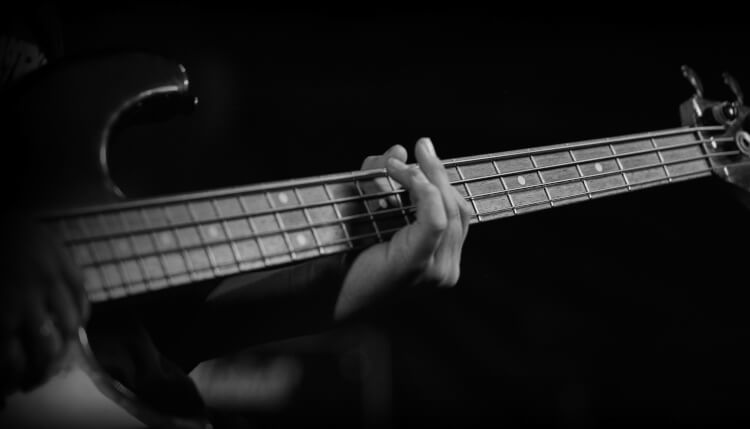 "Love is like a violin. The music may stop now and then, but the strings remain forever." Victor Hugo
Paul Hindemith
Paul Hindemith (16 November 1895 – 28 December 1963) was a German composer, violist, violinist, teacher, music theorist and conductor.
Anatoly Lyadov
Anatoly Konstantinovich Lyadov or Liadov (Russian: Анато́лий Константи́нович Ля́дов; 12 May 1855 – 28 August 1914) was a Russian composer, teacher and conductorLyadov was born in 1855 in St. Petersburg, into a family of eminent Russian musicians. He was taught informally by his conductor step-father Konstantin Lyadov from 1860 to 1868, and then in 1870 entered the St. Petersburg Conservatory to study piano and violin.
The Doors
The Doors were an American rock band formed in 1965 in Los Angeles by vocalist Jim Morrison, keyboardist Ray Manzarek, drummer John Densmore, and guitarist Robby Krieger. They were considered a controversial band, due mostly to Morrison's cryptic lyrics and unpredictable stage persona. The band dissolved in March 1973, short of two years after Morrison's death in July 1971. According to the RIAA, they have sold over 32 million albums in the US alone.
The Doors' music during the 1965-68 era was a fusion of hard rock, blues-rock, and acid rock. The origins of The Doors lay in a chance meeting between acquaintances and fellow UCLA film school alumni Jim Morrison and Ray Manzarek on Venice Beach California in July 1965. Morrison told Manzarek he had been writing songs (Morrison said "I was taking notes at a fantasic rock-n-roll concert going on in my head") and, at Manzarek's encouragement, sang "Moonlight Drive". Impressed by Morrison's lyrics, Manzarek suggested they form a band.
The Doors' music during the 1965-68 era was a fusion of hard rock, blues-rock, and acid rock. The origins of The Doors lay in a chance meeting between acquaintances and fellow UCLA film school alumni Jim Morrison and Ray Manzarek on Venice Beach California in July 1965. Morrison told Manzarek he had been writing songs (Morrison said "I was taking notes at a fantasic rock-n-roll concert going on in my head") and, at Manzarek's encouragement, sang "Moonlight Drive". Impressed by Morrison's lyrics, Manzarek suggested they form a band.
Saint Saens
Charles-Camille Saint-Saëns (9 October 1835 – 16 December 1921) was a French composer, organist, conductor, and pianist, known especially for The Carnival of the Animals, Danse Macabre, Samson and Delilah, Havanaise, Introduction and Rondo capriccioso, and his Symphony No. 3 (Organ Symphony).
Zucchero Fornaciari
Adelmo Fornaciari Cavaliere di Gran Croce OMRI (Italian pronunciation: ; born 25 September 1955), more commonly known by his stage name Zucchero Fornaciari or simply Zucchero (pronounced ), is an Italian singer-songwriter and musician. His stage name is the Italian word for "sugar", as his elementary teacher used to call him. His music is largely inspired by gospel, soul, blues and rock music, and alternates between Italian ballads and more rhythmic R&B-boogie-like pieces. He is credited as the "father of Italian blues", introducing blues to the big stage in Italy. He is one of the few European blues artists who still enjoys great international success.
Esperanza Spalding
Esperanza Spalding (born 1984) is an American multi-instrumentalist best known as a jazz bassist and singer, who draws upon many genres in her own compositions. In 2011, she won the Grammy Award for Best New Artist at the 53rd Grammy Awards, making her the first jazz artist to win the award.
Steve Swallow
Steve Swallow (born October 4, 1940) is a jazz fusion bassist and composer noted for his collaborations with Jimmy Giuffre, Gary Burton, and Carla Bley. He was one of the first jazz double bassists to switch entirely to electric bass guitar.
Matchbox 20
Matchbox Twenty (or MB20, MBT, M20, originally spelled Matchbox 20) is a rock band formed in Orlando, Florida.
Matchbox Twenty has sold over 44 million albums worldwide from the releases of Yourself or Someone Like You, Mad Season, and More Than You Think You Are. They released their latest album, Exile on Mainstream, on October 2, 2007. The current members of the band are Rob Thomas, Paul Doucette, Brian Yale, and Kyle Cook. Rhythm guitarist Adam Gaynor left the band in 2005, after performing on their first three studio albums. Rob Thomas is the principal songwriter and lead singer. Rob Thomas has created a well-established solo career for himself after releasing the album, …Something to Be.
Matchbox Twenty has sold over 44 million albums worldwide from the releases of Yourself or Someone Like You, Mad Season, and More Than You Think You Are. They released their latest album, Exile on Mainstream, on October 2, 2007. The current members of the band are Rob Thomas, Paul Doucette, Brian Yale, and Kyle Cook. Rhythm guitarist Adam Gaynor left the band in 2005, after performing on their first three studio albums. Rob Thomas is the principal songwriter and lead singer. Rob Thomas has created a well-established solo career for himself after releasing the album, …Something to Be.
Ludwig van Beethoven
Ludwig van Beethoven (/ˈlʊdvɪɡ væn ˈbeɪt(h)oʊvən/ (About this soundlisten); German: (About this soundlisten); baptised 17 December 1770 – 26 March 1827) was a German composer and pianist. A crucial figure in the transition between the classical and romantic eras in classical music, he remains one of the most recognized and influential musicians of this period, and is considered to be one of the greatest composers of all time.
Beethoven was born in Bonn, the capital of the Electorate of Cologne, and part of the Holy Roman Empire. He displayed his musical talents at an early age and was vigorously taught by his father Johann van Beethoven, and was later taught by composer and conductor Christian Gottlob Neefe. At age 21, he moved to Vienna and studied composition with Joseph Haydn. Beethoven then gained a reputation as a virtuoso pianist, and was soon courted by Prince Lichnowsky for compositions, which resulted in Opus 1 in 1795.
Beethoven was born in Bonn, the capital of the Electorate of Cologne, and part of the Holy Roman Empire. He displayed his musical talents at an early age and was vigorously taught by his father Johann van Beethoven, and was later taught by composer and conductor Christian Gottlob Neefe. At age 21, he moved to Vienna and studied composition with Joseph Haydn. Beethoven then gained a reputation as a virtuoso pianist, and was soon courted by Prince Lichnowsky for compositions, which resulted in Opus 1 in 1795.
Third World
Third World is a Jamaican reggae fusion band formed in 1973. Their sound is influenced by soul, funk and disco. Although it has undergone several line-up changes, Stephen "Cat" Coore and Richard Daley have been constant members.
Green Day
Green Day is an American rock trio formed in 1987. The band has consisted of Billie Joe Armstrong (vocals, guitar), Mike Dirnt (bass guitar, vocals), and Tré Cool (drums, percussion) for the majority of its existence.
Green Day was originally part of the punk rock scene at 924 Gilman Street in Berkeley, California. Its early releases for independent record label Lookout! Records earned them a grassroots fanbase, some of whom felt alienated when the band signed to a major label.
The band has sold over 65 million records worldwide, They also have three Grammy Awards, Best Alternative Album for Dookie, Best Rock Album for American Idiot, and Record of the Year for "Boulevard of Broken Dreams".
Green Day was originally part of the punk rock scene at 924 Gilman Street in Berkeley, California. Its early releases for independent record label Lookout! Records earned them a grassroots fanbase, some of whom felt alienated when the band signed to a major label.
The band has sold over 65 million records worldwide, They also have three Grammy Awards, Best Alternative Album for Dookie, Best Rock Album for American Idiot, and Record of the Year for "Boulevard of Broken Dreams".
Scott Joplin
Scott Joplin (between June 1867 and January 1868 – April 1, 1917) was an American musician and composer of ragtime music. He remains the best-known ragtime figure and is regarded as one of the three most important composers of classic ragtime, along with James Scott and Joseph Lamb, and also a precursor to Stride Piano. Decades after his death, his music enjoyed a considerable surge of popularity and critical respect in the 1970s, especially for his most famous composition, "The Entertainer."
Even at the time of publication, Joplin's publisher John Stark was claiming that the rags had obtained classical status, and "lifted ragtime from its low estate and lined it up with Beethoven and Bach".
Even at the time of publication, Joplin's publisher John Stark was claiming that the rags had obtained classical status, and "lifted ragtime from its low estate and lined it up with Beethoven and Bach".
Christian Mcbride
Christian McBride (born May 31, 1972) is an American jazz bassist, composer and arranger. He has appeared on more than 300 recordings as a sideman, and is a six-time Grammy Award winner. McBride has performed and recorded with a number of jazz musicians and ensembles, including Freddie Hubbard, McCoy Tyner, Herbie Hancock, Pat Metheny, Joe Henderson, Diana Krall, Roy Haynes, Chick Corea, Wynton Marsalis, Eddie Palmieri, Joshua Redman, and Ray Brown's "SuperBass" with John Clayton, as well as with pop, hip-hop, soul and classical musicians like Sting, Paul McCartney, Celine Dion, Isaac Hayes, The Roots, Queen Latifah, Kathleen Battle, Renee Fleming, Carly Simon, Bruce Hornsby, and James Brown.
stefano ianne
Stefano Ianne is one of the most representative artists of the Italian contemporary musical scenery. Minimalist, but with a very peculiar signature, he is produced by RAI TRADE. His discography counts 4 productions: the last one is “Piano Car”. Some of his works have been chosen as soundtracks for: a Tv show, “Montanelli Tv”, for a commercial of a very famous mineral water and for the movie “Beckett” by Davide Manuli. In 2009 his well known album “Mondovisione”, recorded with the orchestra “I Pomeriggi Musicali” (made up of 60 elements), was for 5 months on the music playlist of two important radio stations: Rai Radio Uno and Isoradio. The new tour will start on April 2010 to promote the album Piano Car in which many internationally known artists will perform, such as like Trilok Gurtu and with direction by Valter Sivilotti.
Niels-Henning Ørsted Pedersen
Niels-Henning Ørsted Pedersen (Danish pronunciation: , 27 May 1946 – 19 April 2005), also known by his abbreviated nickname NHØP, was a Danish jazz double bassist.Ørsted Pedersen was born in Osted, near Roskilde, on the Danish island of Zealand, the son of a church organist. As a child, Ørsted Pedersen played piano, but from the age of 13, he started learning to play upright bass and at the age of 14, while studying, he began his professional jazz career in Denmark with his first band, Jazzkvintet 60 (Danish for Jazz Quintet 60). By the age of fifteen, he had the ability to accompany leading musicians at nightclubs, working regularly at Copenhagen's Jazzhus Montmartre, after his debut there on New Year's Eve 1961, when he was only 15.
Boots Randolph
Homer Louis "Boots" Randolph III (June 3, 1927 – July 3, 2007) was an American musician best known for his 1963 saxophone hit "Yakety Sax" (which became Benny Hill's signature tune). Randolph was a major part of the "Nashville sound" for most of his professional career.
Iced Earth
Iced Earth is an American heavy metal band formed in Tampa, Florida and currently based in Columbus, Indiana. They were formed in 1984 under the name the Rose, then Purgatory, by guitarist and main songwriter Jon Schaffer and original drummer Greg Seymour.
Michael Nyman
Michael Laurence Edward Nyman, CBE (born 23 March 1944, Stratford, London) is an English composer of minimalist music, pianist, librettist and musicologist, perhaps best known for the many movie scores he wrote during his lengthy collaboration with the filmmaker Peter Greenaway, and his multi-platinum soundtrack album to Jane Campion's The Piano. His operas include The Man Who Mistook His Wife for a Hat, Letters, Riddles and Writs, Noises, Sounds & Sweet Airs, Facing Goya, Man and Boy: Dada, Love Counts, and Sparkie: Cage and Beyond, and he has written six concerti, four string quartets, and many other chamber works, many for his Michael Nyman Band, with and without whom he tours as a performing pianist. Nyman has stated his preference for writing opera to other sorts of music. In 2008 Man On Wire was released, much of the film's soundtrack is derived from the 2006 album, The Composer's Cut Series Vol. II: Nyman/Greenaway Revisited.
Loverboy
Loverboy is a Canadian rock band formed in 1979. They were established in Calgary, Alberta, but are currently based in Vancouver, British Columbia. Loverboy's hit singles, particularly "Turn Me Loose" and "Working for the Weekend", have become arena rock staples and are still heard on many classic rock and classic hits radio stations across Canada and the United States.After being rejected by many American record labels, they signed with Columbia/CBS Records Canada and began recording their first album on March 20, 1980. Loverboy's founding members were lead singer Mike Reno (previously with Moxy as Mike Rynoski), guitarist Paul Dean (previously with Scrubbaloe Caine and Streetheart) keyboardist Doug Johnson, bassist Scott Smith, and drummer Matt Frenette. Throughout the 1980s, Loverboy accumulated numerous hit songs in Canada and the United States, earning four multi-platinum albums and selling millions of records. Except for a brief breakup from 1988 to 1991, the band has continued to perform live shows regularly.
Jordan Nobles
Jordan Nobles (born December 11, 1969) is a Canadian composer who specializes in creating spatial music and open instrumentation compositions. His music is performed worldwide and has won several international and national awards including the 2017 Juno Award for Classical Composition of the Year.
Shostakovich
Dmitri Dmitriyevich Shostakovich (25 September 1906 – 9 August 1975) was a Soviet Russian composer and one of the most celebrated composers of the 20th century.
Shostakovich achieved fame in the Soviet Union under the patronage of Leon Trotsky's chief of staff Mikhail Tukhachevsky, but later had a complex and difficult relationship with the Stalinist bureaucracy. In 1936, the government, most probably under orders from Stalin, harshly criticized his opera Lady Macbeth of the Mtsensk District, causing him to withdraw the Fourth Symphony during its rehearsal stages. Shostakovich's music was officially denounced twice, in 1936 and 1948, and was periodically banned. Nevertheless, he also received accolades and state awards and served in the Supreme Soviet of the RSFSR. Despite the official controversy, his works were popular and well received.
Shostakovich achieved fame in the Soviet Union under the patronage of Leon Trotsky's chief of staff Mikhail Tukhachevsky, but later had a complex and difficult relationship with the Stalinist bureaucracy. In 1936, the government, most probably under orders from Stalin, harshly criticized his opera Lady Macbeth of the Mtsensk District, causing him to withdraw the Fourth Symphony during its rehearsal stages. Shostakovich's music was officially denounced twice, in 1936 and 1948, and was periodically banned. Nevertheless, he also received accolades and state awards and served in the Supreme Soviet of the RSFSR. Despite the official controversy, his works were popular and well received.
Red Hot Chili Peppers
Red Hot Chili Peppers are an American rock band formed in Los Angeles, California, in 1983. For most of its existence, the band has consisted of vocalist Anthony Kiedis, guitarist John Frusciante, bassist Michael "Flea" Balzary, and drummer Chad Smith. The band's varied musical style has fused traditional rock and funk with various elements of heavy metal, punk rock and psychedelic rock.
In addition to Kiedis and Flea, the group originally featured guitarist Hillel Slovak and drummer Jack Irons. However, Slovak died of a heroin overdose in 1988, resulting in Irons resigning. Irons was replaced briefly by former Dead Kennedys drummer D. H. Peligro before the band found a permanent replacement in Chad Smith, while Slovak was replaced by up-and-coming guitarist Frusciante. This lineup recorded the band's fourth and fifth albums, Mother's Milk (1989) and Blood Sugar Sex Magik (1991).
Blood Sugar Sex Magik was a critical success and sold over twelve million copies. However, Frusciante grew uncomfortable with the band's success and left the band abruptly in 1992. Kiedis, Flea, and Smith employed Dave Navarro of Jane's Addiction for their subsequent album, One Hot Minute (1995). It, however, failed to match the critical acclaim of Blood Sugar Sex Magik and sold fewer than half the copies of its predecessor. Shortly afterwards, Navarro was fired from the band due to creative differences.
Frusciante, during his time away from the band in 1998, completed rehabilitation and at Flea's request, rejoined the band. The reunited foursome returned to the studio to record Californication (1999), which went on to sell fifteen million units worldwide, becoming their most successful album to date. It was followed three years later with By the Way (2002), which continued their success. In 2006, the group released the double album Stadium Arcadium. The band has won six Grammy Awards. They have sold over fifty million albums world wide, have had seven singles in the Top 40 of the Billboard Hot 100 (including three singles in the Top 10), have had five #1 singles on the Mainstream Rock charts, and a record eleven #1 singles on the Modern Rock charts.
In addition to Kiedis and Flea, the group originally featured guitarist Hillel Slovak and drummer Jack Irons. However, Slovak died of a heroin overdose in 1988, resulting in Irons resigning. Irons was replaced briefly by former Dead Kennedys drummer D. H. Peligro before the band found a permanent replacement in Chad Smith, while Slovak was replaced by up-and-coming guitarist Frusciante. This lineup recorded the band's fourth and fifth albums, Mother's Milk (1989) and Blood Sugar Sex Magik (1991).
Blood Sugar Sex Magik was a critical success and sold over twelve million copies. However, Frusciante grew uncomfortable with the band's success and left the band abruptly in 1992. Kiedis, Flea, and Smith employed Dave Navarro of Jane's Addiction for their subsequent album, One Hot Minute (1995). It, however, failed to match the critical acclaim of Blood Sugar Sex Magik and sold fewer than half the copies of its predecessor. Shortly afterwards, Navarro was fired from the band due to creative differences.
Frusciante, during his time away from the band in 1998, completed rehabilitation and at Flea's request, rejoined the band. The reunited foursome returned to the studio to record Californication (1999), which went on to sell fifteen million units worldwide, becoming their most successful album to date. It was followed three years later with By the Way (2002), which continued their success. In 2006, the group released the double album Stadium Arcadium. The band has won six Grammy Awards. They have sold over fifty million albums world wide, have had seven singles in the Top 40 of the Billboard Hot 100 (including three singles in the Top 10), have had five #1 singles on the Mainstream Rock charts, and a record eleven #1 singles on the Modern Rock charts.
José Galvão
José Galvão Musical artist Songs Natal na Minha Escola Teatro Musical - A Magia do Natal · 2021 Hino Eco-Escola
Natal em Portugal - Raio de Sol Teatro Musical - A Magia do Natal ·
Natal em Portugal - Raio de Sol Teatro Musical - A Magia do Natal ·
Kenny Burrell
Kenneth Earl Burrell (born July 31, 1931) is an American jazz guitarist known for his work on the Blue Note label. His collaborations with Jimmy Smith produced the 1965 Billboard Top Twenty hit album Organ Grinder Swing. He has cited jazz guitarists Charlie Christian and Django Reinhardt as influences, along with blues guitarists T-Bone Walker and Muddy Waters. Furthermore, Jimi Hendrix, Stevie Ray Vaughan and Peter Frampton have cited Burrell as an influence.
Burrell is a professor and Director of Jazz Studies at the UCLA Herb Alpert School of Music.
Burrell is a professor and Director of Jazz Studies at the UCLA Herb Alpert School of Music.
Roger Pemberton
American jazz saxophonist, arranger, composer, and educator originally from Evansville, Indiana. Born 17 October 1930 in Evansville, Indiana and died 7.
Christine McVie
Christine Anne McVie is an English singer, songwriter, and keyboardist, and one of the three lead vocalists and the keyboardist of Fleetwood Mac, which she joined in 1970. She has also released three solo albums. She has a contralto voice. Her direct but poignant lyrics focus on love and relationships.
Alan Silvestri
Alan Anthony Silvestri (born March 26, 1950) is an Academy Award-nominated American film score composer and conductor.
estri is best known for his collaborations with director Robert Zemeckis, having scored Romancing the Stone (1984), the Back to the Future trilogy (1985, 1989, 1990), Who Framed Roger Rabbit (1988), Death Becomes Her (1992), Forrest Gump (1994), Contact (1997), Cast Away (2000), The Polar Express (2004) , Beowulf (2007) and Disney's A Christmas Carol (2009).
Silvestri is also known for his work on Predator (1987) and Predator 2 (1990), both of which are considered preeminent examples of action/sci-fi film scores. He has also begun a collaboration with director Stephen Sommers, scoring the films The Mummy Returns in 2001, Van Helsing in 2004 and G.I. Joe: The Rise of Cobra in 2009.
Silvestri also composed music for television, including for the series Starsky & Hutch, CHiPs , Manimal and HBO's Tales from the Crypt.
Silvestri was 21 years old when he started his film/televsion composing career.
His early style is marked by a strong use of the "octatonic scale," as well as an eclectic use of different notes and instruments.
It was thought that Silvestri was allegedly inspired by the works of Barry DeVorzon, Perry Botkin, Jr., Lalo Schifrin, Jerry Fielding, Jerry Goldsmith and John Williams.
estri is best known for his collaborations with director Robert Zemeckis, having scored Romancing the Stone (1984), the Back to the Future trilogy (1985, 1989, 1990), Who Framed Roger Rabbit (1988), Death Becomes Her (1992), Forrest Gump (1994), Contact (1997), Cast Away (2000), The Polar Express (2004) , Beowulf (2007) and Disney's A Christmas Carol (2009).
Silvestri is also known for his work on Predator (1987) and Predator 2 (1990), both of which are considered preeminent examples of action/sci-fi film scores. He has also begun a collaboration with director Stephen Sommers, scoring the films The Mummy Returns in 2001, Van Helsing in 2004 and G.I. Joe: The Rise of Cobra in 2009.
Silvestri also composed music for television, including for the series Starsky & Hutch, CHiPs , Manimal and HBO's Tales from the Crypt.
Silvestri was 21 years old when he started his film/televsion composing career.
His early style is marked by a strong use of the "octatonic scale," as well as an eclectic use of different notes and instruments.
It was thought that Silvestri was allegedly inspired by the works of Barry DeVorzon, Perry Botkin, Jr., Lalo Schifrin, Jerry Fielding, Jerry Goldsmith and John Williams.
Handel
George Frideric Handel (Friday, 23 February 1685 - Saturday, 14 April 1759) was a German-born Baroque composer who is famous for his operas, oratorios and concerti grossi. Born as Georg Friedrich Handel in Halle, he spent most of his adult life in England, becoming a subject of the British crown on 22 January 1727. His most famous works are Messiah, an oratorio set to texts from the King James Bible; Water Music; and Music for the Royal Fireworks. Strongly influenced by the techniques of the great composers of the Italian Baroque and the English composer Henry Purcell, his music was known to many significant composers who came after him, including Haydn, Mozart, and Beethoven.
Handel's compositions include 42 operas; 29 oratorios; more than 120 cantatas, trios and duets; numerous arias; chamber music; a large number of ecumenical pieces; odes and serenatas; and sixteen organ concerti. His most famous work, the Messiah oratorio with its "Hallelujah" chorus, is among the most popular works in choral music and has become a centerpiece of the Christmas season. Also popular are the Opus 3 and 6 Concerti Grossi, as well as "The Cuckoo and the Nightingale", in which birds are heard calling during passages played in different keys representing the vocal ranges of two birds. Also notable are his sixteen keyboard suites, especially The Harmonious Blacksmith.
Handel introduced various previously uncommon musical instruments in his works: the viola d'amore and violetta marina (Orlando), the lute (Ode for St. Cecilia's Day), three trombones (Saul), clarinets or small high cornets (Tamerlano), theorbo, French horn (Water Music), lyrichord, double bassoon, viola da gamba, bell chimes, positive organ, and harp (Giulio Cesare, Alexander's Feast).
Handel's compositions include 42 operas; 29 oratorios; more than 120 cantatas, trios and duets; numerous arias; chamber music; a large number of ecumenical pieces; odes and serenatas; and sixteen organ concerti. His most famous work, the Messiah oratorio with its "Hallelujah" chorus, is among the most popular works in choral music and has become a centerpiece of the Christmas season. Also popular are the Opus 3 and 6 Concerti Grossi, as well as "The Cuckoo and the Nightingale", in which birds are heard calling during passages played in different keys representing the vocal ranges of two birds. Also notable are his sixteen keyboard suites, especially The Harmonious Blacksmith.
Handel introduced various previously uncommon musical instruments in his works: the viola d'amore and violetta marina (Orlando), the lute (Ode for St. Cecilia's Day), three trombones (Saul), clarinets or small high cornets (Tamerlano), theorbo, French horn (Water Music), lyrichord, double bassoon, viola da gamba, bell chimes, positive organ, and harp (Giulio Cesare, Alexander's Feast).
Sixpence None the Richer
Sixpence None the Richer (Shorter: Sixpence N.T.R.) is a Grammy-nominated American Christian pop/rock band that formed in New Braunfels, Texas, eventually settling in Nashville, Tennessee. The name of the band is inspired by a passage in writer C. S. Lewis's Mere Christianity.
In 1997, the group signed to Steve Taylor's label Squint Entertainment and released a self-titled album, which slowly began garnering attention from a wider audience in the mainstream industry. Although Placencio played bass on most of the album, he left the band before it was released and was replaced by Justin Carry, who joined the band around the same time as second guitarist Sean Kelly.
In 1999, "Kiss Me" was released as a single, propelling Sixpence None the Richer into the national pop spotlight. That year the song was also featured in the film She's All That as the newly made-over protagonist, Laney Boggs, is revealed, and again at the end, during the film's credits. In 2001 the film Not Another Teen Movie would use the song in a parody of that scene. "Kiss Me" was also played on the WB teen drama Dawson's Creek in episodes #2-06 "The Dance" and #2-18 "The Perfect Wedding," and is found on the show's first soundtrack CD, Songs from Dawson's Creek (Volume 1).
In 1999, the band recorded a cover of The La's' "There She Goes", which became their second hit single. This recording was subsequently added to the band's self-titled album in the US, though it had already appeared on all copies of the album internationally.
Current members:
Matt Slocum – Guitar, cello
Leigh Nash – Vocals
Justin Cary – Bass
In 1997, the group signed to Steve Taylor's label Squint Entertainment and released a self-titled album, which slowly began garnering attention from a wider audience in the mainstream industry. Although Placencio played bass on most of the album, he left the band before it was released and was replaced by Justin Carry, who joined the band around the same time as second guitarist Sean Kelly.
In 1999, "Kiss Me" was released as a single, propelling Sixpence None the Richer into the national pop spotlight. That year the song was also featured in the film She's All That as the newly made-over protagonist, Laney Boggs, is revealed, and again at the end, during the film's credits. In 2001 the film Not Another Teen Movie would use the song in a parody of that scene. "Kiss Me" was also played on the WB teen drama Dawson's Creek in episodes #2-06 "The Dance" and #2-18 "The Perfect Wedding," and is found on the show's first soundtrack CD, Songs from Dawson's Creek (Volume 1).
In 1999, the band recorded a cover of The La's' "There She Goes", which became their second hit single. This recording was subsequently added to the band's self-titled album in the US, though it had already appeared on all copies of the album internationally.
Current members:
Matt Slocum – Guitar, cello
Leigh Nash – Vocals
Justin Cary – Bass
Procol Harum
Procol Harum is an English rock band formed in 1967. Their best-known recording is the 1967 hit single "A Whiter Shade of Pale", one of the few singles to have sold over 10 million copies. Although noted for their baroque and classical influence, Procol Harum's music is described as psychedelic rock and proto-prog.
DENNIS JERNIGAN
Dennis Jernigan is a singer-songwriter of contemporary Christian music. He is native to Oklahoma, and headquarters a music-based Christian ministry from there. Jernigan now lives in Muskogee, Oklahoma with his wife and their nine children.Jernigan is a graduate of Oklahoma Baptist University.A primary source of inspiration for Jernigan's message and music is an experience he describes as his deliverance from homosexuality. Jernigan states that this began during a 2nd Chapter of Acts concert in Norman, Oklahoma. Jernigan believes his prior identification as homosexual was related to an erroneous childhood perception that he had been rejected by his father.
Chick Corea
Armando Anthony "Chick" Corea (born June 12, 1941) is a multiple Grammy Award-winning American jazz pianist, keyboardist, drummer, and composer.
He is known for his work during the 1970s in the genre of jazz fusion. He participated in the birth of the electric fusion movement as a member of Miles Davis' band in the 1960s, and in the 1970s formed Return to Forever.
He continued to pursue other collaborations and explore various musical styles throughout the 1980s and 1990s. He is also known for promoting Scientology.
He is known for his work during the 1970s in the genre of jazz fusion. He participated in the birth of the electric fusion movement as a member of Miles Davis' band in the 1960s, and in the 1970s formed Return to Forever.
He continued to pursue other collaborations and explore various musical styles throughout the 1980s and 1990s. He is also known for promoting Scientology.
Dirty Dancing
Dirty Dancing is a 1987 romance film. Written by Eleanor Bergstein, the film features Jennifer Grey, Patrick Swayze, Cynthia Rhodes, and Jerry Orbach. The story details the moment of time that a teenaged girl crosses over into womanhood both physically and emotionally, through a relationship with a dance instructor during a family summer vacation. Around a third of the movie involves dancing scenes choreographed by Kenny Ortega (later famous for High School Musical), and the finale has been described as "the most goosebump-inducing dance scene in movie history".
Originally a low-budget film by a new studio and with no major stars (at the time), Dirty Dancing became a massive box office hit. As of 2007, it has earned $300 million worldwide. It was the first film to sell over a million copies on home video, and the Dirty Dancing soundtrack generated two multi-platinum albums and multiple singles, including "(I've Had) The Time of My Life", which won both the Golden Globe and Academy Award for Best Original Song, and a Grammy Award for best duet. The film spawned a 2004 sequel, Dirty Dancing: Havana Nights, as well as a stage version which has had sellout performances in Australia, Europe, and North America, with plans to open on Broadway.
Originally a low-budget film by a new studio and with no major stars (at the time), Dirty Dancing became a massive box office hit. As of 2007, it has earned $300 million worldwide. It was the first film to sell over a million copies on home video, and the Dirty Dancing soundtrack generated two multi-platinum albums and multiple singles, including "(I've Had) The Time of My Life", which won both the Golden Globe and Academy Award for Best Original Song, and a Grammy Award for best duet. The film spawned a 2004 sequel, Dirty Dancing: Havana Nights, as well as a stage version which has had sellout performances in Australia, Europe, and North America, with plans to open on Broadway.
Zequinha de Abreu
José Gomes de Abreu, better known as Zequinha de Abreu (September 19, 1880 — January 22, 1935), was a Brazilian musician and composer who in 1917 wrote the famous choro tune "Tico-Tico no Fubá" (whose original title was "Tico-Tico no Farelo"). Other well-known tunes he wrote were "Branca" and "Tardes de Lindóia."
Music theory
Music theory is the study of the practices and possibilities of music. The Oxford Companion to Music describes three interrelated uses of the term "music theory"
Michael Ruff
Grammy® nominated producer and songwriter, BMI Award winner, Multiple Na Hoku Award winner and Nominee, Cable Ace Award winner. Musical director for major artists and tours.Writing, Production, Touring and Recording credits include:
Melodibog
Melodibog A very nice study book containing all the notes of many songs.
Mozart
Wolfgang Amadeus Mozart, full name Johann Chrysostom Wolfgang Amadeus Mozart (27 January 1756 â 5 December 1791) was a prolific and influential composer of the Classical era. His over 600 compositions include works widely acknowledged as pinnacles of symphonic, concertante, chamber, piano, operatic, and choral music. Mozart is among the most enduringly popular of classical composers, and many of his works are part of the standard concert repertoire.
Mozart's music, like Haydn's, stands as an archetypal example of the Classical style. His works spanned the period during which that style transformed from one exemplified by the style galant to one that began to incorporate some of the contrapuntal complexities of the late Baroque, complexities against which the galant style had been a reaction. Mozart's own stylistic development closely paralleled the development of the classical style as a whole. In addition, he was a versatile composer and wrote in almost every major genre, including symphony, opera, the solo concerto, chamber music including string quartet and string quintet, and the piano sonata. While none of these genres were new, the piano concerto was almost single-handedly developed and popularized by Mozart. He also wrote a great deal of religious music, including masses; and he composed many dances, divertimenti, serenades, and other forms of light entertainment.
The central traits of the classical style can be identified in Mozart's music. Clarity, balance, and transparency are hallmarks of his work.
Mozart's music, like Haydn's, stands as an archetypal example of the Classical style. His works spanned the period during which that style transformed from one exemplified by the style galant to one that began to incorporate some of the contrapuntal complexities of the late Baroque, complexities against which the galant style had been a reaction. Mozart's own stylistic development closely paralleled the development of the classical style as a whole. In addition, he was a versatile composer and wrote in almost every major genre, including symphony, opera, the solo concerto, chamber music including string quartet and string quintet, and the piano sonata. While none of these genres were new, the piano concerto was almost single-handedly developed and popularized by Mozart. He also wrote a great deal of religious music, including masses; and he composed many dances, divertimenti, serenades, and other forms of light entertainment.
The central traits of the classical style can be identified in Mozart's music. Clarity, balance, and transparency are hallmarks of his work.
David Sanborn
David William Sanborn is an American alto saxophonist. Though Sanborn has worked in many genres, his solo recordings typically blend jazz with instrumental pop and R&B. He released his first solo album Taking Off in 1975, but has been playing the saxophone since before he was in high school.
Ilio Volante
Was born in Italy in 1964, he was still a teen ager when he started his music studies (saxophone) showing from the very beginning a particular predisposition towards the music composition and Jazz music. At the age of 19 he won the audition for the Italian National Army Band stationed in Rome. He served it for 10 years under the direction of Col. Marino BARTOLONI. After this, he played in the Grenadiers of Sardinia’s Band (Rome) and the Shape International Band (the official Nato Band) stationed in Mons (BELGIUM). In this last post, he covered for three years the 1st Tenor Saxophone slot helping the Director, MSg Allen WITTIG, in doing the original arrangements for the Big Band. http://www.iliovolante.com http://www.musicaperbanda.com
Jimmy Johnson
Jimmy Johnson (born 1956) is an American bass guitarist best known for his work with James Taylor, Allan Holdsworth, and Flim & the BB's. Raised in a rich musical environment, his father was a 47-year member of the Minnesota Orchestra's bass section, his mother a piano teacher and accompanist, and his brother Gordon is also a professional bassist.
In 1976, Johnson worked with Alembic and GHS to create one of the first 5-string bass guitars with a low B string. Living in the Los Angeles area since 1979, Johnson continues to record and tour with singer-songwriter James Taylor and also appears with various groups at The Baked Potato jazz club in Studio City, California.
In 1976, Johnson worked with Alembic and GHS to create one of the first 5-string bass guitars with a low B string. Living in the Los Angeles area since 1979, Johnson continues to record and tour with singer-songwriter James Taylor and also appears with various groups at The Baked Potato jazz club in Studio City, California.
Larry Koonse
Larry Koonse Jazz guitarist Born: July 7, 1961 (age 60 years), San Diego, California, United States Genre: Jazz Albums: Storybook, Americana, Father & Son Jazz Guitars, MORE Record labels: Summit Records, Independent, Larry Koonse, Dance Plant Records, Chris Wabich, Essential Media Group Songs A Poor Man's Mister Evans New Jazz Standards Vol. 4 · 2019 Do Be Do Be Do New Jazz Standards Vol. 4 · 2019 Hipnicity New Jazz Standards Vol. 4 · 2019
Vivaldi
Antonio Lucio Vivaldi (March 4, 1678 â July 28, 1741), nicknamed il Prete Rosso ("The Red Priest"), was a Venetian priest and Baroque music composer, as well as a famous virtuoso violinist; he was born and raised in the Republic of Venice. The Four Seasons, a series of four violin concerti, is his best-known work and a highly popular Baroque piece.
Many of Vivaldi's compositions reflect a flamboyant, almost playful, exuberance. Most of Vivaldi's repertoire was rediscovered only in the first half of the 20th century in Turin and Genoa and was published in the second half. Vivaldi's music is innovative, breaking a consolidated tradition in schemes; he gave brightness to the formal and the rhythmic structure of the concerto, repeatedly looking for harmonic contrasts and innovative melodies and themes. Moreover, Vivaldi was able to compose nonacademic music, particularly meant to be appreciated by the wide public and not only by an intellectual minority. The joyful appearance of his music reveals in this regard a transmissible joy of composing; these are among the causes of the vast popularity of his music. This popularity soon made him famous in other countries such as France which was, at the time, very independent concerning its musical taste.
Vivaldi is considered one of the composers who brought Baroque music (with its typical contrast among heavy sonorities) to evolve into a classical style. Johann Sebastian Bach was deeply influenced by Vivaldi's concertos and arias (recalled in his Johannes Passion, Matthäuspassion, and cantatas). Bach transcribed a number of Vivaldi's concerti for solo keyboard, along with a number for orchestra, including the famous Concerto for Four Violins and Violoncello, Strings and Continuo (RV 580).
Many of Vivaldi's compositions reflect a flamboyant, almost playful, exuberance. Most of Vivaldi's repertoire was rediscovered only in the first half of the 20th century in Turin and Genoa and was published in the second half. Vivaldi's music is innovative, breaking a consolidated tradition in schemes; he gave brightness to the formal and the rhythmic structure of the concerto, repeatedly looking for harmonic contrasts and innovative melodies and themes. Moreover, Vivaldi was able to compose nonacademic music, particularly meant to be appreciated by the wide public and not only by an intellectual minority. The joyful appearance of his music reveals in this regard a transmissible joy of composing; these are among the causes of the vast popularity of his music. This popularity soon made him famous in other countries such as France which was, at the time, very independent concerning its musical taste.
Vivaldi is considered one of the composers who brought Baroque music (with its typical contrast among heavy sonorities) to evolve into a classical style. Johann Sebastian Bach was deeply influenced by Vivaldi's concertos and arias (recalled in his Johannes Passion, Matthäuspassion, and cantatas). Bach transcribed a number of Vivaldi's concerti for solo keyboard, along with a number for orchestra, including the famous Concerto for Four Violins and Violoncello, Strings and Continuo (RV 580).
Gustav Holst
Gustav Theodore Holst (21 September 1874 – 25 May 1934) was an English composer and was a music teacher for nearly 20 years. He is most famous for his orchestral suite The Planets. Having studied at the Royal College of Music in London, his early work was influenced by Ravel, Grieg, Richard Strauss, and fellow student Ralph Vaughan Williams, but most of his music is highly original, with influences from Hindu spiritualism and English folk tunes. Holst's music is well known for unconventional use of metre and haunting melodies.
Holst wrote almost 200 catalogued compositions, including orchestral suites, operas, ballets, concertos, choral hymns, and songs (see Selected works below).
Holst became music master at St Paul's Girls' School in 1905 and director of music at Morley College in 1907, continuing in both posts until retirement.
He was the brother of Hollywood actor Ernest Cossart and father of the composer and conductor Imogen Holst, who wrote a biography of him in 1938.
Holst wrote almost 200 catalogued compositions, including orchestral suites, operas, ballets, concertos, choral hymns, and songs (see Selected works below).
Holst became music master at St Paul's Girls' School in 1905 and director of music at Morley College in 1907, continuing in both posts until retirement.
He was the brother of Hollywood actor Ernest Cossart and father of the composer and conductor Imogen Holst, who wrote a biography of him in 1938.
John Scofield
John Scofield (born December 26, 1951), sometimes referred to as "Sco", is an American jazz-rock guitarist and composer whose music includes bebop, jazz fusion, funk, blues, soul, and rock. He has worked with Miles Davis, Dave Liebman, Joe Henderson, Charles Mingus, Joey DeFrancesco, Herbie Hancock, Eddie Palmieri, Pat Metheny, Bill Frisell, Joe Lovano, Pat Martino, Mavis Staples, Phil Lesh, Billy Cobham, Medeski Martin & Wood, George Duke, Jaco Pastorius, John Mayer, Robert Glasper, and Gov't Mule.
Manning Sherwin
Manning Sherwin was an American composer. Born in Philadelphia, Sherwin attended Columbia University before embarking upon a long career in musical theatre and films. His most enduring composition is the music for "A Nightingale Sang in Berkeley Square", lyrics by Eric Maschwitz, written for New Faces in 1940.
Chopin
Frédéric Chopin (1 March 1810 – 17 October 1849) was a Polish composer and virtuoso pianist of the Romantic period. He is widely regarded as the greatest Polish composer, and ranks as one of music's greatest tone poets.
He was born in the village of Żelazowa Wola, in the Duchy of Warsaw, to a Polish mother and French-expatriate father, and in his early life was regarded as a child-prodigy pianist. In November 1830, at the age of 20, Chopin went abroad; following the suppression of the Polish November Uprising of 1830–31, he became one of many expatriates of the Polish "Great Emigration."
In Paris, he made a comfortable living as a composer and piano teacher, while giving few public performances. A Polish patriot,
Chopin's extant compositions were written primarily for the piano as a solo instrument. Though technically demanding, Chopin's style emphasizes nuance and expressive depth rather than virtuosity. Chopin invented musical forms such as the ballade and was responsible for major innovations in forms such as the piano sonata, waltz, nocturne, étude, impromptu and prelude. His works are mainstays of Romanticism in 19th-century classical music.
He was born in the village of Żelazowa Wola, in the Duchy of Warsaw, to a Polish mother and French-expatriate father, and in his early life was regarded as a child-prodigy pianist. In November 1830, at the age of 20, Chopin went abroad; following the suppression of the Polish November Uprising of 1830–31, he became one of many expatriates of the Polish "Great Emigration."
In Paris, he made a comfortable living as a composer and piano teacher, while giving few public performances. A Polish patriot,
Chopin's extant compositions were written primarily for the piano as a solo instrument. Though technically demanding, Chopin's style emphasizes nuance and expressive depth rather than virtuosity. Chopin invented musical forms such as the ballade and was responsible for major innovations in forms such as the piano sonata, waltz, nocturne, étude, impromptu and prelude. His works are mainstays of Romanticism in 19th-century classical music.
Tom Kitt
Thomas Robert "Tom" Kitt (born 1974) is an American composer, conductor, orchestrator and musician. For his score for the musical Next to Normal, he shared the 2010 Pulitzer Prize for Drama with Brian Yorkey. He also won the Tony Award and 2008 Outer Critics Circle Award, and was nominated for a Drama Desk Award for American Idiot and Everyday Rapture.
Dizzy Gillespie
John Birks "Dizzy" Gillespie (pronounced /ɡɨˈlɛspi/; October 21, 1917 – January 6, 1993) was an American jazz trumpet player, bandleader, singer, and composer dubbed "the sound of surprise".
Together with Charlie Parker, he was a major figure in the development of bebop and modern jazz. He taught and influenced many other musicians, including trumpeters Miles Davis, Fats Navarro, Clifford Brown, Arturo Sandoval, Lee Morgan, Jon Faddis and Chuck Mangione.
Allmusic's Scott Yanow wrote that "Dizzy Gillespie's contributions to jazz were huge. One of the greatest jazz trumpeters of all time (some would say the best), Gillespie was such a complex player that his contemporaries ended up copying Miles Davis and Fats Navarro instead, and it was not until Jon Faddis's emergence in the 1970s that Dizzy's style was successfully recreated . . . Arguably Gillespie is remembered, by both critics and fans alike, as one of the greatest jazz trumpeters of all time.
In addition to featuring in the epochal moments in bebop, he was instrumental in founding Afro-Cuban jazz, the modern jazz version of what early-jazz pioneer Jelly Roll Morton referred to as the "Spanish Tinge". Gillespie was a trumpet virtuoso and gifted improviser, building on the virtuoso style of Roy Eldridge but adding layers of harmonic complexity previously unknown in jazz. Dizzy's beret and horn-rimmed spectacles, his scat singing, his bent horn, pouched cheeks and his light-hearted personality were essential in popularizing bebop.
Together with Charlie Parker, he was a major figure in the development of bebop and modern jazz. He taught and influenced many other musicians, including trumpeters Miles Davis, Fats Navarro, Clifford Brown, Arturo Sandoval, Lee Morgan, Jon Faddis and Chuck Mangione.
Allmusic's Scott Yanow wrote that "Dizzy Gillespie's contributions to jazz were huge. One of the greatest jazz trumpeters of all time (some would say the best), Gillespie was such a complex player that his contemporaries ended up copying Miles Davis and Fats Navarro instead, and it was not until Jon Faddis's emergence in the 1970s that Dizzy's style was successfully recreated . . . Arguably Gillespie is remembered, by both critics and fans alike, as one of the greatest jazz trumpeters of all time.
In addition to featuring in the epochal moments in bebop, he was instrumental in founding Afro-Cuban jazz, the modern jazz version of what early-jazz pioneer Jelly Roll Morton referred to as the "Spanish Tinge". Gillespie was a trumpet virtuoso and gifted improviser, building on the virtuoso style of Roy Eldridge but adding layers of harmonic complexity previously unknown in jazz. Dizzy's beret and horn-rimmed spectacles, his scat singing, his bent horn, pouched cheeks and his light-hearted personality were essential in popularizing bebop.